


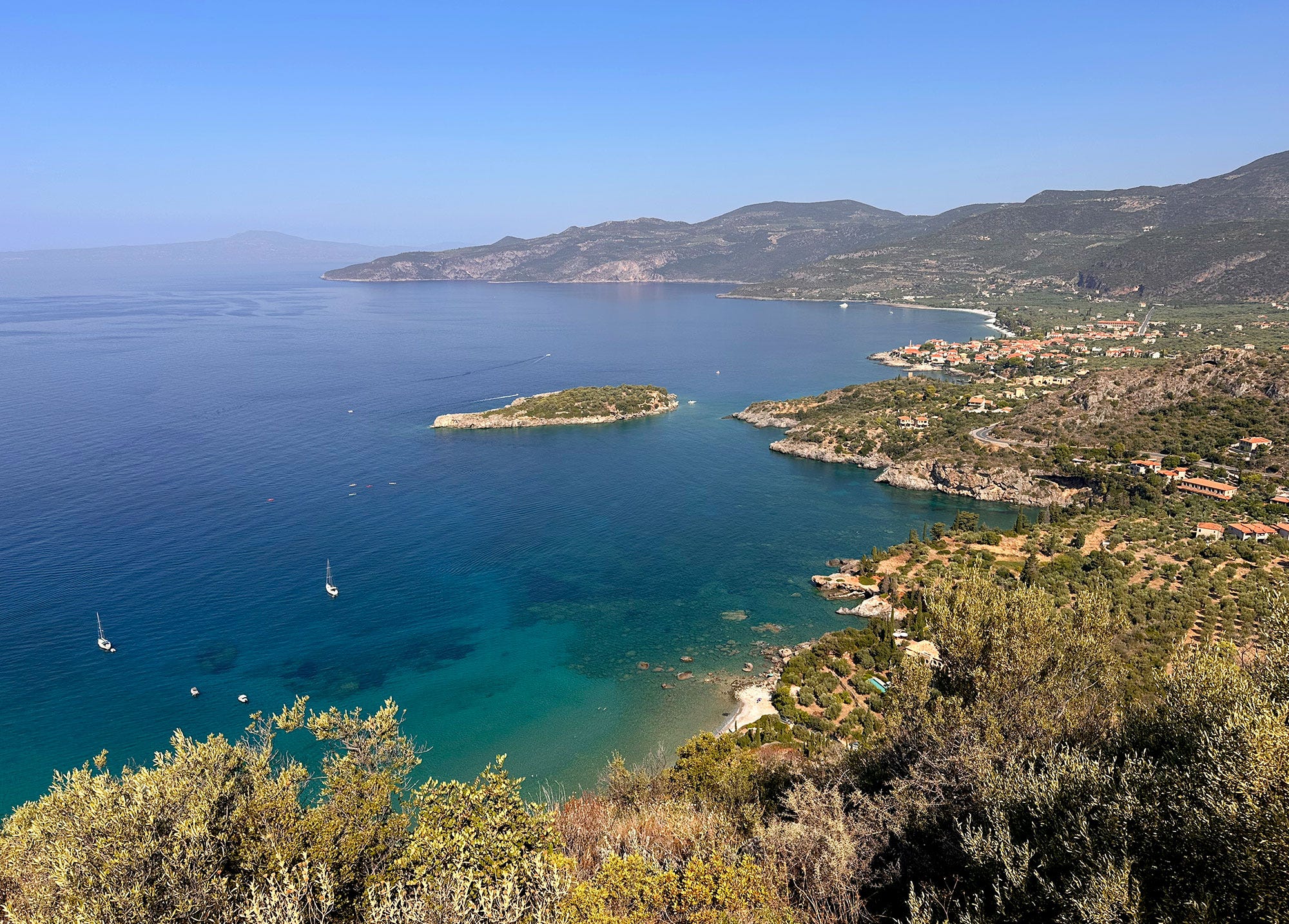
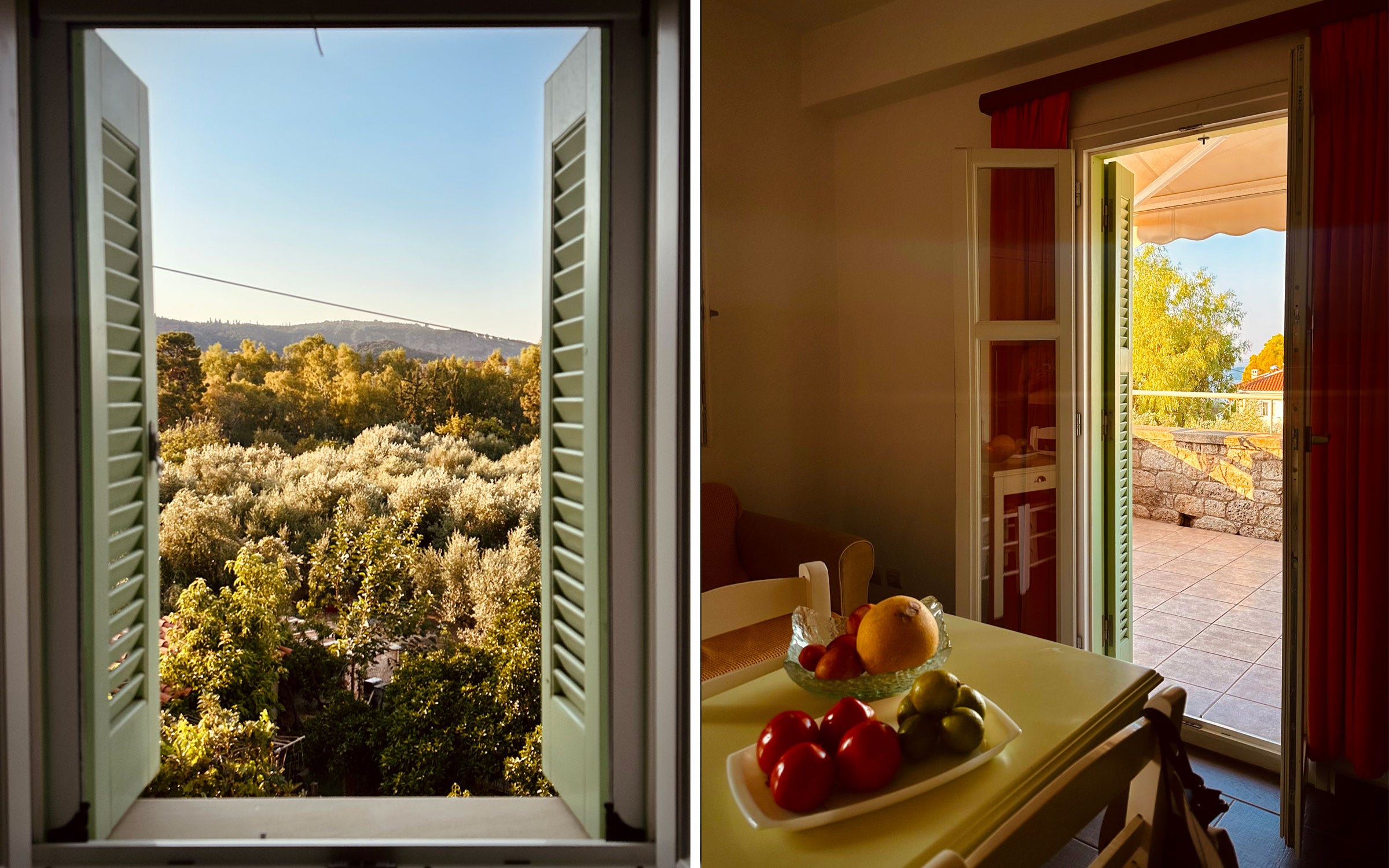
Below our balcony sits a small, white-domed ekklisakia (little church). To the left lies a vast grove of ancient, gnarled olive trees, with wafts of slow cooking drifting our way from the Taverna past the trees. Beyond that, a pebbly beach and endless calm sea… a single catamaran drifting south. Behind us is the ancient, fortified Old Kardamyli Town – framed by the soaring, rugged mountains of the Mani Peninsula.
We’re staying in a traditional stone-walled tower in the small coastal town of Kardamyli. In the heat of summer (like today, a baking 38°C in the car) this region provides a calmer, greener sanctuary known for its pine forests and dense mountain scrub.
The ‘Maniots’ of this region are proud of their unique identity, and their fight for survival. Though they fell under Ottoman rule in the 16th century, they remained resilient, and played a key role in the Greek War of Independence (1821–1829)… never letting go of their cultural footprint which remains present, particularly in the more coastal towns today.
We’re here for two weeks. It’s peak season August and it’s hot, so thankfully there’s just enough to explore and do, without feeling guilty when we retreat to the shade most afternoons.
Grab a cuppa, and enjoy a few moments of Kardamyli and the surrounding mountain-scape that we’ve loved.
Quickly before we dive in (because a few people have asked):
Q: Are your posts meant to be travel guides Josh?
A: There’s already so much curated info out there on where to eat, what to see, and where to sleep across blogs, books, AI chat, and social channels. I’m sharing a few moments, local stories, some inspiration to encourage the planning your next adventure. Of course, if you’re ever have a question, please drop me an email.
The Forgotten ‘Jazz’ Mountain Towns of Mani
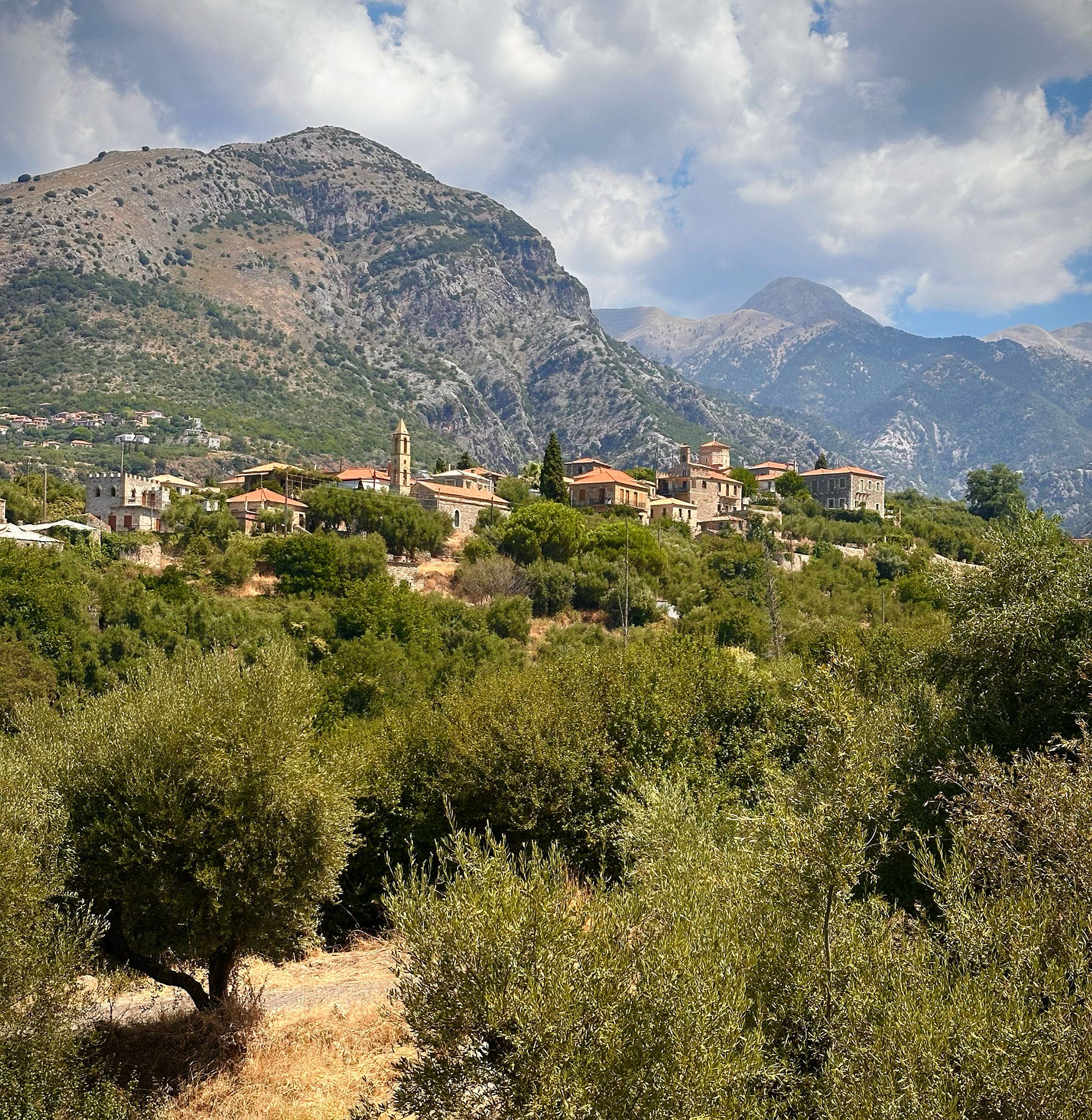
Gaze up at the 2,400m peaks behind Kardamyli at night, just below the stars, and you’ll spot twinkling clusters of life – small, ancient villages that in their time have housed soldiers, captains, travellers, farmers, and herdsmen with their families.
Today, most of these once bustling little towns stand as crumbling museums of another time. Historically, the Maniots would retreat to their mountain strongholds, protecting themselves from thieving pirates and attacks from below. The aftermath of World War II and the Greek Civil War though left this region in a severe state of poverty. This resulted in mass departures and migration to countries like Australia and Canada offering new beginnings. Most of those who chose to remain moved to the more prosperous, coastal seaside towns like Kardamyli and Stoupa.
Having spent a month back in June exploring Norway’s infinite valleys and elevated peaks, there was something alluring about this harsh, remote highland landscape.
We fuelled the lawnmower-mobile and hit the mountain road.
The ascent soon opened to a breath-taking panoramic of the sparkling coastline, the sea dotted small vessels, islands, and the alluring gradients of aquamarine.
We had the whole, winding pot-holed road to ourselves – dodging small landslides, overgrown petrified scrub and rusty street signs – like we’d stumbled upon a place forgotten.
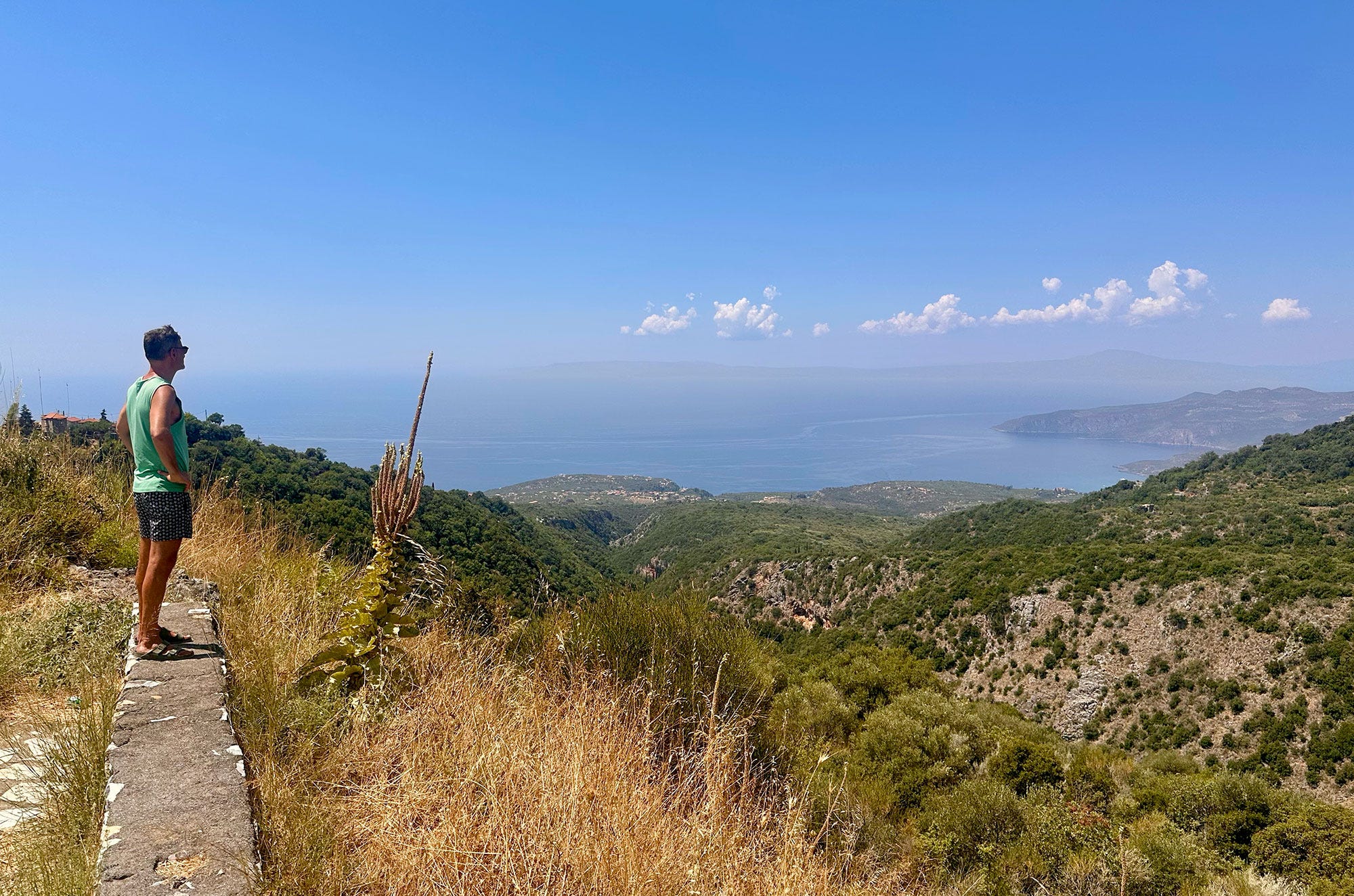
We parked outside the village of Exochori, which sits at 450m above Kardamyli on the slopes of Mt Taygetos. Next to was a ‘fragrant’, overfilled bin in desperate need of emptying – not sure how often street collections happen up this way.
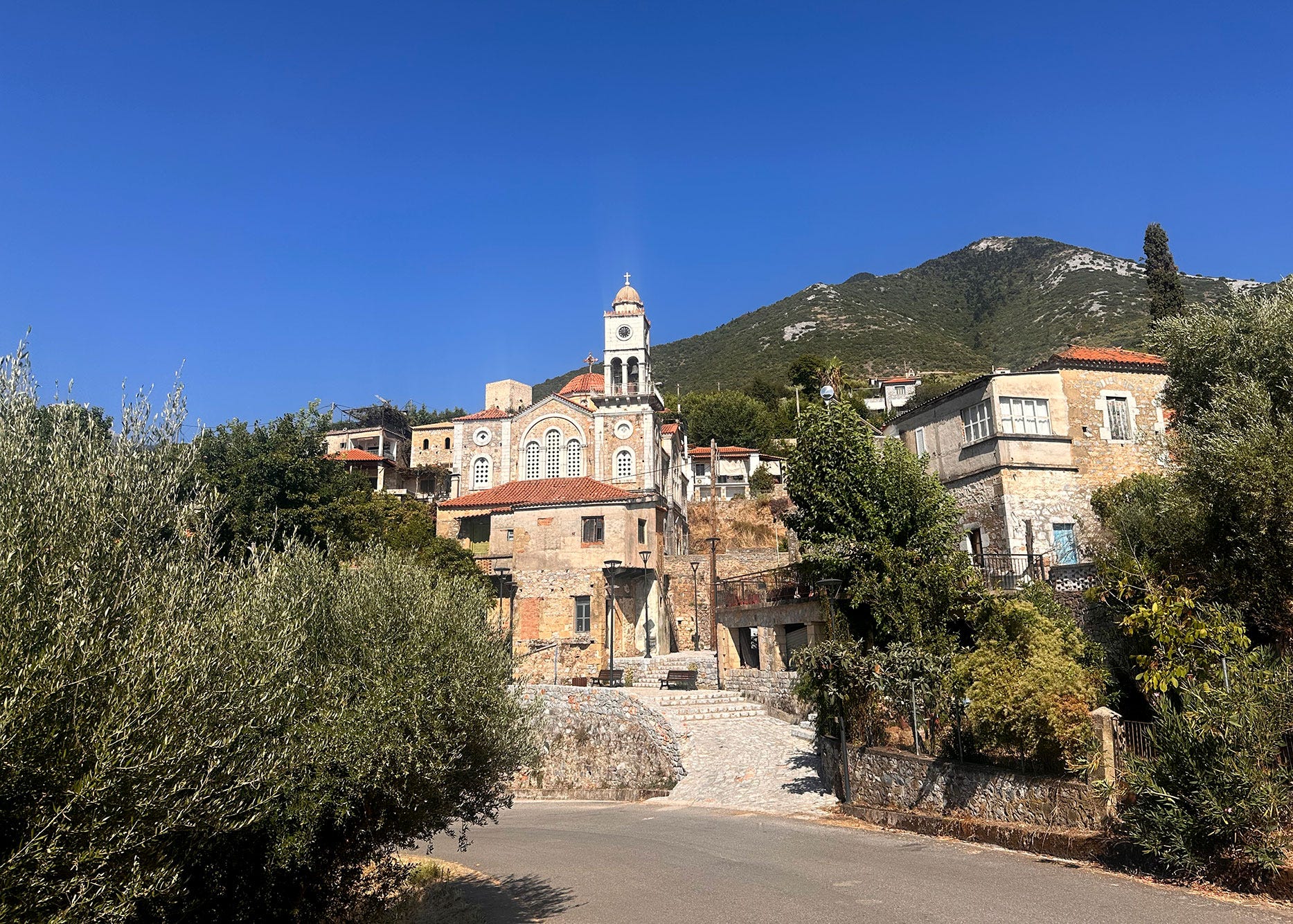
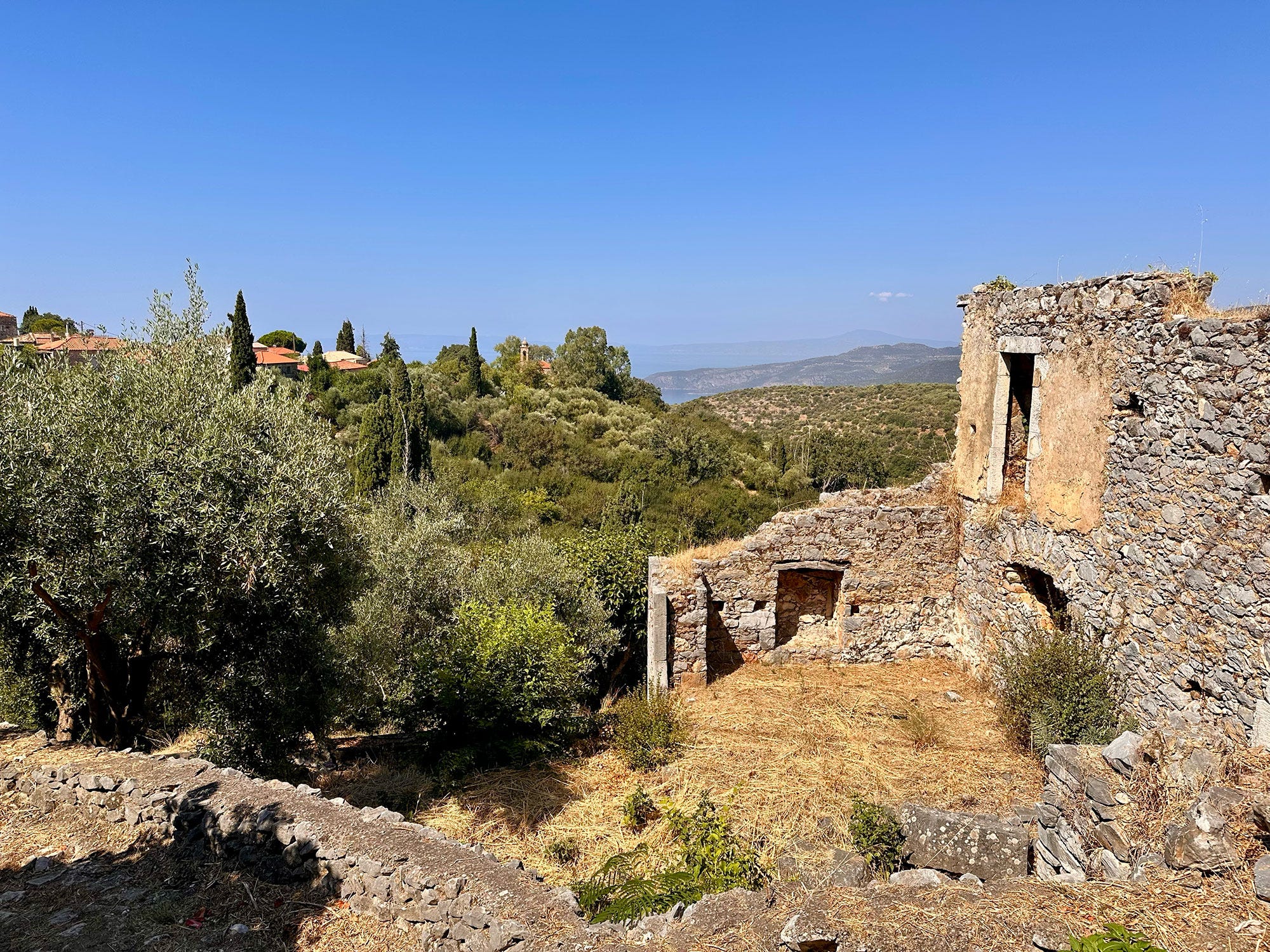
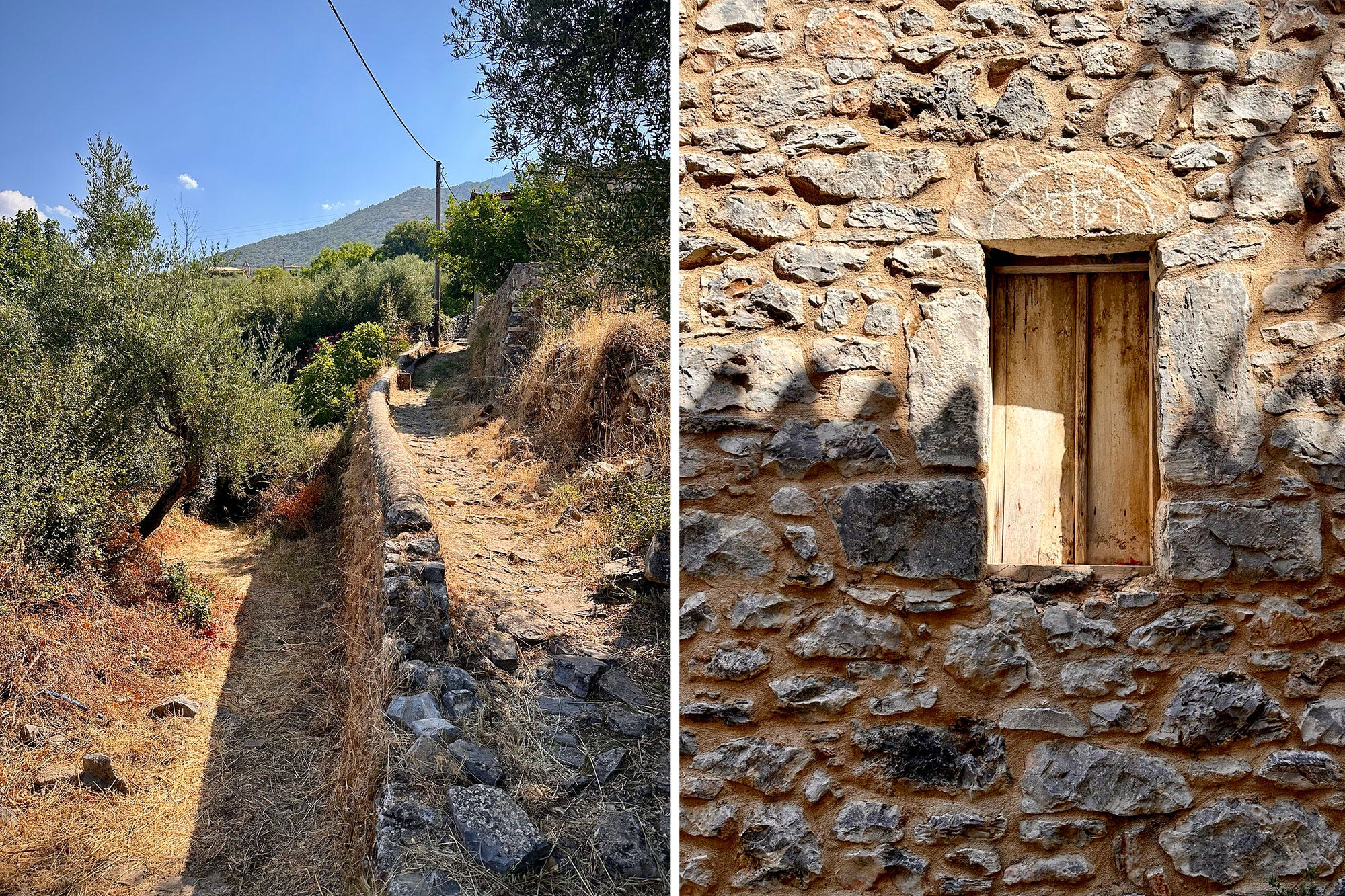
It’s eerily quiet. We wandered aimlessly, and soon lost ourselves in a maze of overgrown laneways, weaving their way between houses and gardens in varying states of disrepair. A fresh fig is picked and quickly devoured; a curious kitty gazes down from its safe post; I jump (no scream) at the bark of a German Shepherd; the sound of a distant TV.
“Yassas”… a Yia Yia rocking on her balcony chair greets us as we awkwardly try to sneak past.
Why are we sneaking?
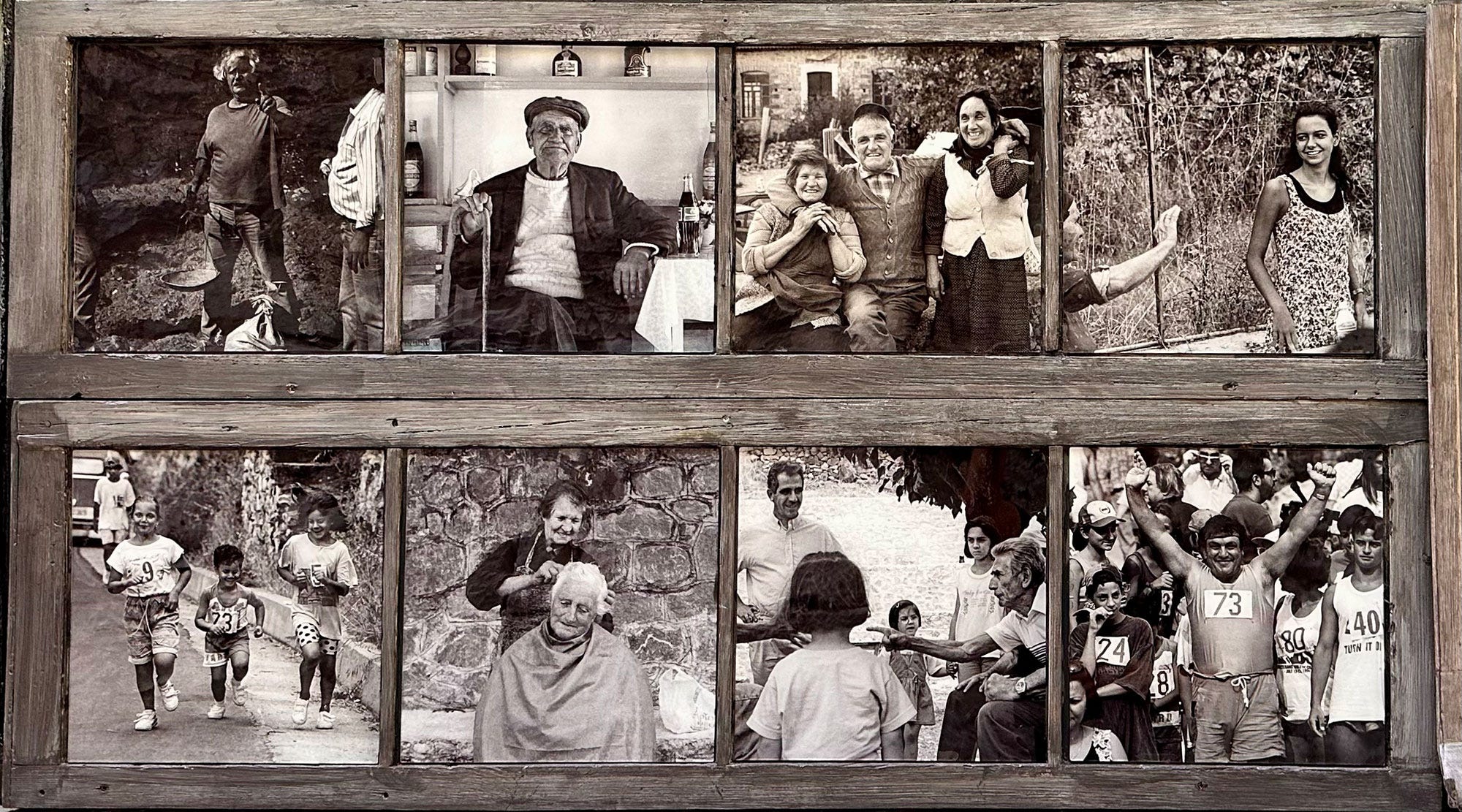
Ahead in a laneway we spot a few newly wickered chairs. Black and white photos line the entry to what appears to be an open café. Images of ladies getting haircuts, old gents, and children racing in the streets. Celebrations. Moments from another time.
There’s jazz music floating our way… surely there’s coffee? We’ve stumbled upon POYΓA Art Cafe – Their name means (appropriately) a small street, alley, or village gathering spot. It’s a new space opened a few weeks ago by a young couple with family connections to the village – she’s a jazz singer, her husband a photographer and pianist. They’ve created this place for performances, gatherings, conversations and exhibitions – it’s early days. We park it on their balcony, taking in their headline act – the glorious view back towards Kardamyli and the coastline below.
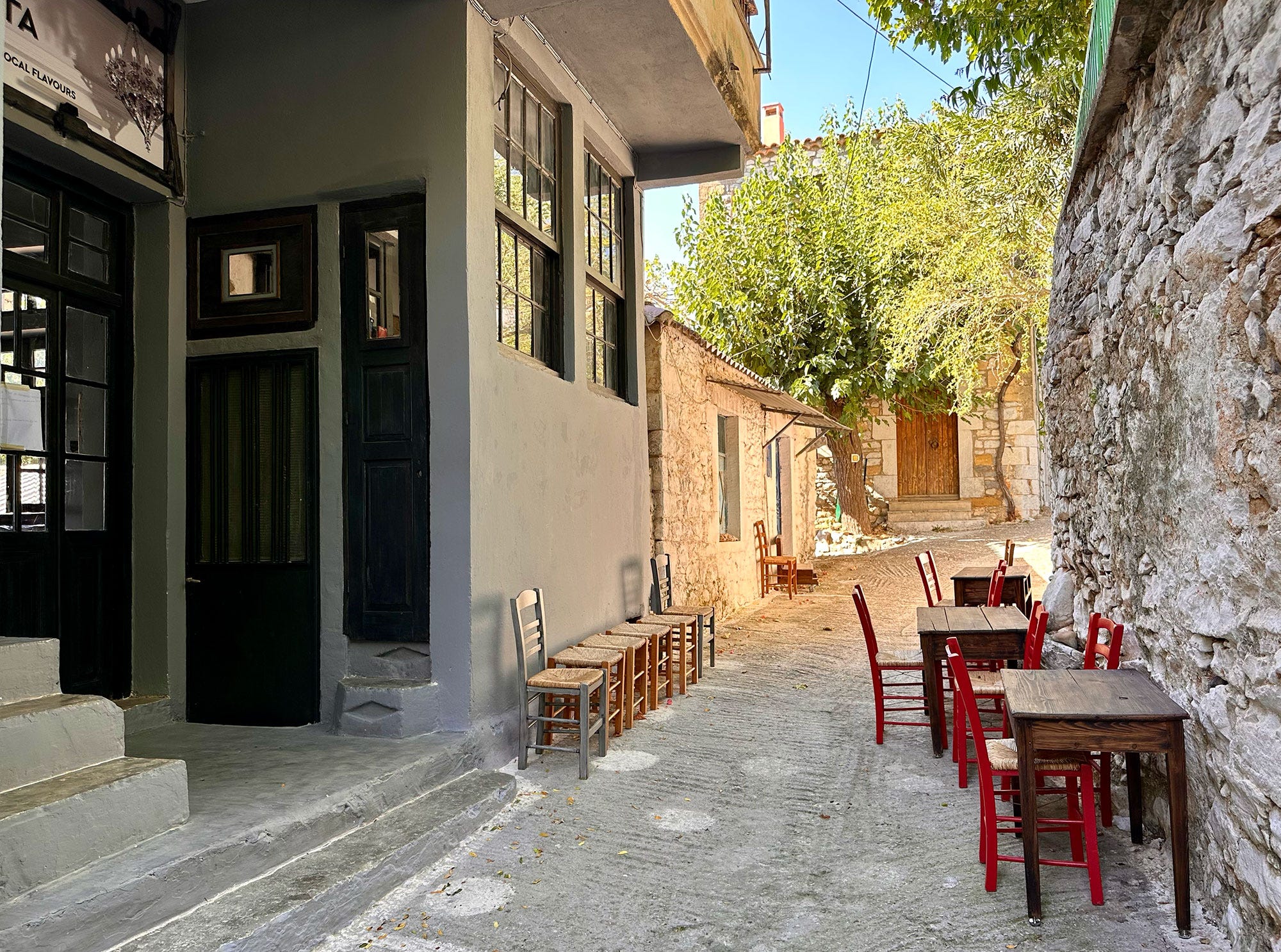
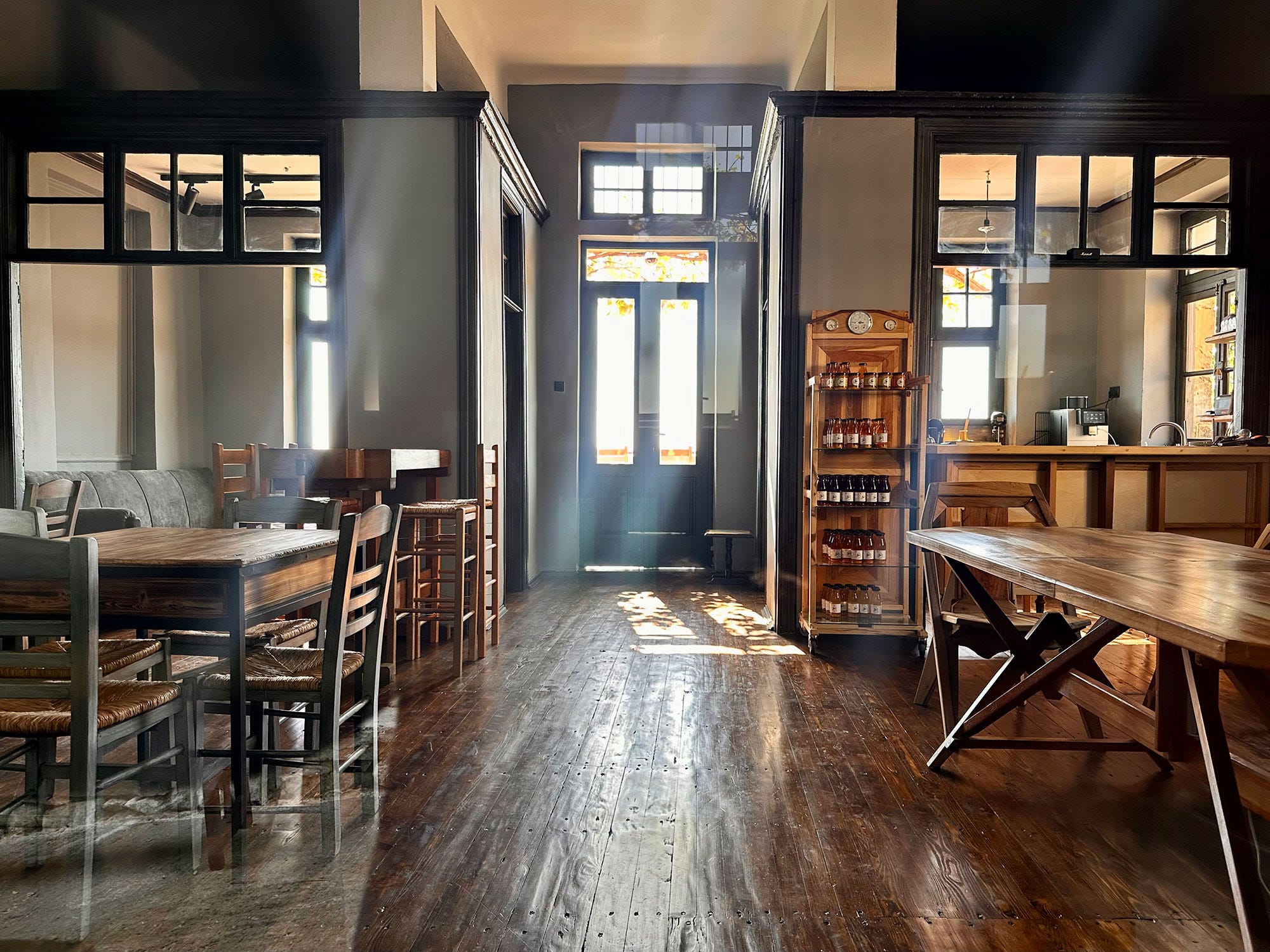
It feels young, a little unrefined and naïve, but not every idea needs a dot-com business plan. Importantly, it was wonderful to see young generational blood breathing life back into what currently is, for the most part, forgotten.
The Quest for an August ‘Not-Busy’ Beach
We jumped in the lawnmower heading for Foneas Beach – a pebbly cove that scores a credible 4.7 Google stars across 2,800 reviews. I’d seen it profiled on a few Mani Peninsula blogs, with photos of a picturesque beach and an impressive rock formation in the middle, jutting out of the sea.
It sounded wonderful.
We rounded the corner… this beach is definitely ‘discovered’. We squeeze into a small crevasse in amongst the ant trail of vehicles. Walking down the path we’re soon face to face with the high-beam reality of the summer hoards – throngs of umbrellas, and beach chairs fighting for pole position. Slicks of sunscreen lapped the shoreline. Queues of bathers waiting for Frappuccino’s, Souvlaki and outdoor showers. One too many competing portable speakers.
Not quite the postcard.
About turn. We headed home.
Just twenty metres down the road from our Kardamyli Studio is peaceful Ritsa Beach. Fifteen or so patrons, a simple Taverna across the road (sans beats), and a kilometre-long pebble shoreline with bonus gum tree shade to soften the midday heat… no umbrella needed.
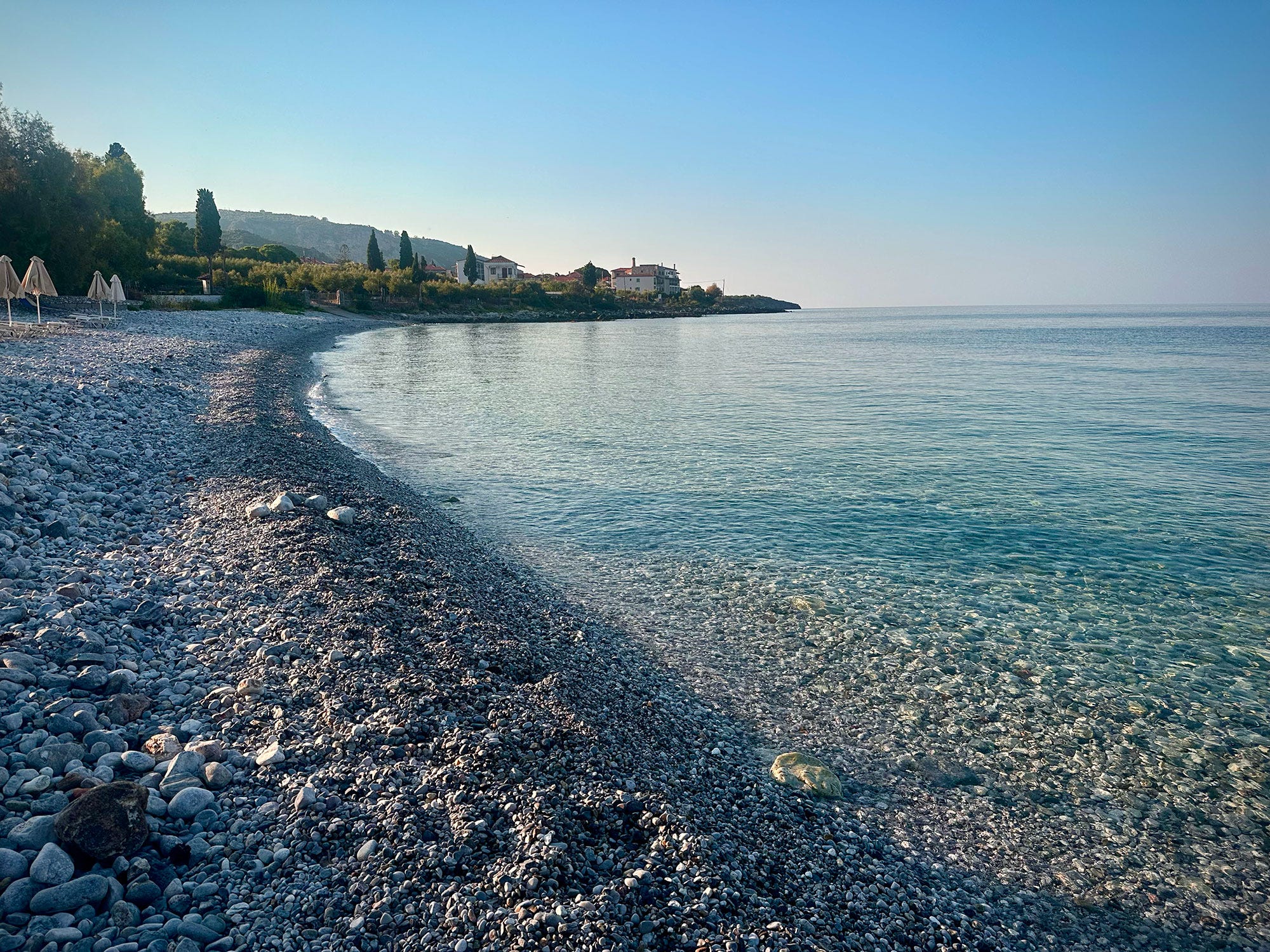
We spent a few hours plunging the crystal-clear waters, pretending to do laps, but more interested in playing with curious tiny fish darting in and out of the rocks below. Sailing boats glide by, locals in hat and sunglasses gathered for daily meets. Cicadas confirming our fine choice.
There’s PLENTY of coastline in Greece. If you’re silly enough (like us) to plan your vacation time here in August, it’s OK. It’s easy to find paradise – drive a few kilometres past Google’s praises, and you’ll find your very own retreat.
Morning Market Mates
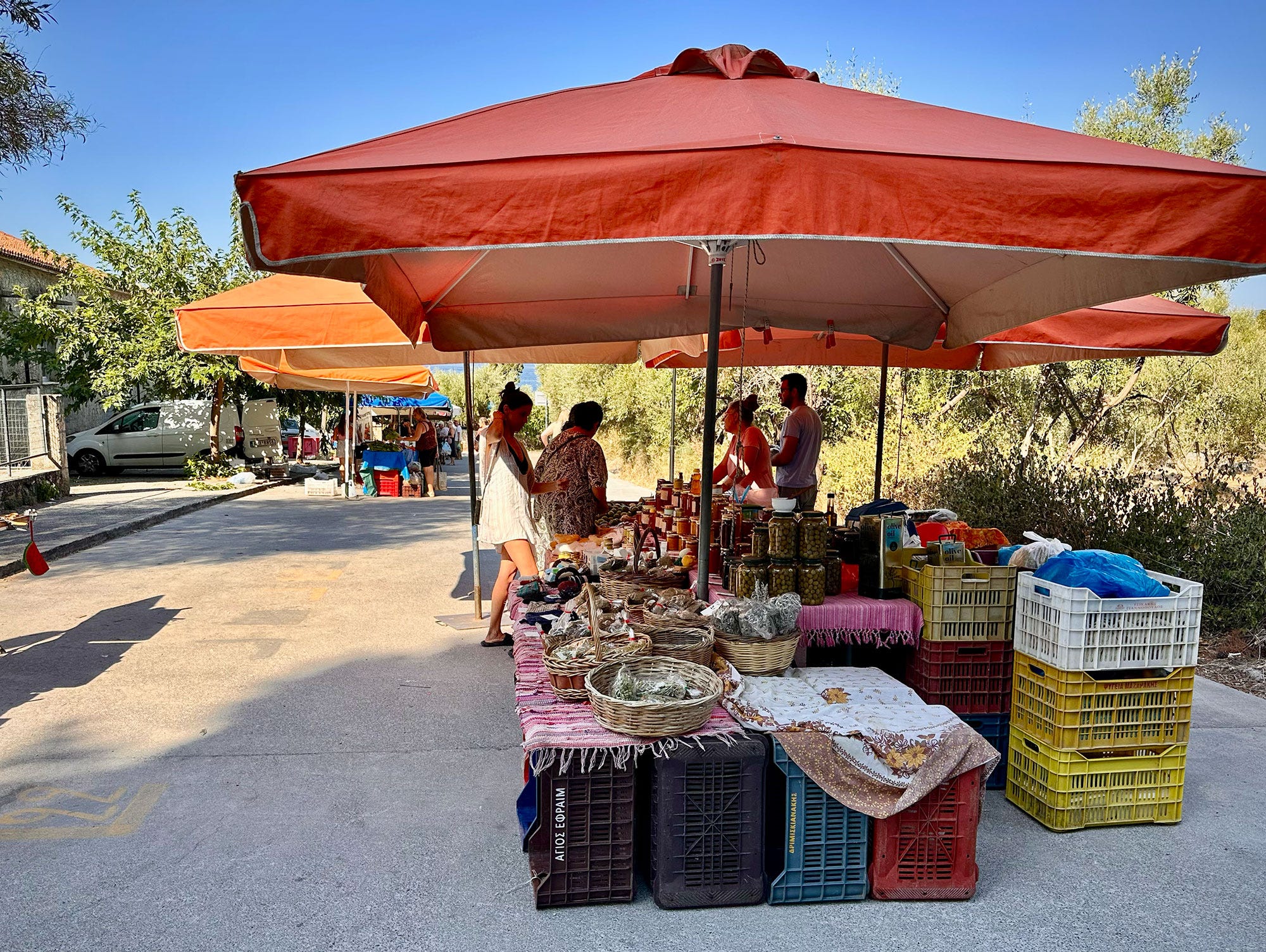
Early morning Summer strolls are magic. A perfect 24C, soft, warm light through the olive trees and bougainvilleas, with locals prepping for the busy day ahead. Even better… it’s market day.
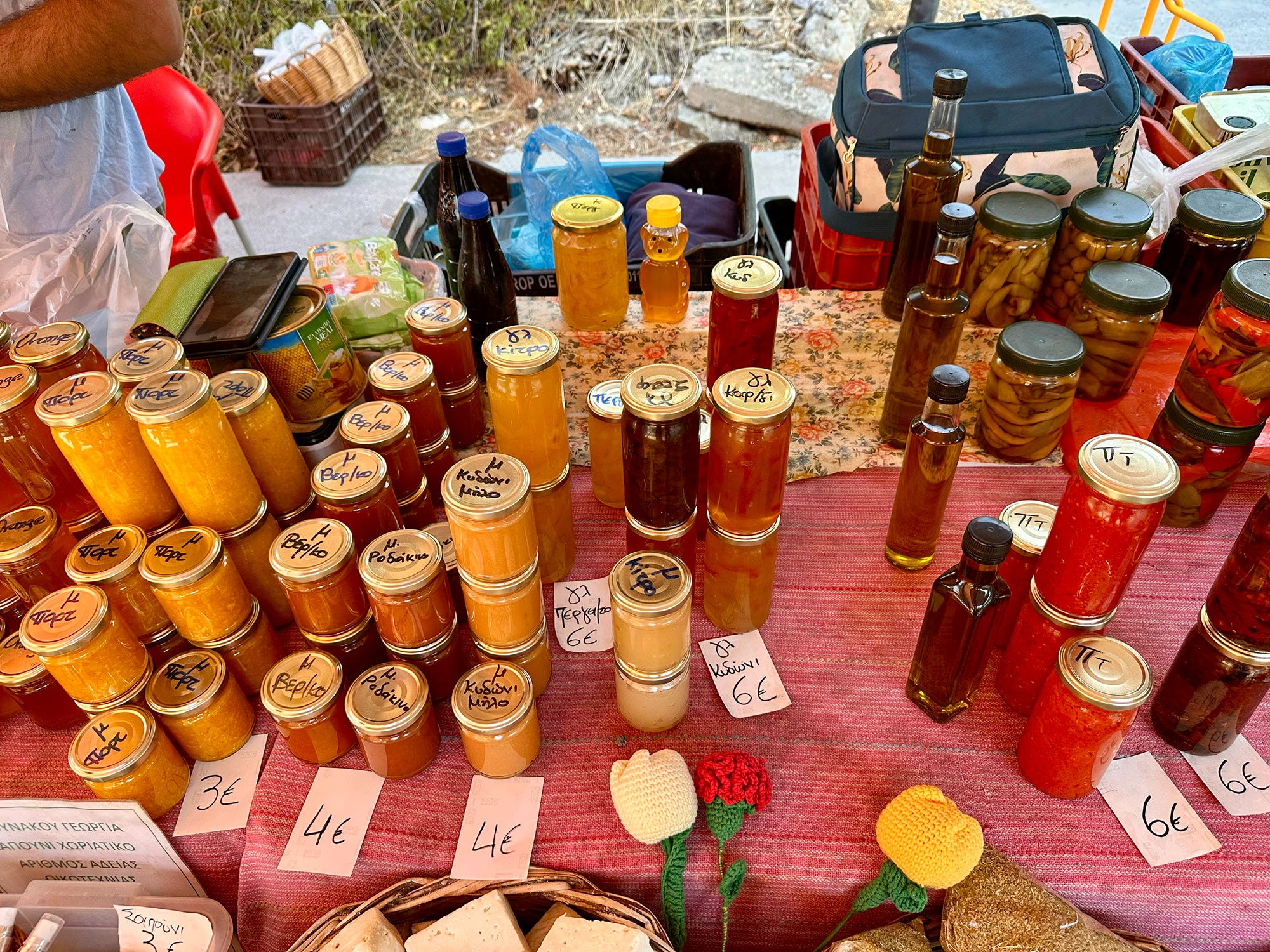
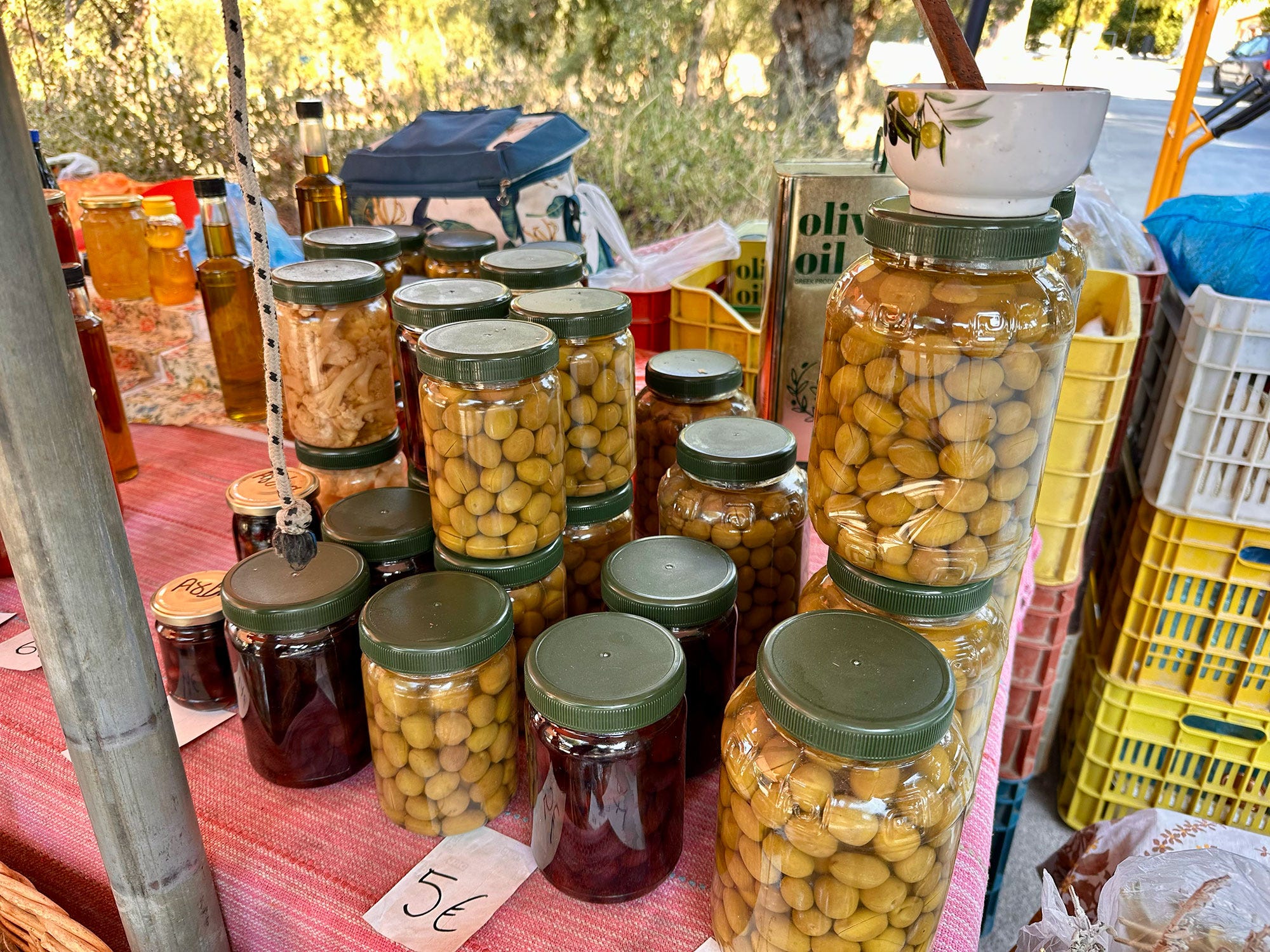
The first stall looks to be a regional farmer. He’s selling stacked jars full of picked and preserved wares. There’s shades of green and black olives, diced okra and cucumbers, cauliflower, red peppers caper leaves – some in oil, others in brine. Salt and condiments too.
The next – olive oil soaps, organic eggs and lemons, a range of jams including watermelon, figs, apple, and orange, as well as fragrant thyme-infused honey, grape reduction (used in cooking) and mountain teas.
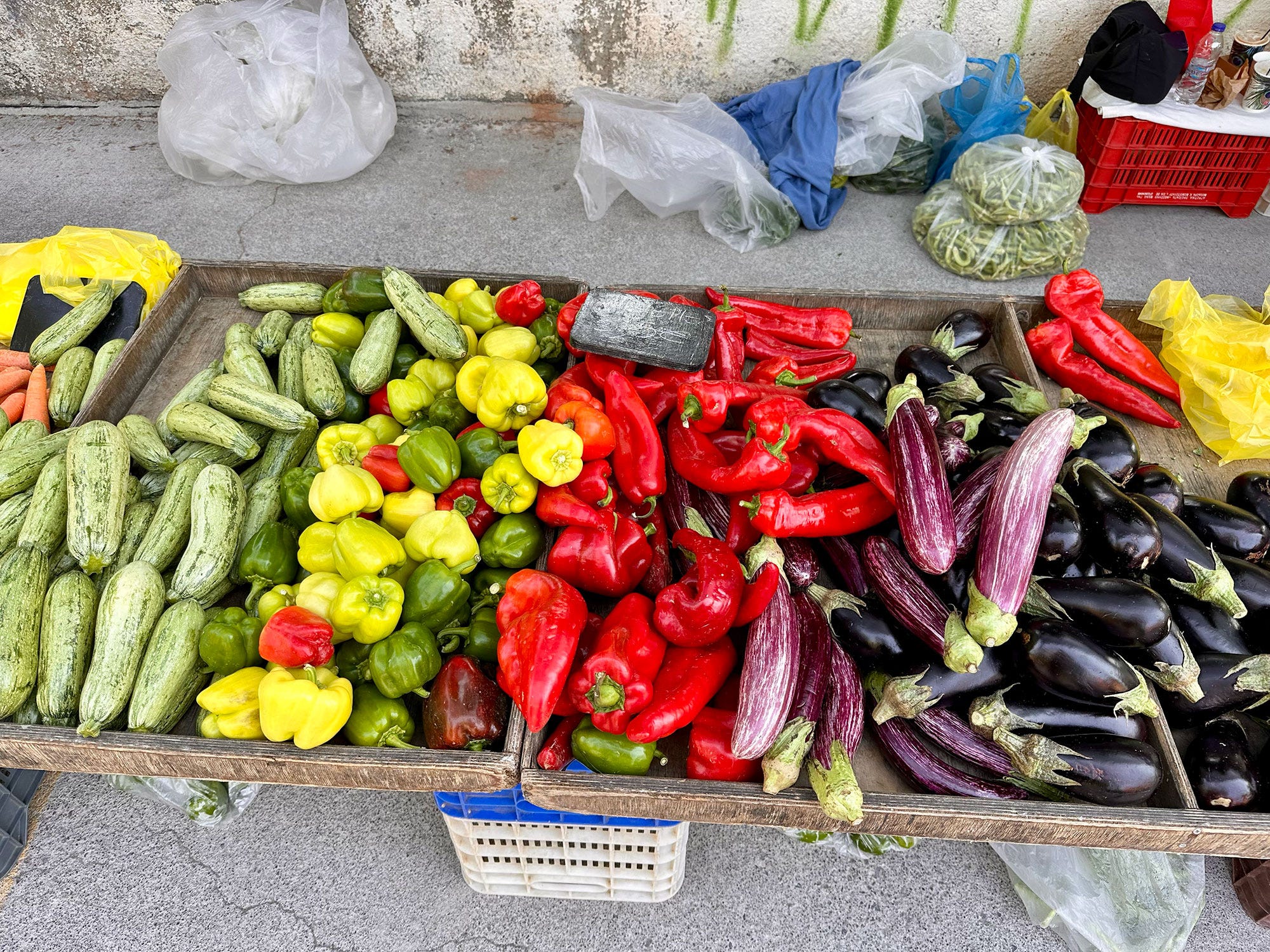
We head over to the seasonal fruit and vegetables. I’m deep in tomato world when I hear “I remember you… Pylos!” It’s the girl who served us last week at our previous stop, happy to bump into us again in Kardamyli.
“You get around!” I jest.
She grins. I think she understood me.
Just call me the Peloponnese market stalker.
Bags full we check out for a very fair twenty Euro. A Greek Salad the night before was ten. More than enough here to feed an army of two for the week.
Late Night Souvlaki
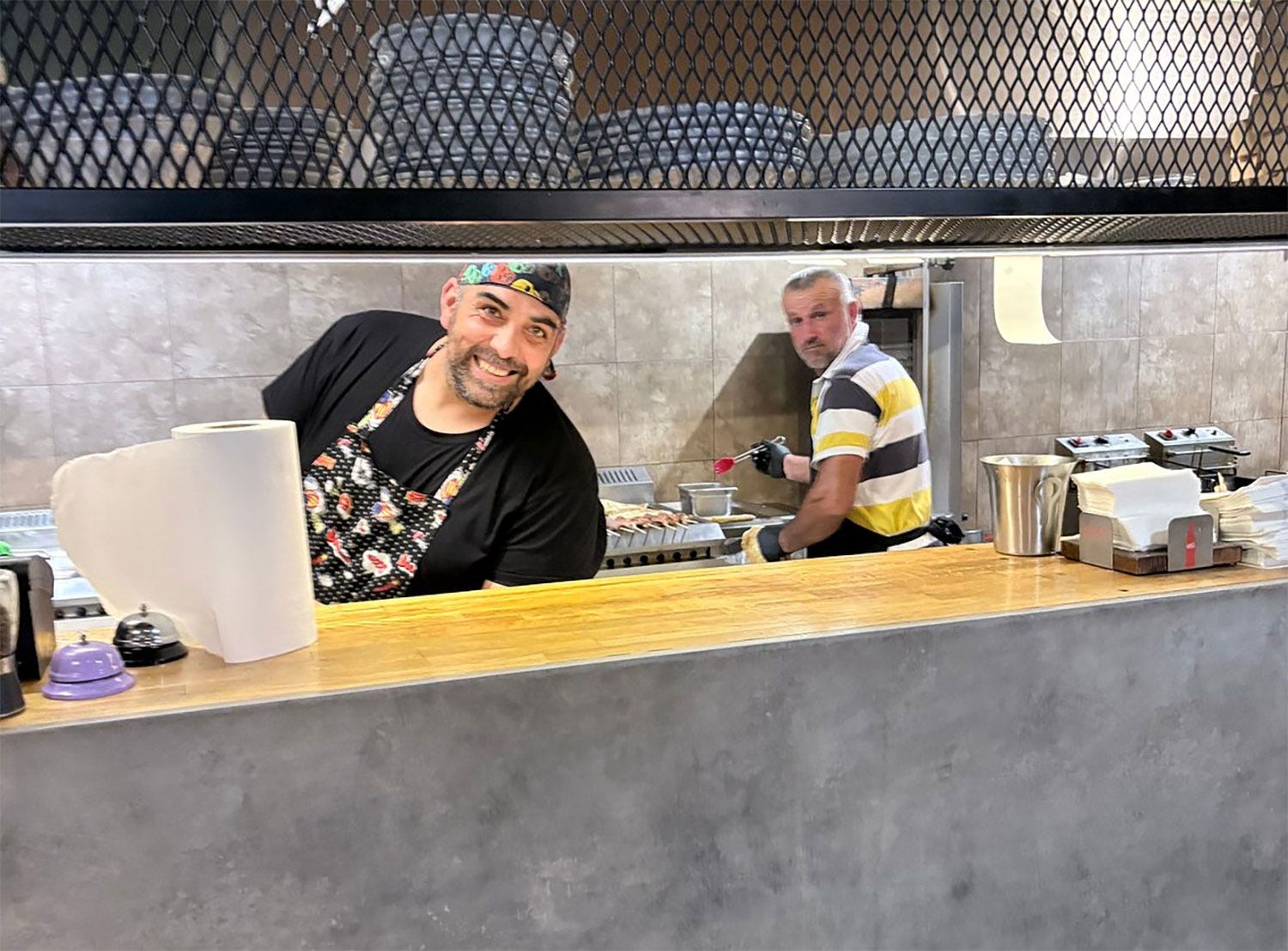
A small wooden staircase leads us to an enchanting festoon-lit olive grove, with odd furniture scattered here and there amongst the trees. Two sweaty, heavy set Greek lads are flying up and down the stairs of Babis Handmade Souvlaki, balancing trays and serving up grilled meaty plates for hungry late-night diners. They artfully dodge street traffic, back and forth… and back again to the bustling kitchen across the road.
This place is popular. We arrived at an apparently early 8.45pm, lucky to nab a table. By 9.00pm, it’s full, with four ‘foaming at the mouth’ family tribes awaiting tables.
In Summer, Greek kids rarely go to bed early.
Back home the likes of gyros and souvlaki are typically considered ‘fast’ food, or something you grab post-clubbing at 4.00am – an on the way home carb/protein/fat fix. Here it’s different. A fine souvlaki establishment will have you queuing for hours.
I wander over to the kitchen. It’s prime time busy, but it’s a clean, tightly run vessel. Familiar, comforting aromas of oregano, garlic, and oil. Grills filled with Virgo-approved souvlaki administration – sticks of pork, chicken being artfully flipped and shuffled.
We order two ‘everything’ plates – each loaded with a crunchy shredded salad of cabbage and carrot, dressed in a simple but decent olive oil and salt… no acid. There’s grilled bread wedges drizzled in (more) oil and oregano, the obligatory chips, and of course the souvlaki sticks. They’re perfectly charred whilst still tender and succulent. Full of flavour.
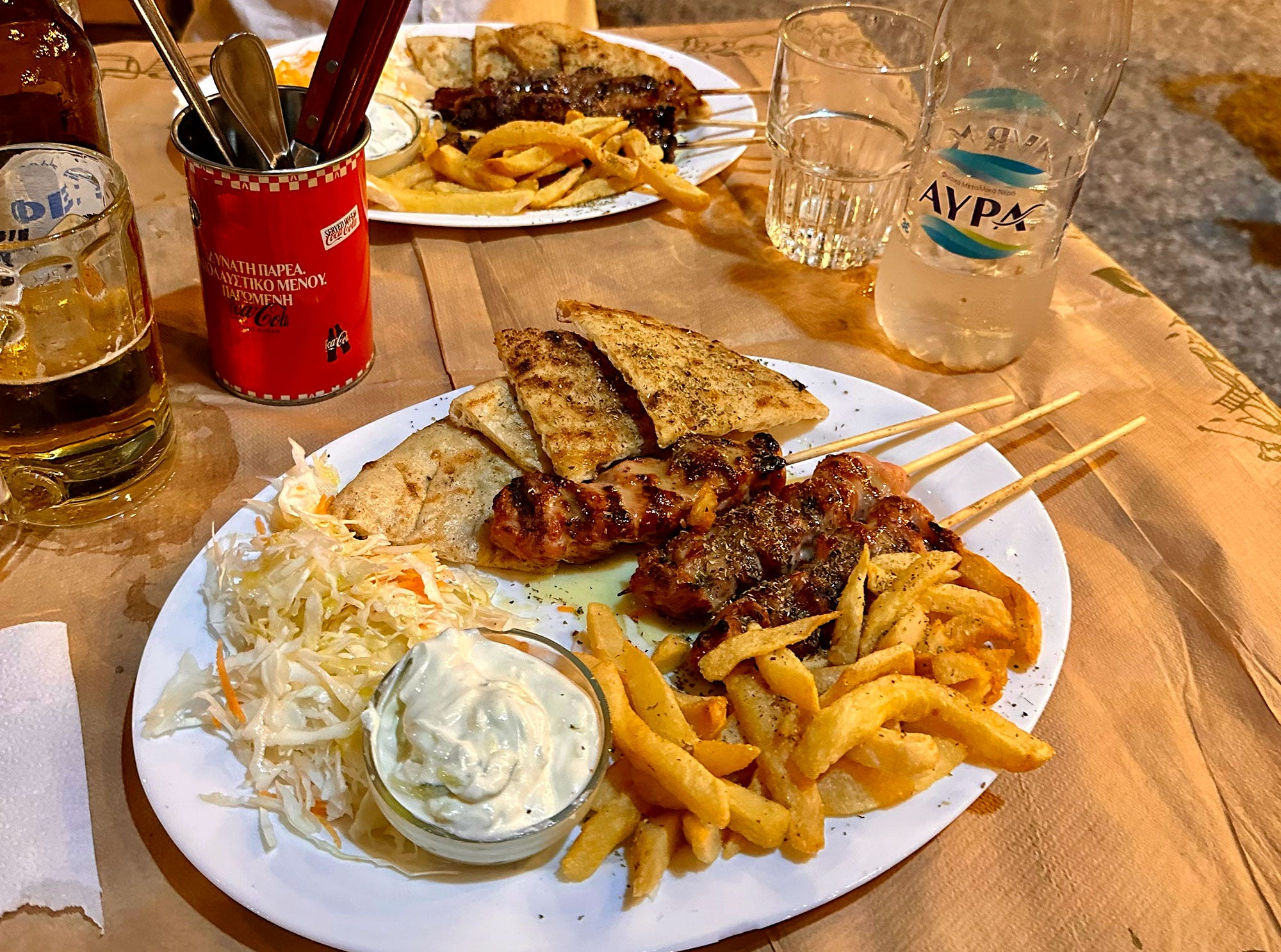
Polished clean and washed down with beer.
Burp.
It’s still an ‘early’ 11.00pm. We wander up the road for a frozen yoghurt at Lolas. The place is pumping, not even a hint of a wind down with the court-yard lit in an interrogating flood of cool white globes. Can someone please brief the Greek light administration on the comfort of warm-white?
Close to midnight we yawn our way home. As we pass the town square there’s twenty or so kids with their dads, playing their first-half match of football.
These guys are just warming up.
Shared Moments
Best eats:
Old Kardamyli Taverna – Talented Head Chef Panagiotis Kikentzis celebrates local producers in his traditional-inspired cooking with a signature twist. This must-book outdoor Taverna sits next to the beautiful Old Kardamyli Town. There’s Olive Trees draped in more festoon lights (It’s a thing in Greece) and the place is quietly humming with charming, friendly waitstaff happy to chat. There’s not an empty seat in the house. The standout dish? Grilled string beans with tomato confit, roasted pine nuts, mint and grated Mizithra Cheese. I mean hello…YUM.
Home-style Greek Okra – I’ve spotted this in season at the markets, so this week I dived in for the cook up. My mum used to love this slow-simmered dish known as ‘Bamies Laderes’ – its slippery, shiny texture so indulgent. Okra comes to life with simple accompaniments of garlic, tomato, onion, and of course feta cheese, glugs of olive oil and a chunk of bread to serve. Treasured family memories.
Best ‘worth the effort’ moment:
Travelling with playing cards. Solitaire is my new phone-free-friend. Every time I play it reminds me of my Yia Yia. At family gatherings she would sit at the dining table and play a few rounds, a brief pause, away from cooking and cleaning, after a houseful of grandkids tornado’d her house.
Flat point:
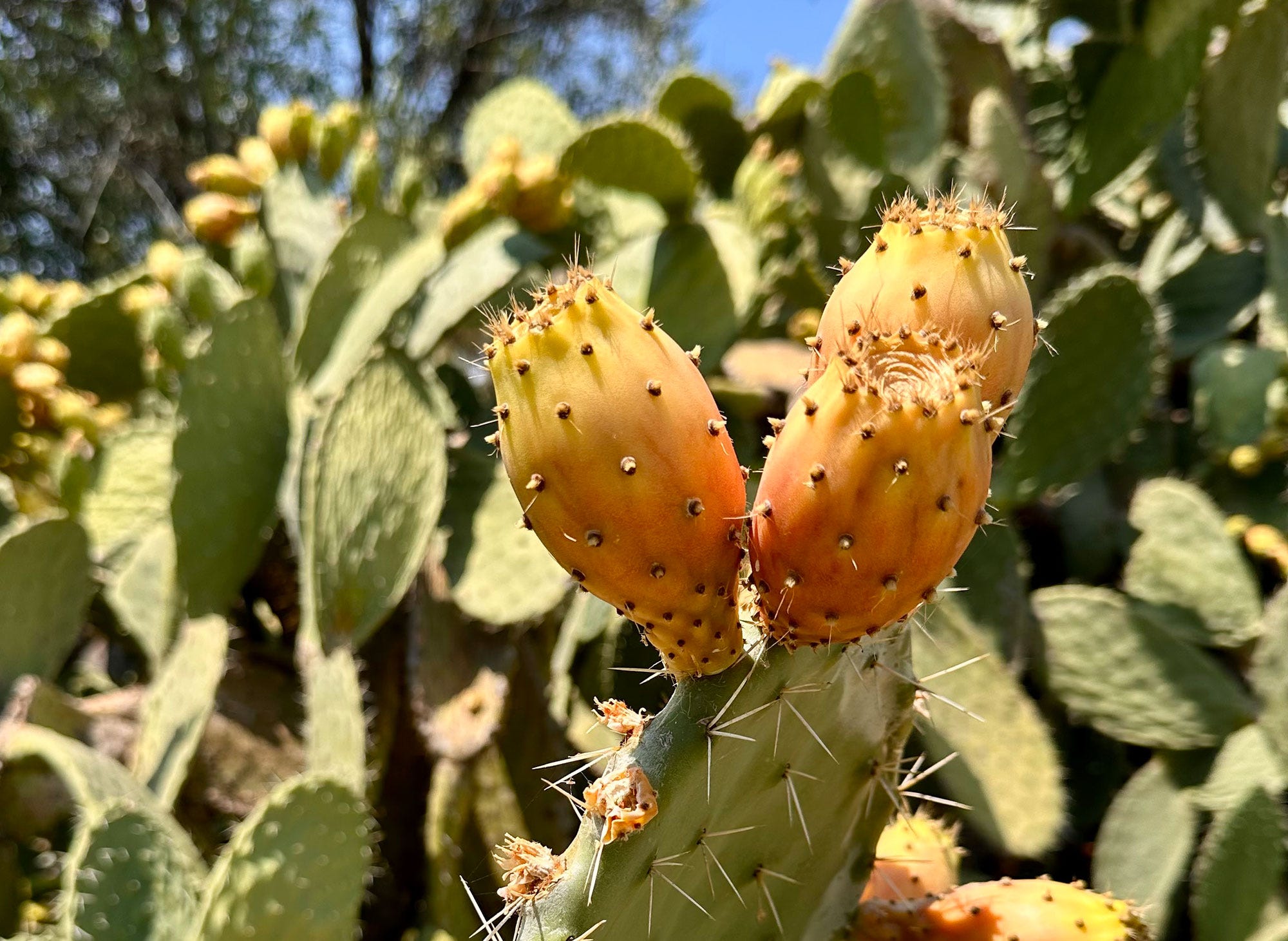
Thinking I could harvest cactus fruit – shirtless, with tongs and a knife. I’ve paid the price, spending the last 48 hours (ongoing) removing glochids – those fine, barbed needles that detach at the slightest disturbance when trying to harvest. Not OK! I now know why there’s so much unharvested ripe fruit around town.
Cultural observation:
Back home in Australia we head to the beach early to avoid the intensity of summer. The Greeks start arriving by the truckload after midday, ready for the afternoon bake n’ burn. Olive oil included.
And… onwards! 💚
Cracking read Josh! Felt like I was there with you guys embracing the smell of the “fragrant” bins 😂 and yes can totally relate with the hazy 4am felafel stands in Australia! You definitely capture the similar experience we had in Greece.
Love it Josh. I confess I'm a super harsh critic of anything written in Greece but I love the rhythm and wit mixed with reverance and reality in this piece. As well as a fine piece about Kardamyli in August it's a great piece of writing & if you care for my opinion. (I think it's nice to give feedback when most of us aren't professional writers - I think - but are full time readers 😉)
I also found Exochori so quiet that we were 'sneaking' and whispering. We felt absolutely that people were watching us! Maybe from inside what appeared to be abandoned buildings 😂 but how intriguing about the new cafe.