


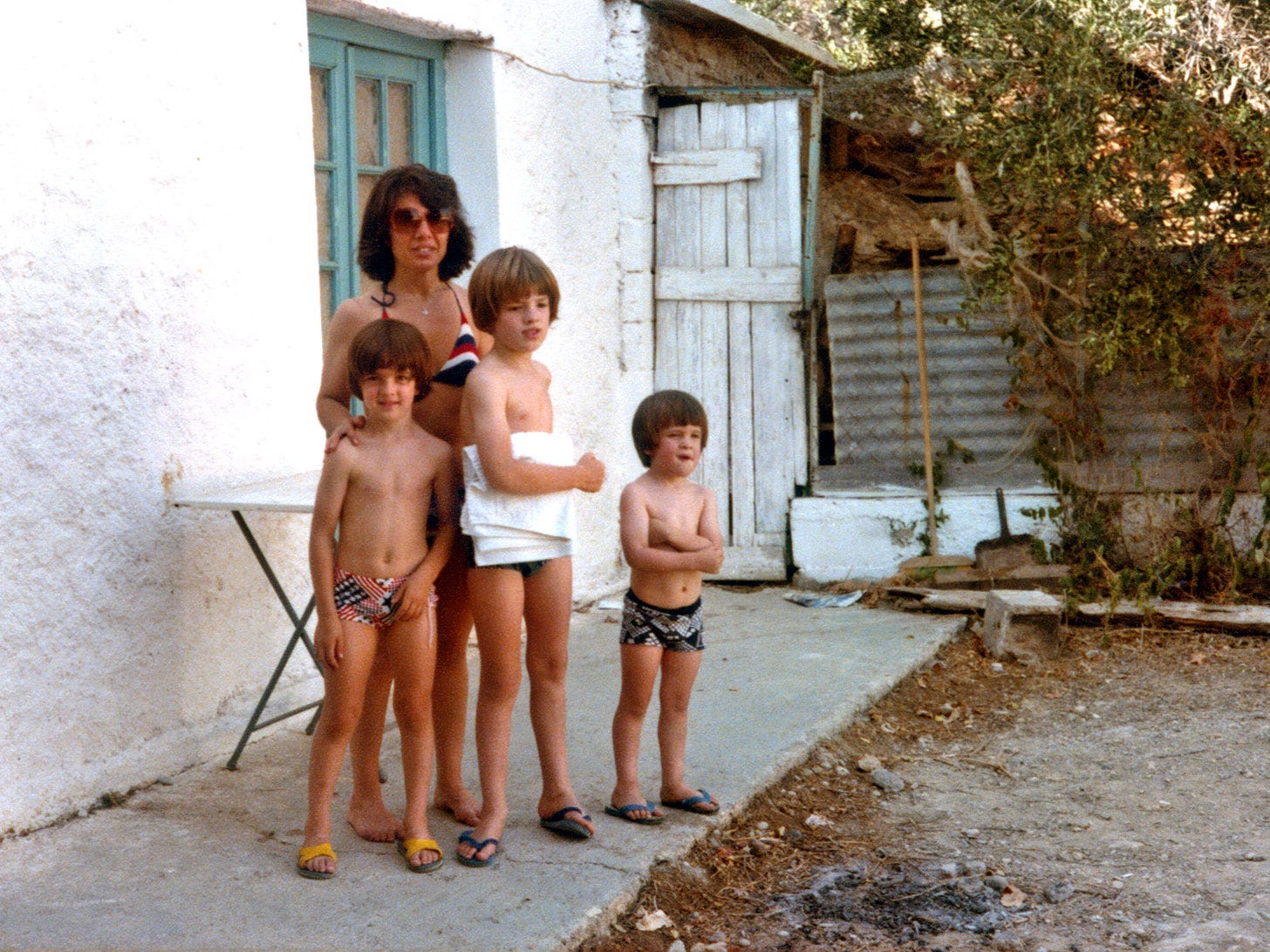
My first memories of Kythira exist as ‘moment bubbles’ – from a family trip when I was eight years old.
A bumpy flight to the island from Athens, face-squashing squeezy hugs from strangers, loads of splashy swims, Mum showering her boys under the backyard hose, Dad trying to teach us line fishing, and lots of devoured, home-cooked Greek food.
My grandparents on my mother’s side were born sixteen years apart in Kythira. Michael Locos, my Papou (grandfather) in the small village of Aroniadika in 1906. Katina Andronicos, my Yia Yia (grandmother) in the even smaller village of Milapotamos in 1922.
By the time I met them in the 1970s, they had immigrated to Australia, survived an arranged marriage, run several milk bars in outback Charleville and big-city Brisbane, and had four now grown up children. Their lives were well-entrenched in the Australian multicultural way, but Kythira was still very present in their hearts – the strong bond of family, the importance of time spent together, their local dialect, random outbursts of emotion, live music, and of course a love of traditional Greek food.
Kythira in the Early 1900s – My Yia Yia
Katina was brought into the world in her Milopotamos family home. The midwives assisting her mother thought she was still born, so she was left alone on the floor, on a pile of rags, as they tried to comfort her mother. Fortunately, someone noticed a movement from her tiny body. She was alive! She was quickly washed and wrapped, and handed back to her mother, to be snuggled and welcomed into the family.
Growing up, Katina would often skip school without concern from her mother. She preferred taking her goats for walks to the hills for feeding. Sometimes she’d bring the neighbour’s goats along too in exchange for a garden fresh cucumber, a handful of sweet, dried raisins or a Greek biscuit. The animals returned home without her guidance the next morning, ready for the milking.
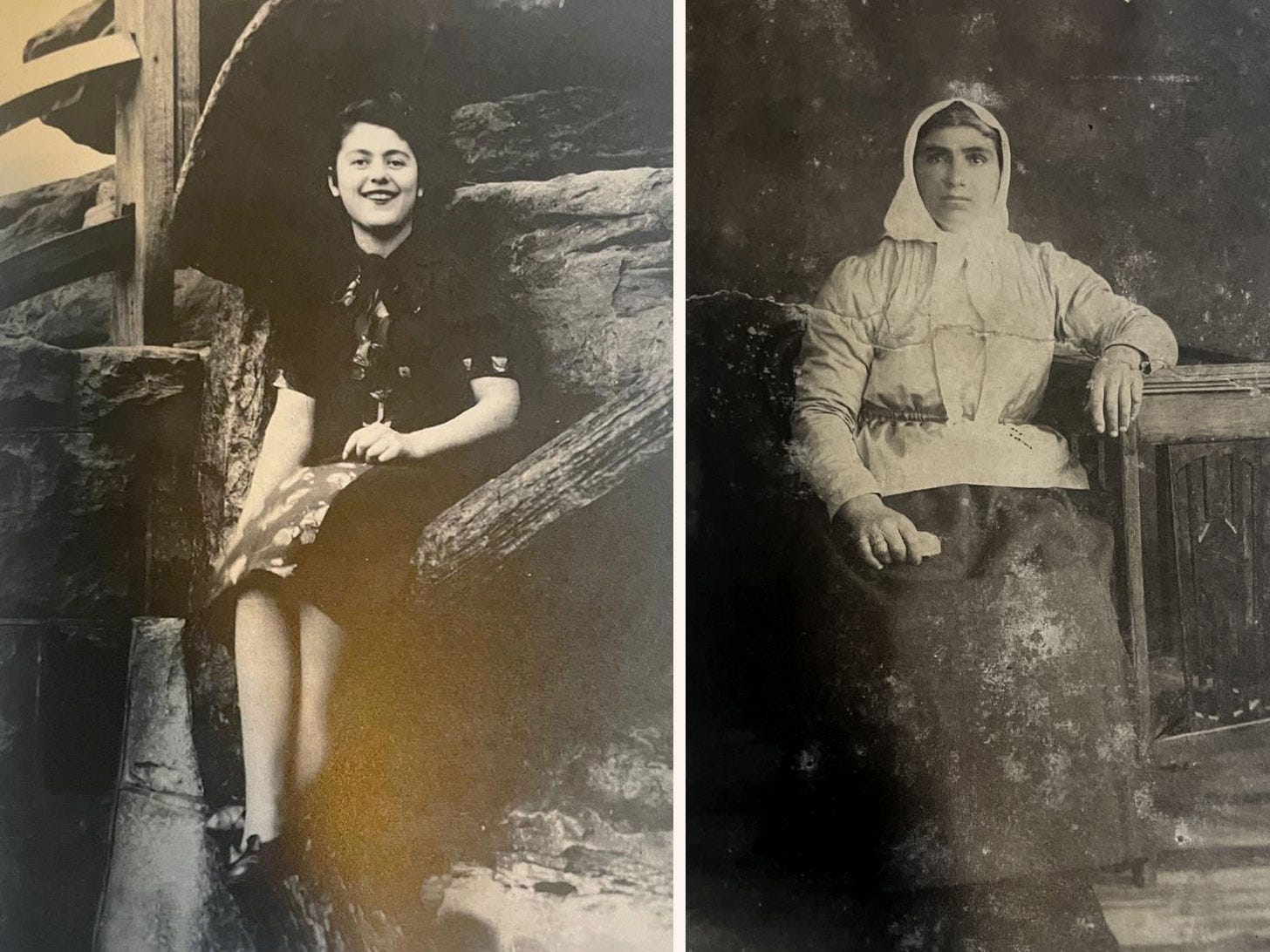
Her family grew most of their own fruit and vegetables including potatoes, tomatoes, eggplants, cucumbers, okra, peppers and onions. They would forage the surrounding landscape for wild, edible greens like vlita. They baked bread in a shared village oven, made fresh Mizithra cheese from goat’s milk, and had olive oil, olives and honey available from the surrounding farms. They lived close-by to a communal well, so fresh water was always on hand.
It sounds like the Greek Island, ‘Blue Zone’ dream, but winters were bitterly cold and windy, and money was scarce. Life was a struggle. Her mother was so poor that she couldn’t afford shoes for Katina – she lived a year barefoot.
In summer she travelled across the island with her mother by donkey, in the baking sun, to the coastal village of Avlemonas. She would spend the month there with her grandparents, swimming in the calm, pool-like waters of the rocky inlet. Life was simple. She slept on the floor with just a blanket, and they ate seafood her grandfather was able to catch.
In amongst this struggle, there was a loyal community and genuine friendship. She would miss these people and this life dearly, soon after arriving in Australia – after a 100-day boat ride from Piraeus to Sydney, in 1937.
Kythira in the Early 1900s – My Papou
It’s been challenging to find the story of my Papou growing up on the island. The facts are scare. I’ve been told he served in the Greek Army, and that after he had migrated to Australia, he returned to Greece several times to visit his mother and sister.
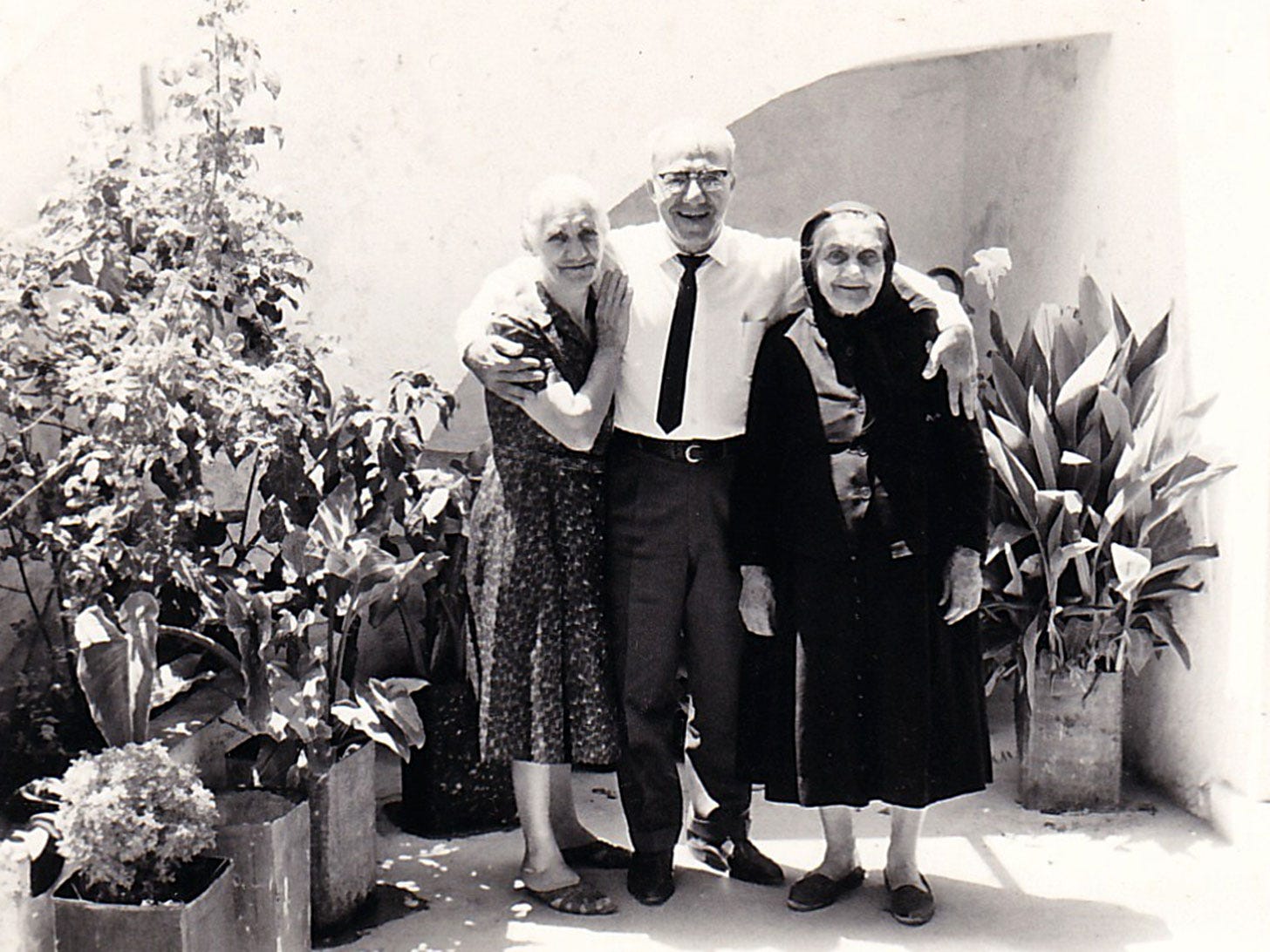
He was good with his hands, and in his youth he trained as a blacksmith according to my Yia Yia. The village of Aronadika was renowned for its talented craftsmen including metalworkers and blacksmiths, who forged equipment for the island’s farmers.
He was also a gifted musician, his first instrument being the Greek Bouzouki, before moving on to teach himself the violin. I’m lucky to have his violin today, which came to me with a shredded bow and cracked timber corpus. I’ve recently has it restored… if only I could play.
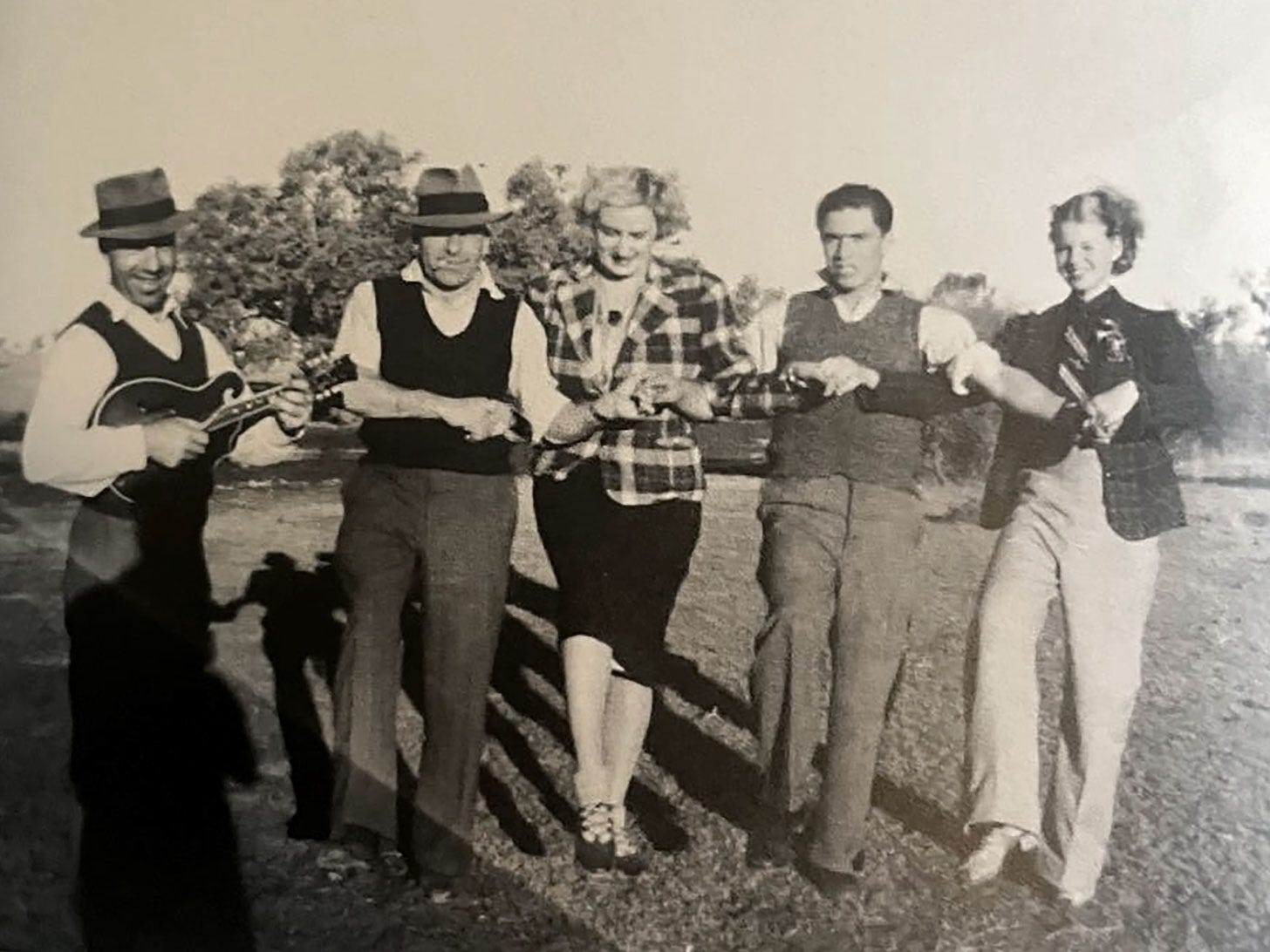
Michael was a proud man of his time, from what my Mum and her siblings have shared. He wasn’t one to talk of his feelings or open up about his life story. I feel he chose a new beginning in Australia, a land of hope and prosperity for his children. A life better than he had experienced.
1979 – My First Trip to Kythira
I opened an oversized, foil-lined cardboard box to discover a mountain of fried, crunchy pastry rolls drizzled in honey, walnuts, and cinnamon… mmmm, Diples.
Sheer, pupil-dilating delight!
I travelled to Kythira with my two brothers, my parents and Yia Yia in 1979. Sadly my Papou had already passed before our first family visit to his home island.
We flew on Olympic Airways in a noisy, rattling twin engine plane. The flight was full except for a copilot’s seat. My Dad explained to the pilot he flew for Qantas, so he was welcomed to sit up front. Soon after take-off, to his surprise… he was handed control of the aeroplane.
Dad was flying us to Kythira!
Fortunately, the pilot took back control of the aircraft on final approach.
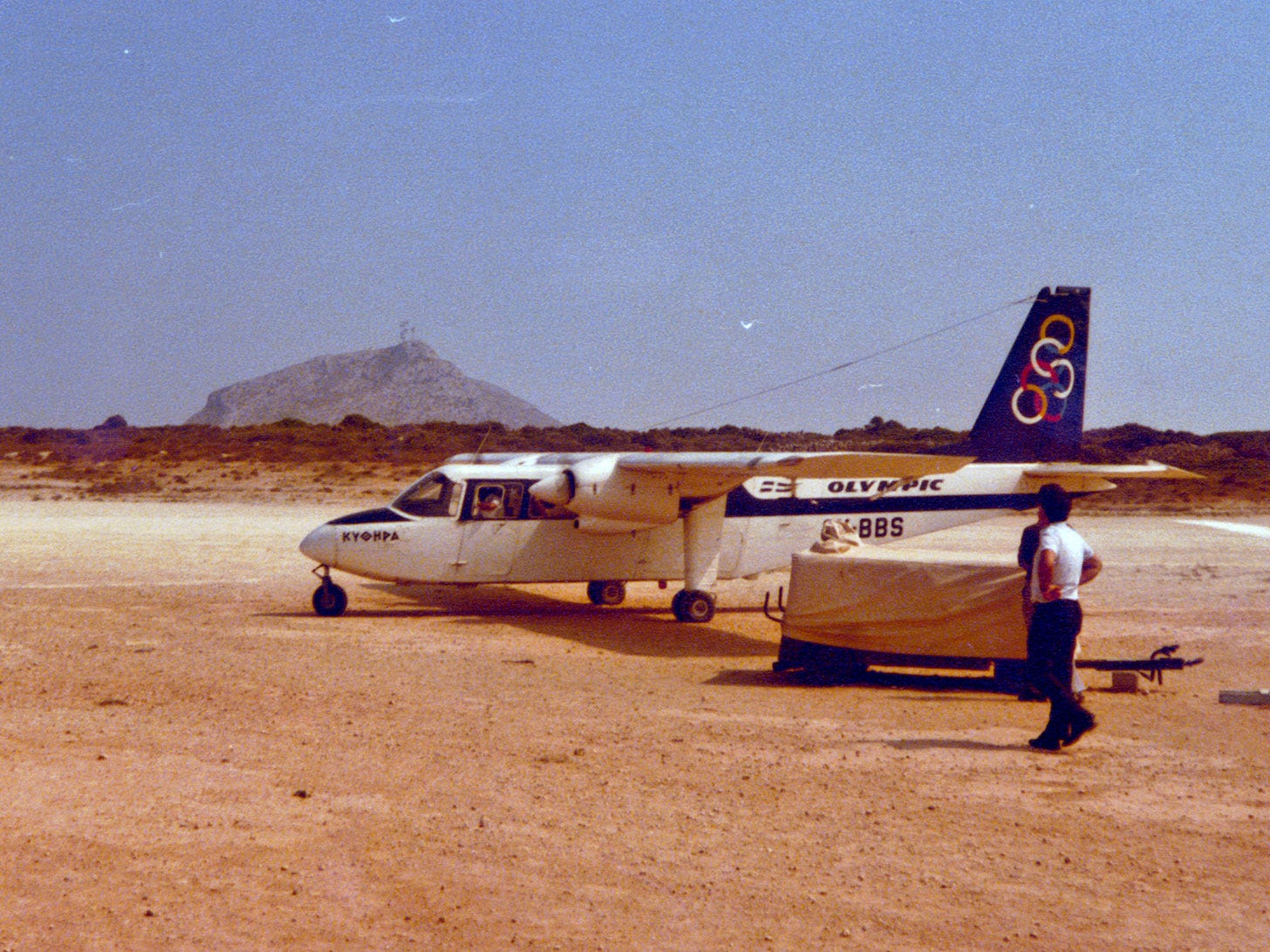
We landed on the dusty runway and were welcomed with lots of hugs, tears and sloppy kisses from people I didn’t know. They dressed funny, and spoke in a language that didn’t make any sense. Even my mum was joining in. So weird!
I remember our simple, everything painted white accommodation near the beach in the coastal town of Kapsali. There were boxes filled with ’feed an army’ piles of Spanakopita, Tiropita, delicious sticky pastries, and icing sugar dusted Kourabiedes delivered by relatives I’d never met.
There was a large, concrete hole in the living room of our Kapsali beachside accommodation. I remember cautiously opening the lid, peering down into the darkness of the house’s water supply.
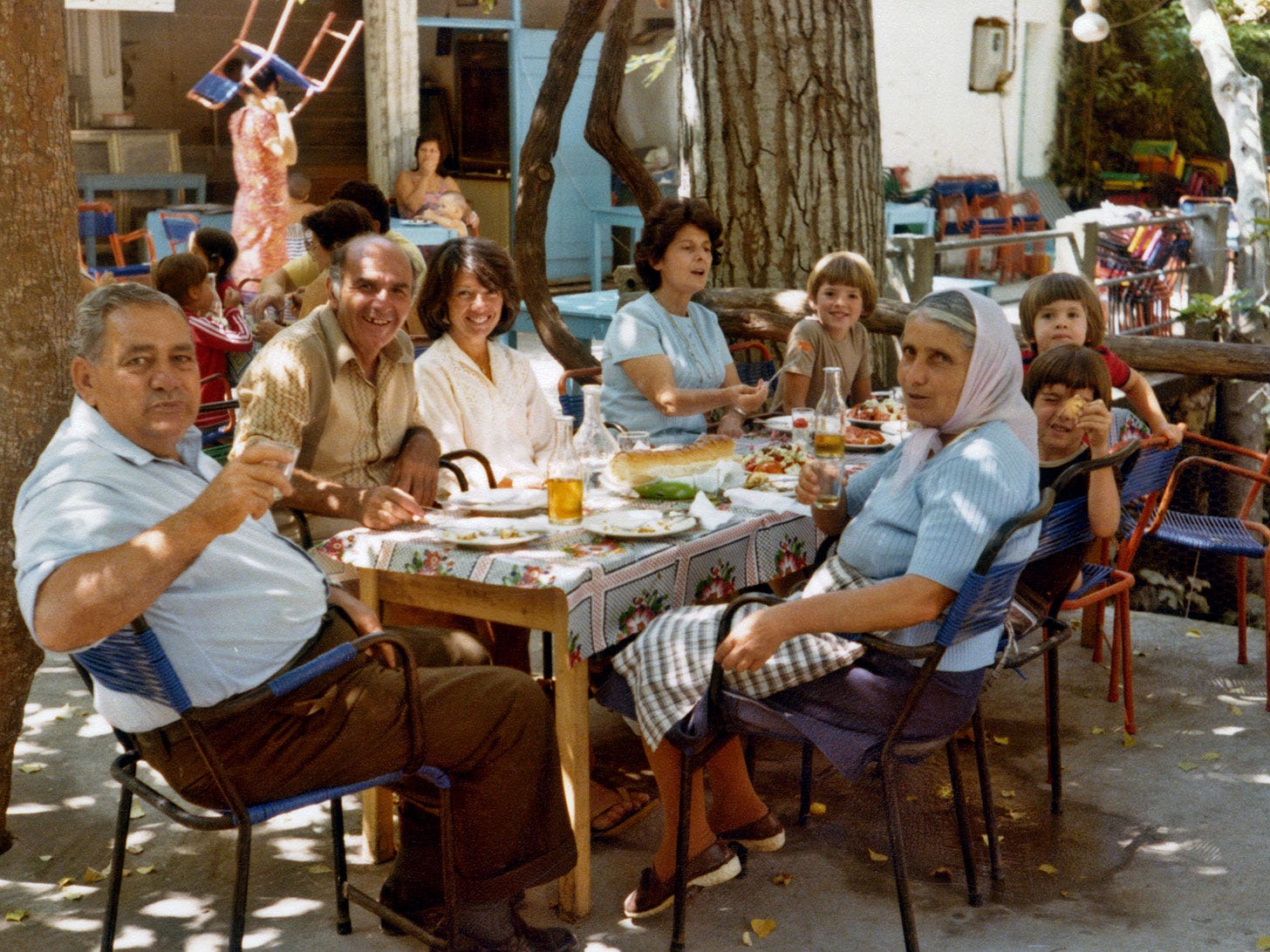
We drove to Milopotamos for lunch. We sat at a long table with my Yia Yia and her sister, eating lots of food under a big shady tree, with ducks playing in a stream nearby.
One morning, Dad took us fishing at the local pier. He had our attention for a good few minutes before we took to running and leaping from into the water below – screaming and yelling with joy, and always a competition, seeing who could touch the bottom first.
September 2026 – a Return Visit
Our year on the road has been planned around spending this magical month in Kythira. The August onslaught have returned to Athens, restaurateurs catch their breath, and locals feel a sense of normalcy – reconnecting with familiar faces, and relieved to have people driving on the right side of the road.
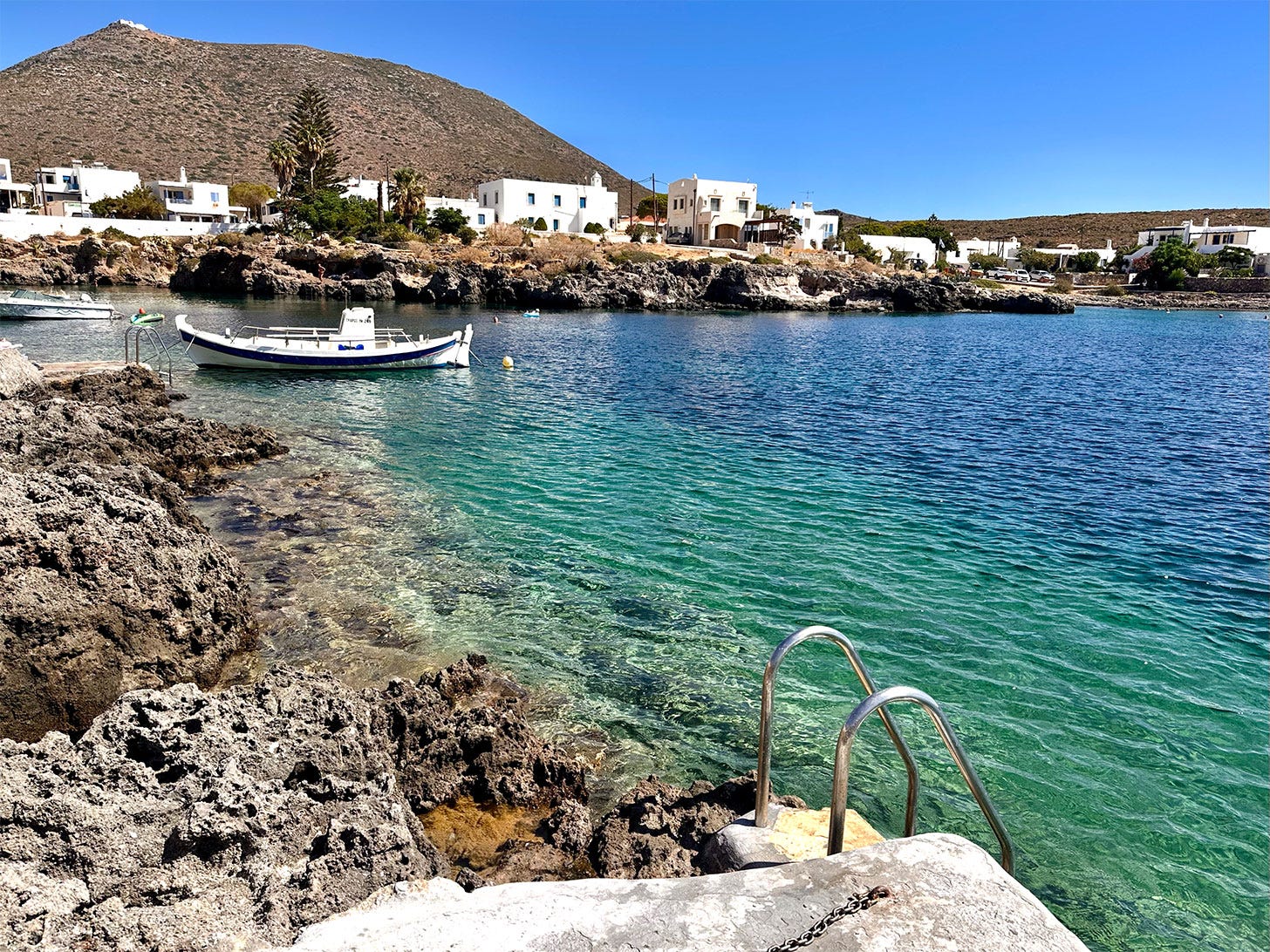
We’re staying in charming Avlemonas, where growing up, my Yia Yia would spend her summers. Today there’s still only a handful of white-washed dwellings hugging this small bay… boojee Mykonos-style retreats are nowhere to be found. Old wooden fishing boats chug in and our of the port. The kiss of a salty breeze. Bleeting goats across the way.
I can see her, swimming, playing and diving in amongst the rocks, with the curious Saddled Seabream chasing her tail.
Joy.
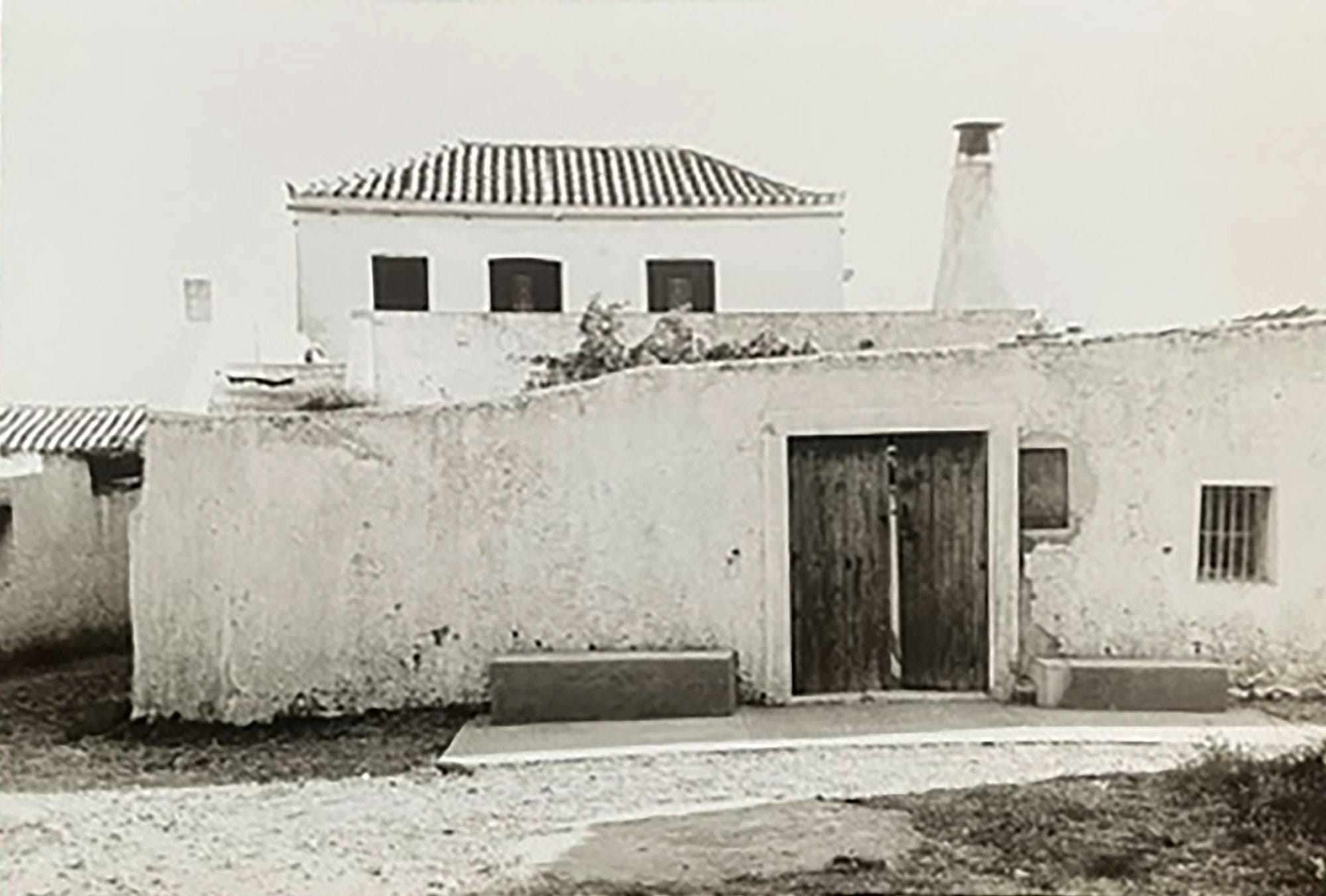
Soon after we arrived, we explored my Papou’s village of Aronidika – a crossroad town frequented by farmers, traders and locals for many years when heading north to south on the island. Though quiet and somewhat dilapidated, with a mix of crumbling and restored homes, there’s a sense of ‘lived-in’ here. Zig-zagging alley-ways, manicured gardens, a freshly watered olive tree, a new stone wall, builders busy rendering a signature hobbit-style home.
I was able to find his restored house thanks to my investigative Aunty. No one was home… but I could peer in from the outside… ever curious to know more of his life growing up here.
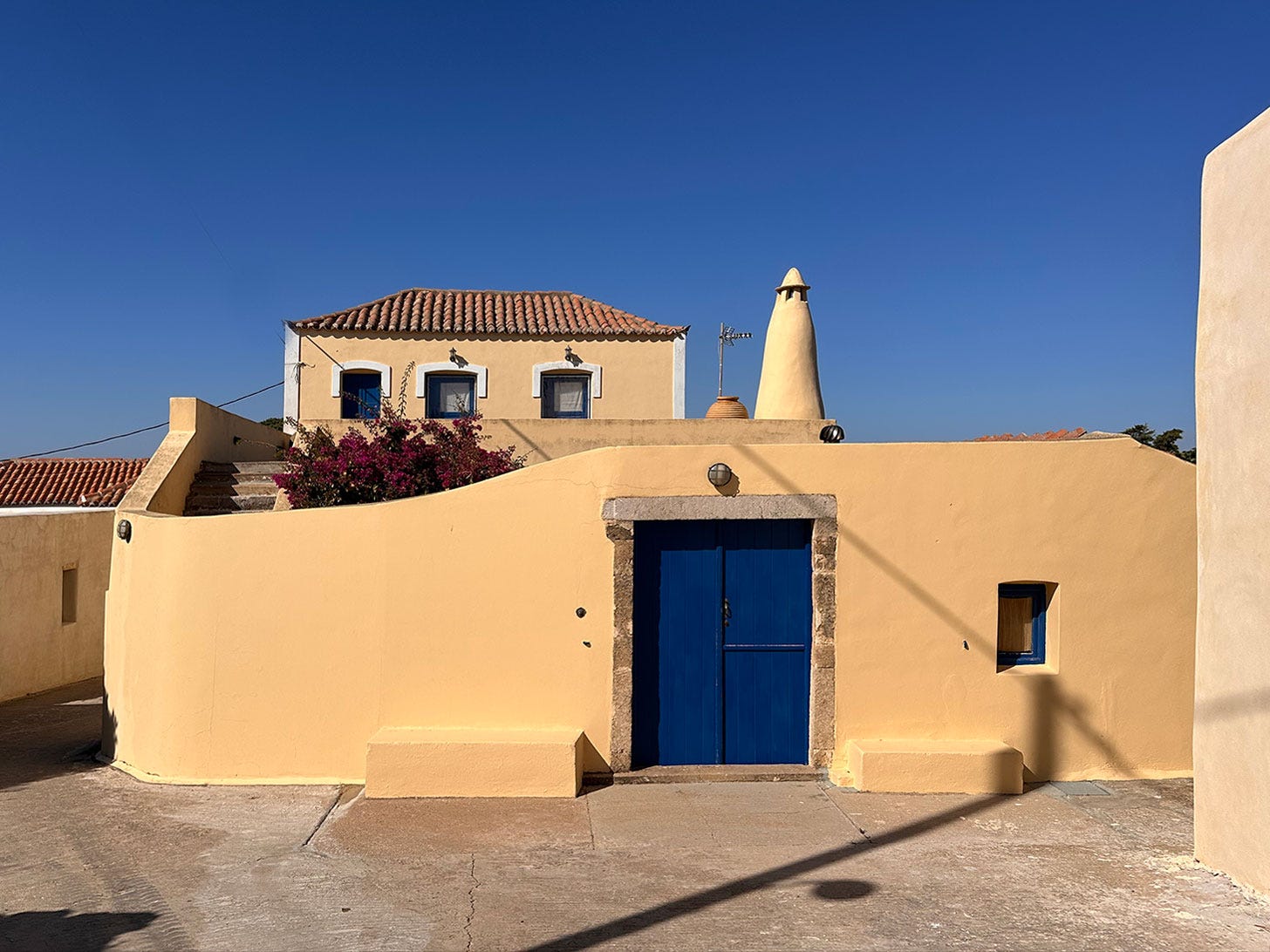
Yesterday we jumped in the world’s smallest car heading west to the town of Milapotamos, the birthplace of Katina. The town is a neatly packed disarray of mashed-up architecture – history’s crumbling past interspersed with more modern, simplified island buildings.
Dry-stone archways with protruding beams of hand-turned timber now support electricity boxes and street signage. Beautiful points in time wait in hope for a love purchase to restore their former charm, but it feels like many of these places will remain forgotten.
Somewhere within these walls you’ll find the house of my Yia Yia.
We took a seat under the sprawling arbour of the huge plane trees, at the same Taverna I’d shared a meal with my Yia Yia, brothers, parents, and other relatives forty seven years ago (Holy moly!). Platanos Taverna is the centre of town where all the important conversations, celebrations and Sunday hangouts happen.
I cherish every return visit here to this day.
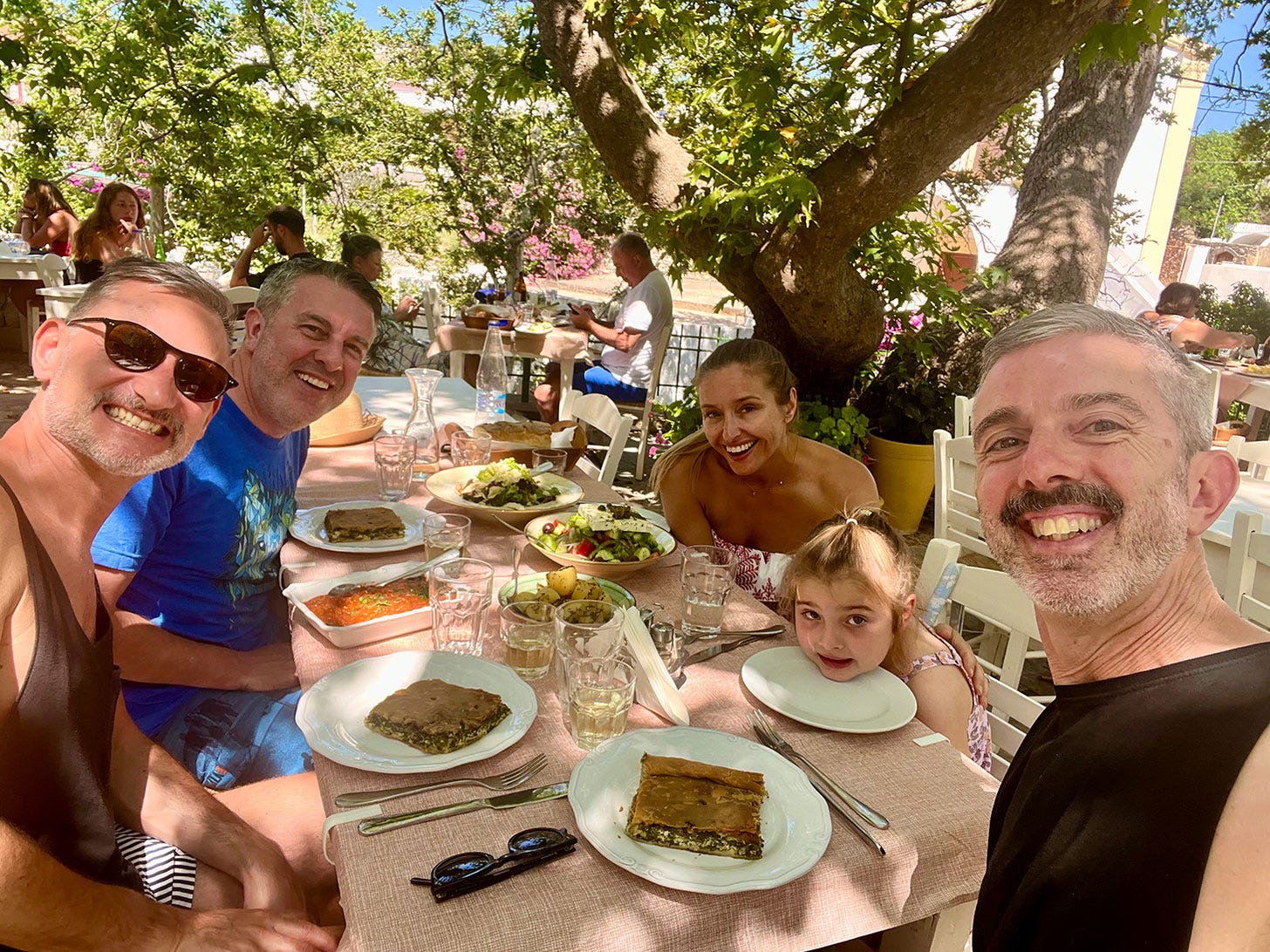
Only now do I have the time to connect with Katina’s youth – milking her goats, picking olives, fermenting cheese, baking bread and cleaning up after ‘toilet-anywhere’ donkeys.
Had it not been for her boldly travelling to Australia at the tender age of fifteen, to meet my Papou who also made the long-haul ocean trip ‘Down Under’ – both not speaking a word of English, leaving their families behind, Katina never seeing her mother again, with only a few simple possessions to their names…
I would not be here today.
. . . . . . . . .
We all have precious, family memories stored away from our childhood. Some of us are able to reconnect with our past. For me, this has meant returning to Kythira, at different times in my life, with family, friends, and my husband to learn as much as I can about the Greek side of my heritage.
This island holds memories of family births, growing up, generational visits, and departures. Across the scrubby plains, beyond the beach cove of Kapsali, you’ll find a small memorial plaque. It was placed there by my brother a few years back to honour my Australian-born, Greek mother, Erofily Diana, who left us in December 2021.
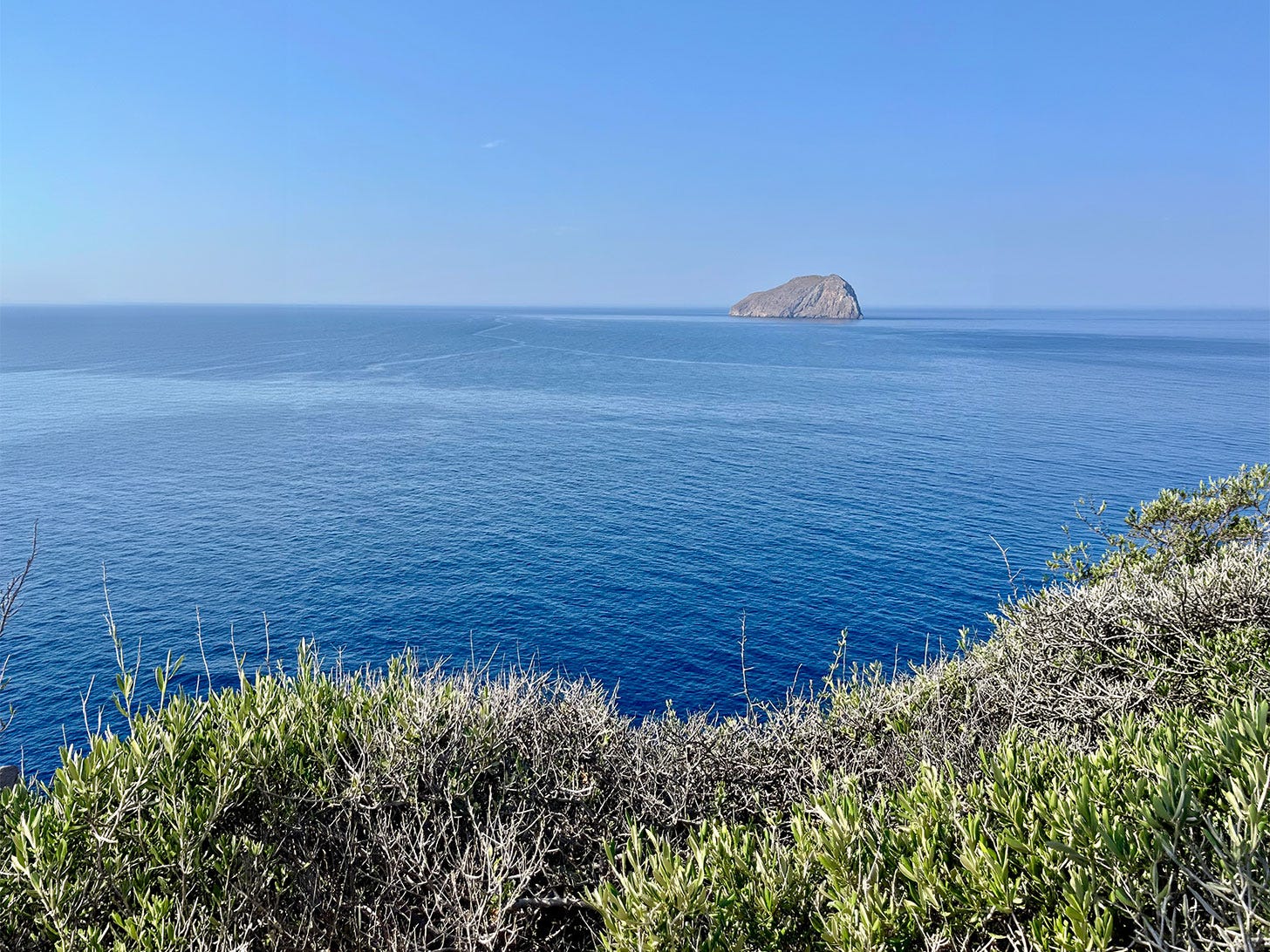
Mum is here with me now, in all my half-Greek-ness, with my Yia Yia and Papou and their spirits, soaring above the Kytherian cliffs, with the most beautiful vista over the Ionian Sea and beyond.
A Note of Thanks
I was only seven when my Papou died, but I was older when my Yia Yia (Grandmother) passed. I never took the time to sit and talk about her childhood. Fortunately, author Gaye Reeve Andronicos interviewed my Yia Yia, and eleven other Kytherian immigrants in her book Twelve Kytherians - Their Life Stories. I have very much lent into her work, to bring Katina’s story to life. For my Papou’s story I have pieced together what I can, thanks to the generous assistance of family.
A final note: Why ‘Little Australia’ in the title of this post? Kythira is often tongue in cheek called Little Australia, because of its strong historic and cultural connection to Australia.
Thanks all again for your love and support. 🧡
While I was too young to remember much of the 1979 trip, we’ve been lucky enough to create so many new memories and bring the next generation to experience the joy of Kythira.
One of my favourite memories was the last day of one of our recent visits, when Annabelle was jumping up and down in the water at Chalkos Beach, giggling and yelling out, “I love Kythira!”. My heart melts every time I think of that moment.
Oh and stuffing my face constantly plays a big part in my love of that place...
We really do love Kythira. It’s a special place for so many reasons.
Great trip down memory lane Josh. Love ya xx
A fantastic read! It must be bittersweet being there.