


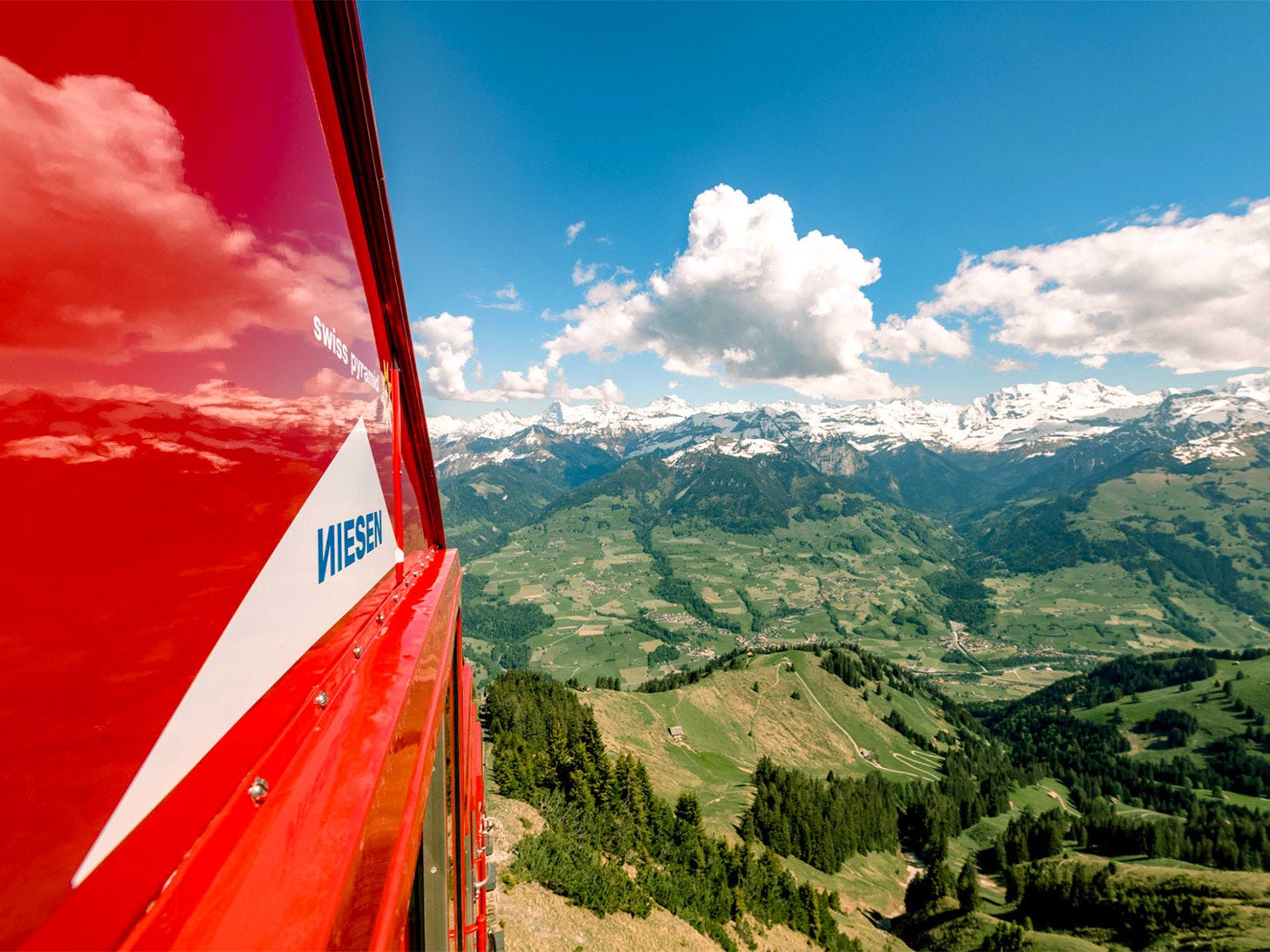
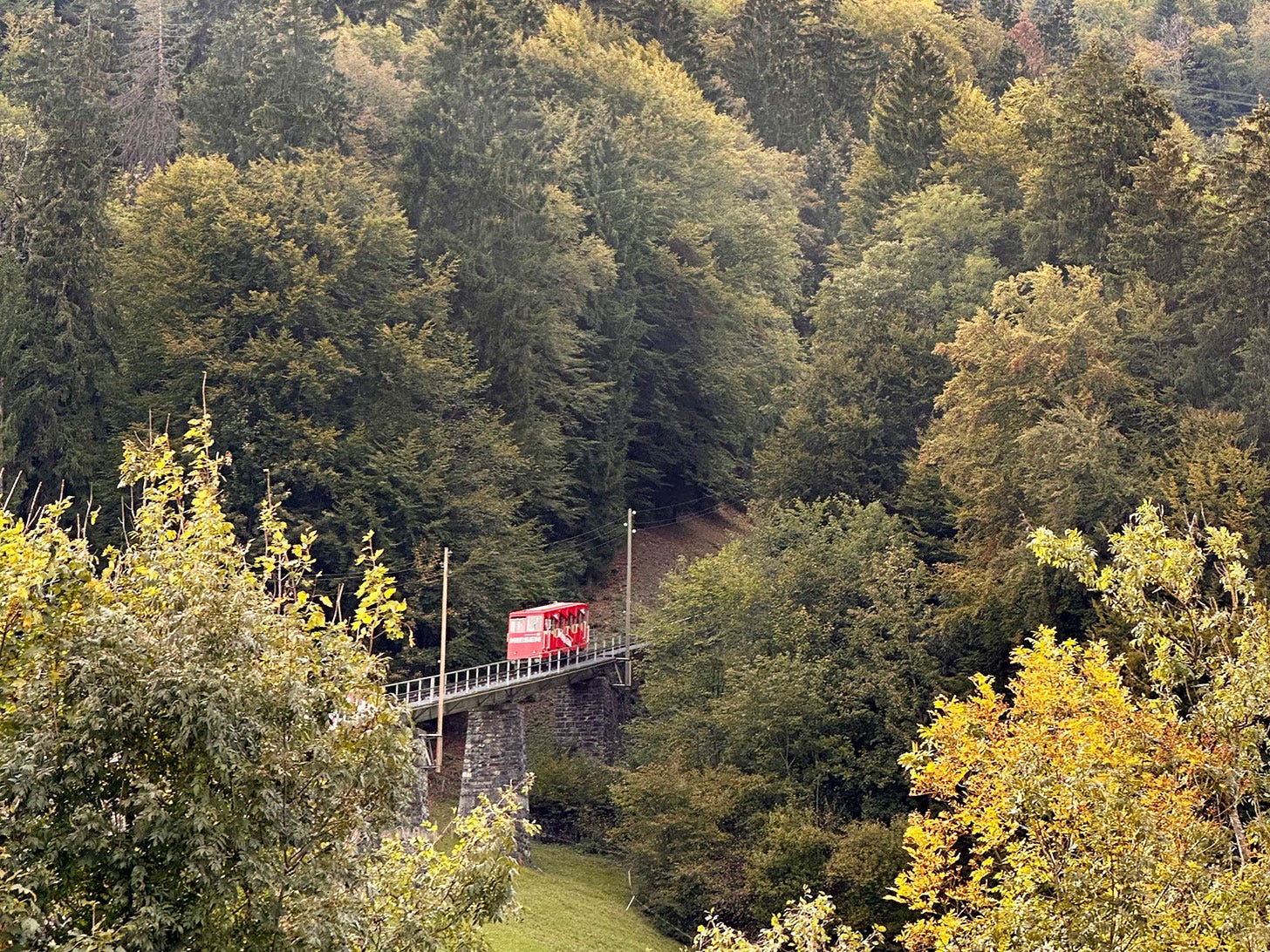
We’re thirty-ish humans squeezed into the Niesenbahn carriage – ‘Niesen’ being mountain, and ‘bahn’ meaning near-vertical railway line. We’ve departed Mülenen basecamp at 693m, and the rattling’s set in as our sardine can is hauled up the 2,362m steep incline.
Destination? Switzerland’s Niesen summit.
As a kid growing up in Sydney, I loved nothing more than a trip to the annual Royal Easter Show. I’d actively seek out the stomach-churning rides, my favourite being the horrendous Zipper, usually after a pluto-pup (deep fried hotdog on a stick) and a milkshake. It spun the cage relentlessly in both directions, sending my brain off kilter, my insides upside down, and all the while laughing hysterically.
Jump forward forty years to now, and this is my fifth trip to the land of Toblerone, fancy watches and my husband’s country of birth. Every time I’m eagerly Googling our next cable car, funicular, or train adventure. The mountains here are true giants – at first sighting they properly taking your breath away, as their peaks soar to the skies above. The Swiss have, over the years, built some masterful engineering feats, all in the name of getting curious humans to the clouds and beyond.
Quick Location Update:
After our final slice of spanakopita in Greece at the end of September, we packed our bags for the autumnal green of Switzerland. Two flights, and seven bus/car/train/tram rides later… we arrived.
There’s a distinct lack of pot-holes, roadside fig trees to raid, and groups of old gents drinking thick tar Greek coffee at the local taverna. Instead, we’ve had many wonderful, shared meals with friends and family in Adriano’s former homeland.
Why A Near-Vertical Funicular?
In 1856 an Inn was built at Niesen’s summit. Before the funicular existed, it was an arduous journey to the peak either on foot, on the back of a mule, or the wealthy being carted by human carriage. Rain, snow or sunshine, all supplies and workers needed to run the Inn had to travel the same exhausting trail.
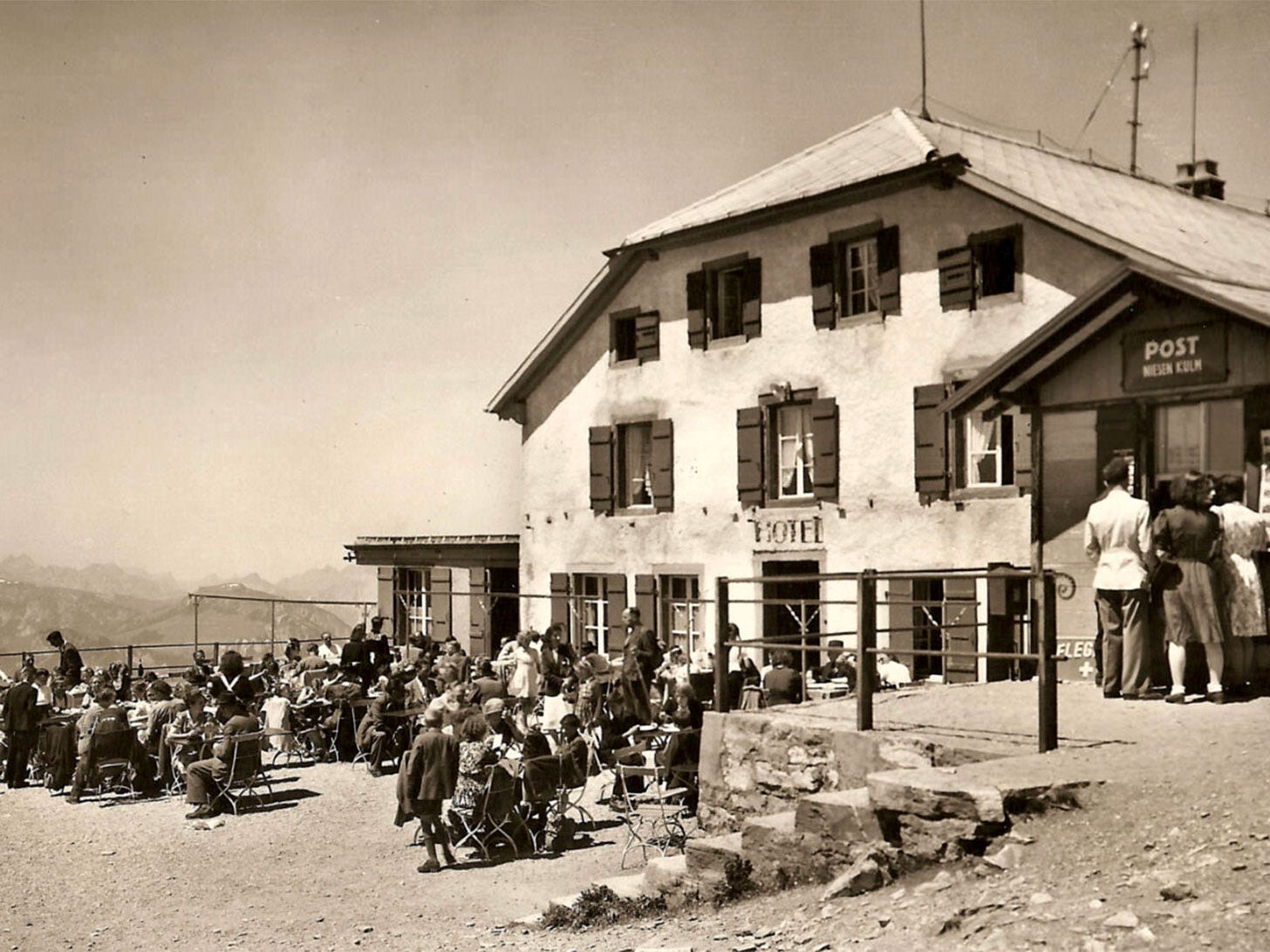
One of the more famous guests to visit the Inn at this time on foot was Johannes Brahms in 1886. Brahms liked to send postcards. He wrote of the Swiss mountain landscape around him as “full of so many melodies that one would have to be careful not to step on any.”
With the boom of Swiss Alps tourism in the nineteenth century, and the summit being known as a particularly attractive hotspot – a funicular line to reach the peak was designed and approved.
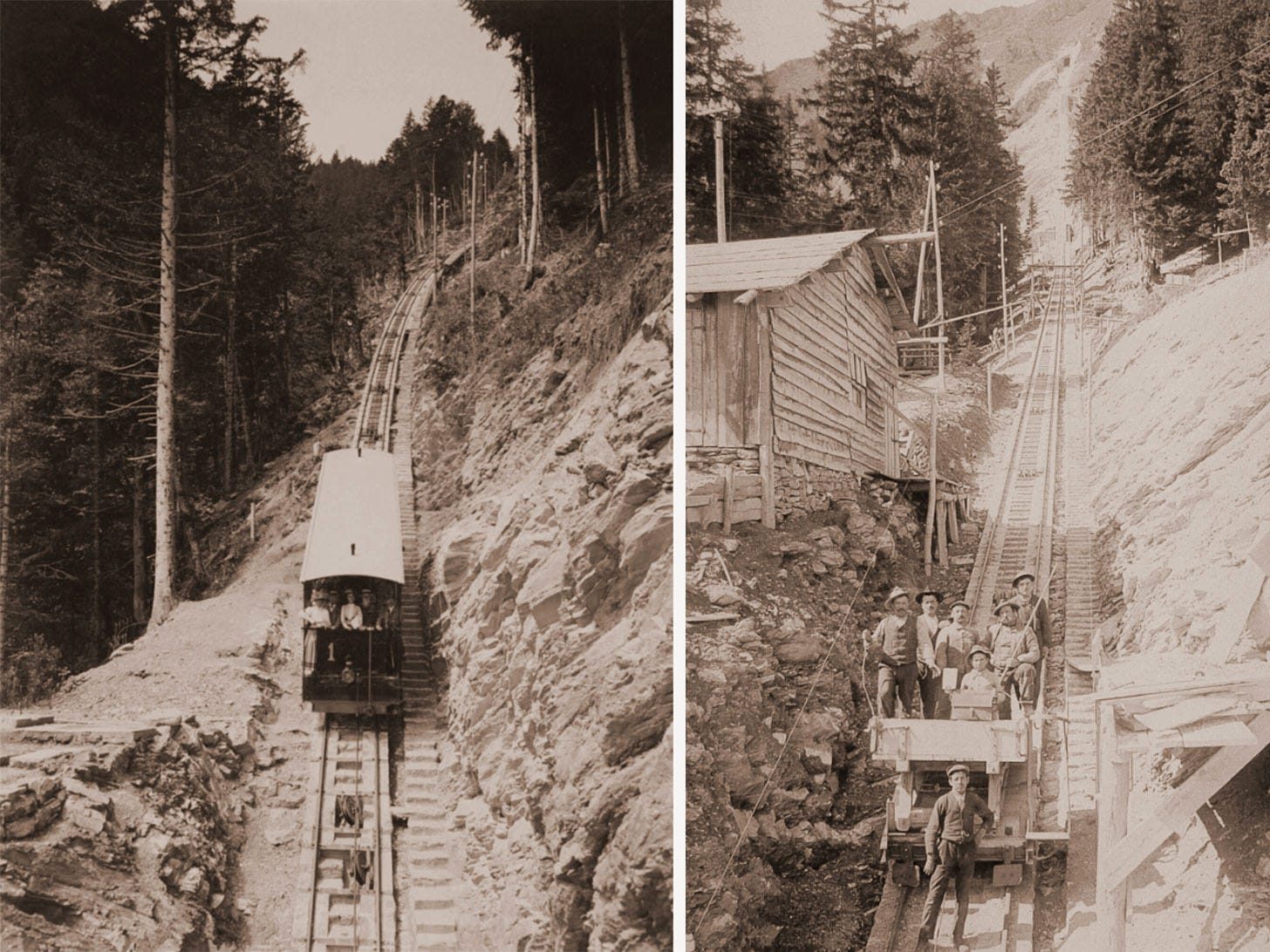
The first track was laid in August 1906. The project took two hundred workers over four years to complete, finally opening to the public on 15 July, 1910. In just thirteen minutes, with one carriage change mid-way, visitors now reached the Niesen’s peak without lifting a finger.
The Journey Up
Edging our way skywards we’re surrounded by an avenue of towering, densely clustered pine trees. These slopes are un-skiable steep. There’s a constant, uneasy feeling of being suspended by a wire as the incline intensifies – which at its sharpest sits at a near-perpendicular sixty-eight degrees.
The view opens to vast valleys of green, the rolling hillside scattered with toy-like wooden chalets, cows with their clanging neck bells, and farmers busily ploughing their picture-perfect pastures. Small joy ride planes ascend the surrounding ravines from the airport below.
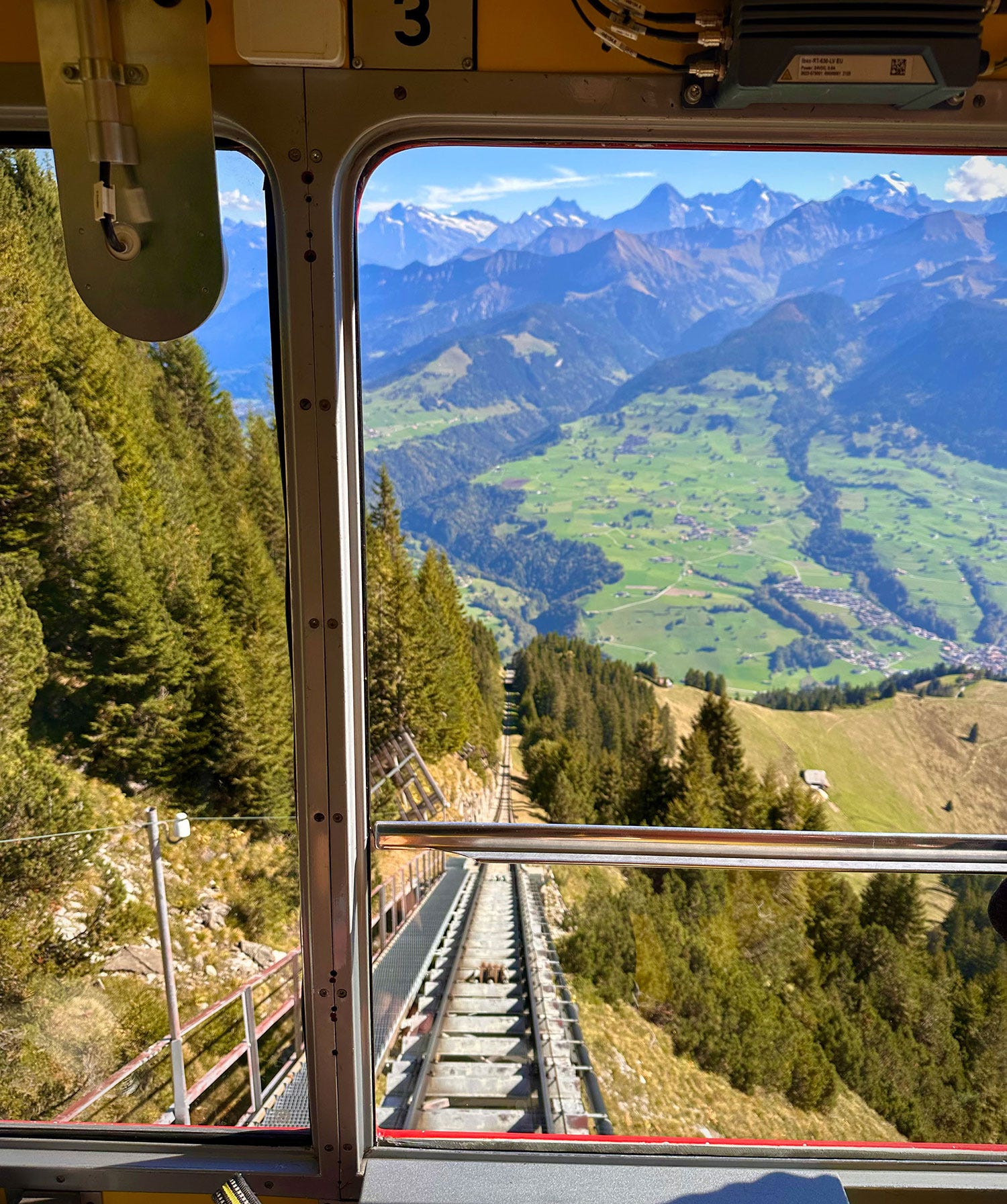
Next to the tracks sits the world’s longest service and rescue staircase featuring an eye-watering 11,674 steps. Every year, hundreds of calf muscles are destroyed in a ridiculous race to reach the top.
Halfway to the summit we change carriages for the final ascent. The temperature drops to a crisp 10˚C. Trees are soon left behind, revealing a landscape of rocky, barren slopes, and ant-trails of hikers committed to the climb.
For us the cable’s doing all the heavy lifting.
The Top
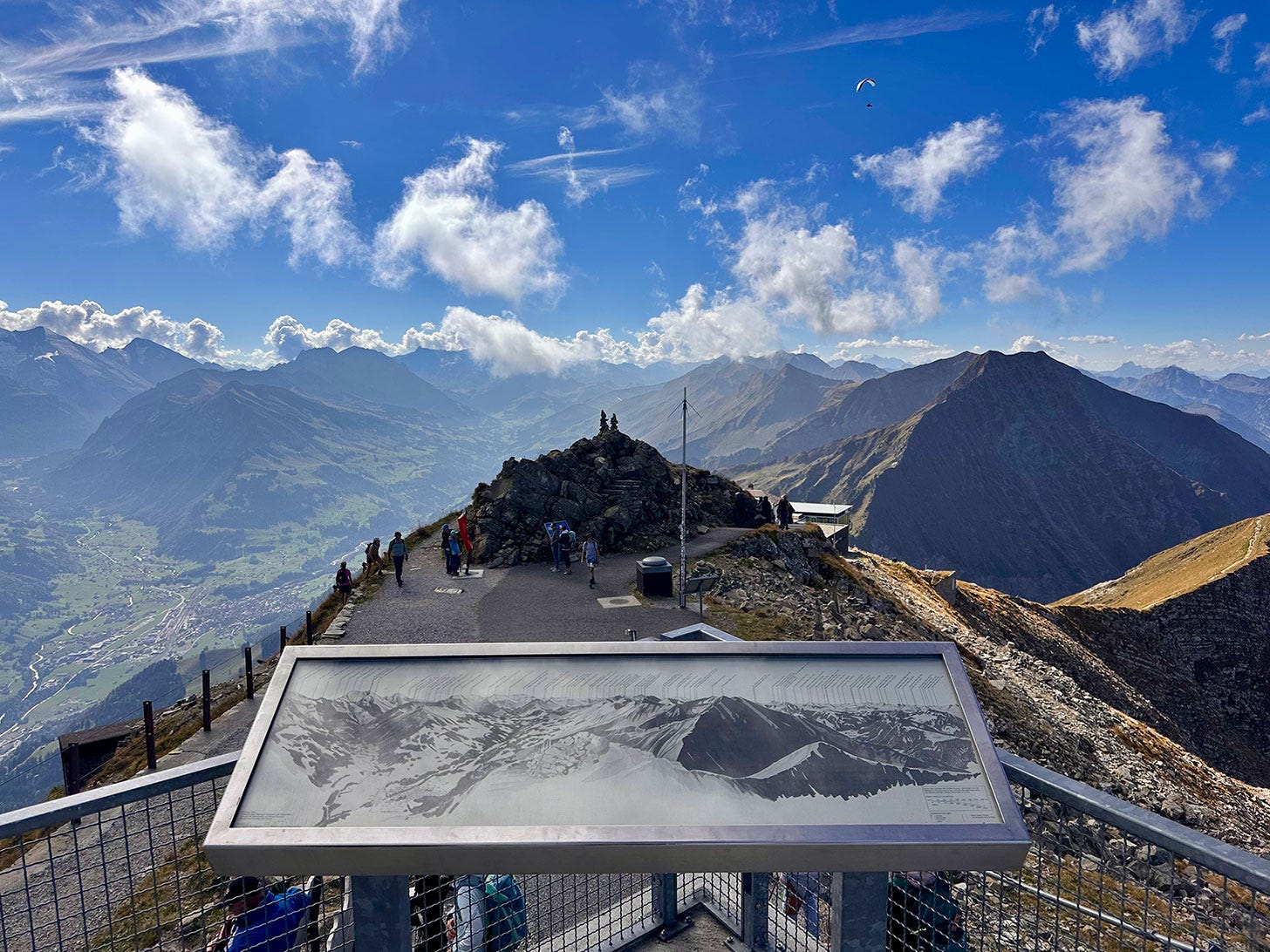
We’re surrounded by Switzerland’s paparazzi of finest peaks. Before us lies a visual roadmap of our Bernese Oberland adventures through the years – presented in a gift-wrapped panorama.
To the west sits the ‘On Her Majesty’s Secret Service’ Schilthorn summit at 2,970m, Jungfraujoch at 3,475m, and the dark, forbidding Eiger at 3,970m.
I photographed the Eiger back in 2014, after climbing the close-by Männlichen with my Swiss mountain goat ‘+1’. It was my first visit to Switzerland, and I had a crush on the country’s fine infrastructure – a train from Bern to Lauterbrunnen, another small train to the enchanting town of Wengen, then a well-signed, sweaty uphill hike through the pine forest to the peak. I happy snapped the Eiger over a lunch of cold cuts and Gruyère, which now sits proudly framed on our wall back home in Australia.
Niederhorn sits to the northeast, beyond Lake Thun, at a more ski-friendly 1,963m. We took the cable car to the peak back in 2019, amid winter on a wind-free, blue-sky day – everything iced in the whitest blanket of snow. I recall a mother giving her young child a confident shove. We watched her little pocket rocket effortlessly disappear down the slope, probably more comfortable on skis than walking.
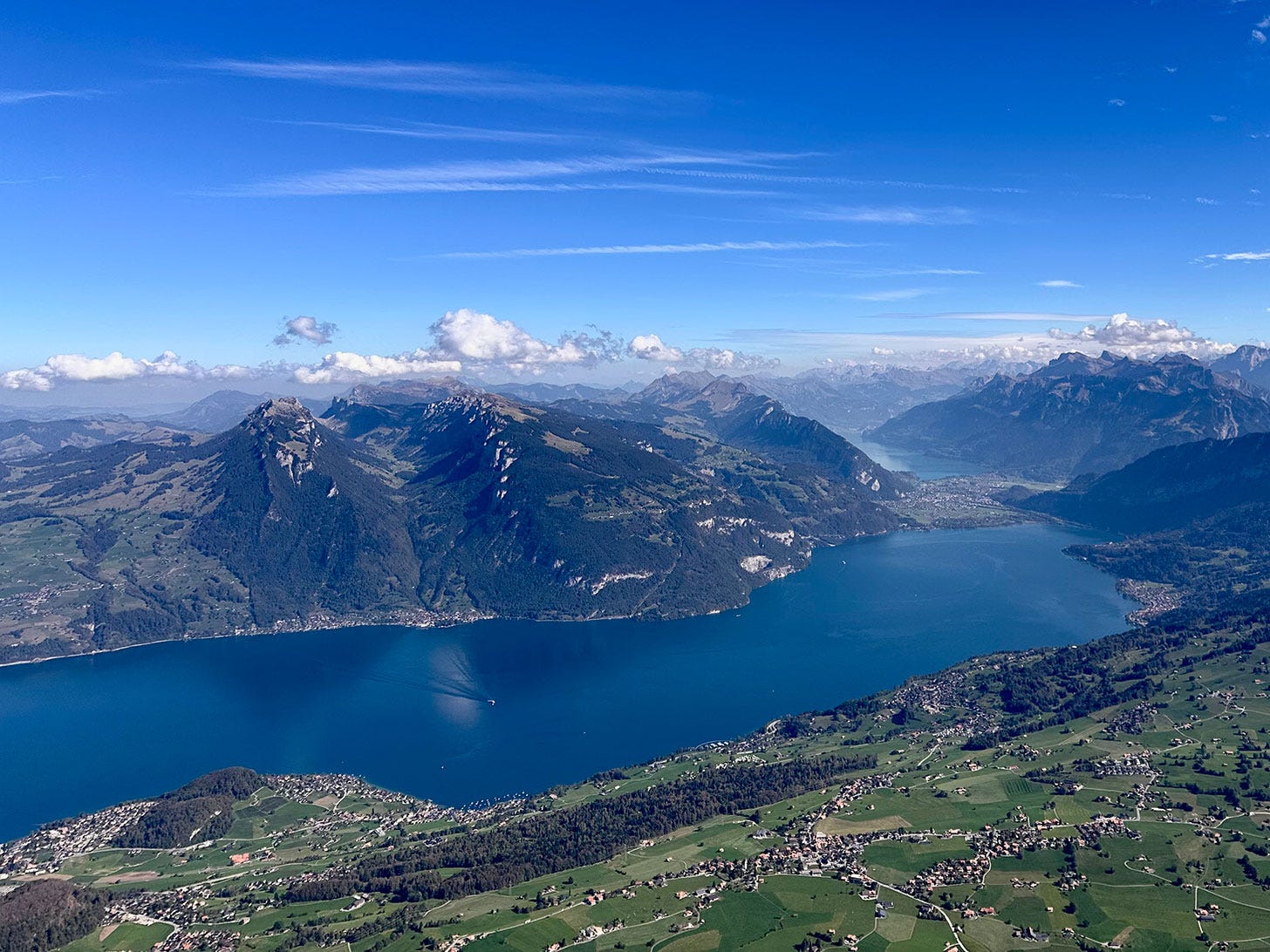
It’s 1.00pm and the Berghaus Niesen Kulm (peak restaurant) is packed with hungry, mostly-Swiss tourists, serving up classic artery-clogging potato rösti, and meaty cheese laden macaroni.
The circling paragliders above are a meditative watch – drifting from peak to peak, soaring the upward drafts and royal-waving to onlookers below.
Back To Earth
Most walkers alight at the midway funicular stop, hiking the remaining 744m on foot. We opted for the easier downwards route, passing puffing ascenders and the occasional happy puppy along the way.
The familiar yellow signs lead the way, featuring a highly legible, condensed Frutiger font created by the Swiss typographer Adrian Frutiger. This handsome, timeless, sans-serif typeface was designed for maximum legibility in poorer mountain weather conditions, and can be found on thousands of hikes across the country.
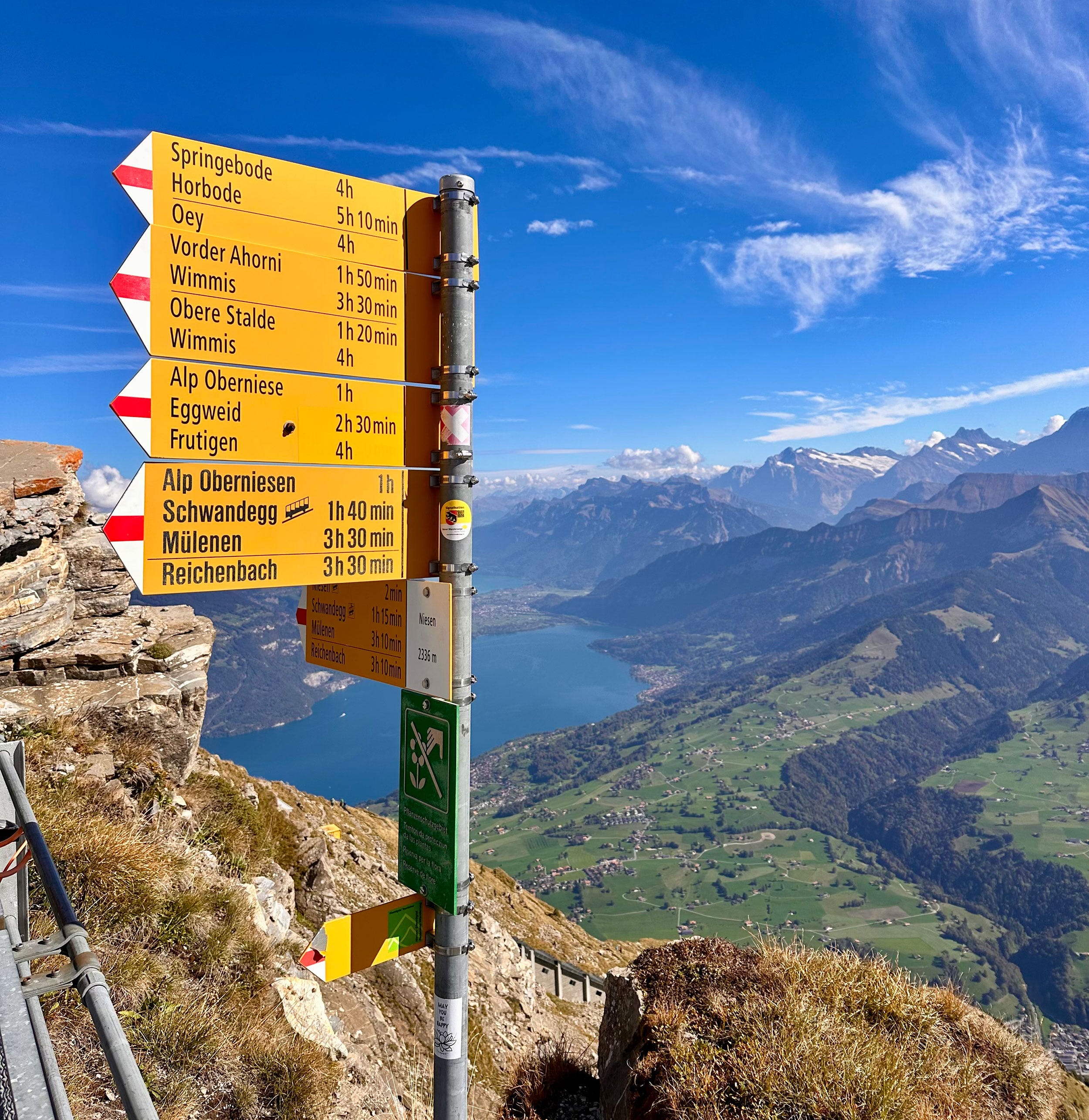
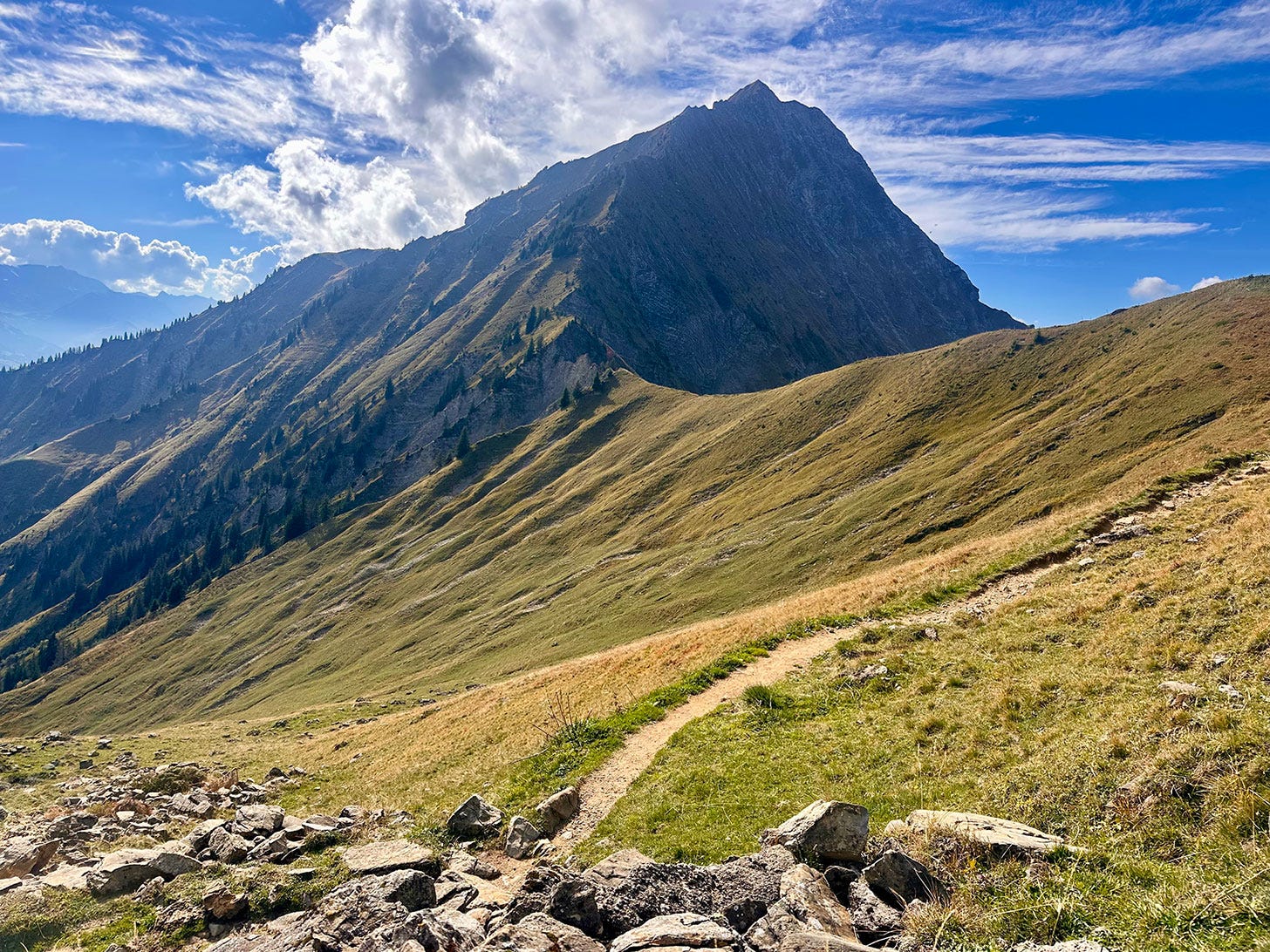
Some may say this country is a little too boring-beige, obsessively neat n’ tidy… like it needs a good ruffing up. There’s an element of truth in this, particularly having spent the last ten weeks in disorganised Greece. For me though, this well-thought-through system makes for an easier, more pleasant, and memorable travel experience.
Importantly, there’s more big kid funicular adventures still on my bucket list, so see you again soon Switzerland.
Swiss Funicular Lovers’ Guide
Niesenbahn | Mülenen
Catch the train to the front door, changing at Spiez if coming from Bern and getting off at Mülenen. I’d recommend the ‘Hiking Ticket’ which includes three sections by funicular and one hiking. The only thing to watch is there’s no online booking available – a weekday would be your best option to avoid the weekend or school holiday queues. And ideally, aim for a clear day for unforgettable vistas.
Stoosbahn | Schwyz
This one takes the world’s steepest funicular prize, climbing to 744m in a few minutes. As you make your way up the near vertical slope the barrel shaped carriages rotate, keeping the contents of your stomach where they should be. There’s another chairlift that takes to the peak for more nuts vistas.Gelmerbahn | Lake Gelmersee
This one’s giving proper rollercoaster ride vibes. There’s an open-roofed carriage, and just a waist bar to keep you in place as you face down the mountain for the twelve minute ride to 1,860m. This one is proper popular, and bookable which we like. Be sure to plan ahead.Giessbachbahn | Lake Brienz
A far more charming option, this is Europe’s oldest funicular which was built in 1879, purely for tourists. There’s the historic Belle Époque Grandhotel Giessbach at the top for lunch. To make this one extra special, arrive by boat from Interlaken or Brienz. Now that’s infrastructure magic.
And… onwards! 💚
Great write up and very informative [and very jealous !!! ] also good pictures. You will be back I am sure. Take care in Mexico much love Dad, Lizzie and Lola XXX