


In last week’s Mexico City Part I post we ate our way through Roma – one taco, a few more pastries and a complimentary mezcal at a time.
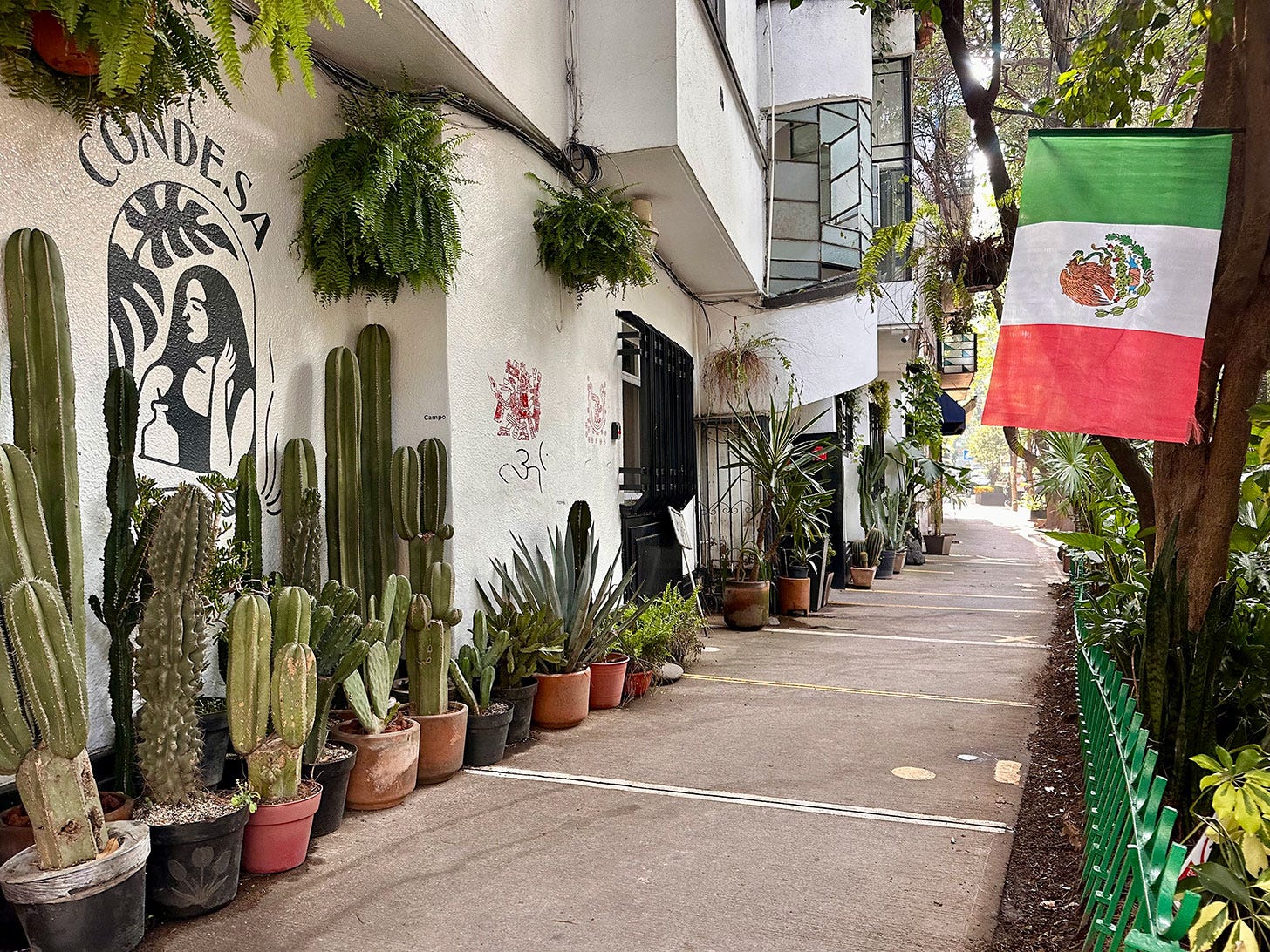
In Part II we burn the calories with a marathon wander around Condesa. This inner city suburb is pancake flat, with a huge canopy of dense trees lining its shady streets. I’m reminded of our time in meticulously planned Paris, and the more southern Madrid, with the overgrown shabbiness of Berlin thrown in the mix.
For architect-wannabes like me, there’s a world of early 20th-century style buildings to explore here – in particular, curvaceous Art Deco.
It’s remarkable that so many of these builds have stood the test of time, surviving several major, destructive earthquakes. A strong sense of loyalty has endured through loss and destruction. What was erased, has either been replaced with more modern architectural statements, or remained vacant, used as car parking lots, or for street food vendors.
It’s not pristine. Many facades are in some state of disrepair – cracks, chipped paint, pollution and mould, crumbling render and broken glass panes.
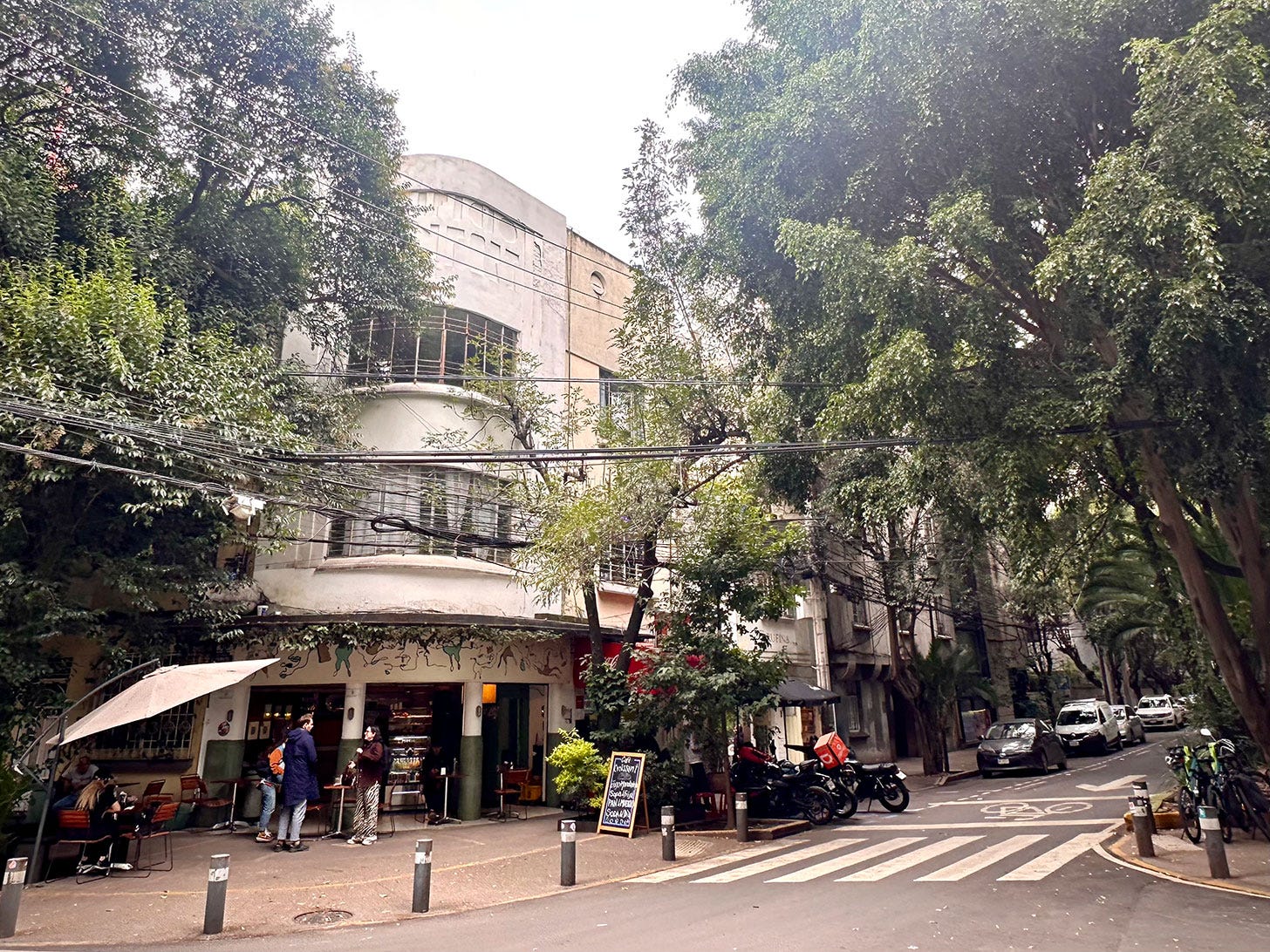
There’s a charm though to this very lived in neighbourhood… buzzing cafes full of locals and digital nomads, bars, taquerias, amazing bakeries, bookstores, clothing and handicraft boutiques. A little too cool perhaps, but still relaxed and appealing.
Walk with me through the laneways and promenades, explore a remarkable architect’s home, and meet some of the people we encounter along the way.
Loveable ‘Art Deco’ Condesa
I’ve lived in two Art Deco apartments in my time. I’m a fan of their distinctive features – high ceilings and detailed cornices, over-engineered walls and rounded corners, generous living spaces, intricate ironwork, and hearing my neighbour buttering toast through paper-thin timber floors.
Condesa’s well-planned streets present as one of the finest, albeit somewhat dishevelled Art Deco galleries of the world. A few solid 10,000 step days were needed for its discovery.
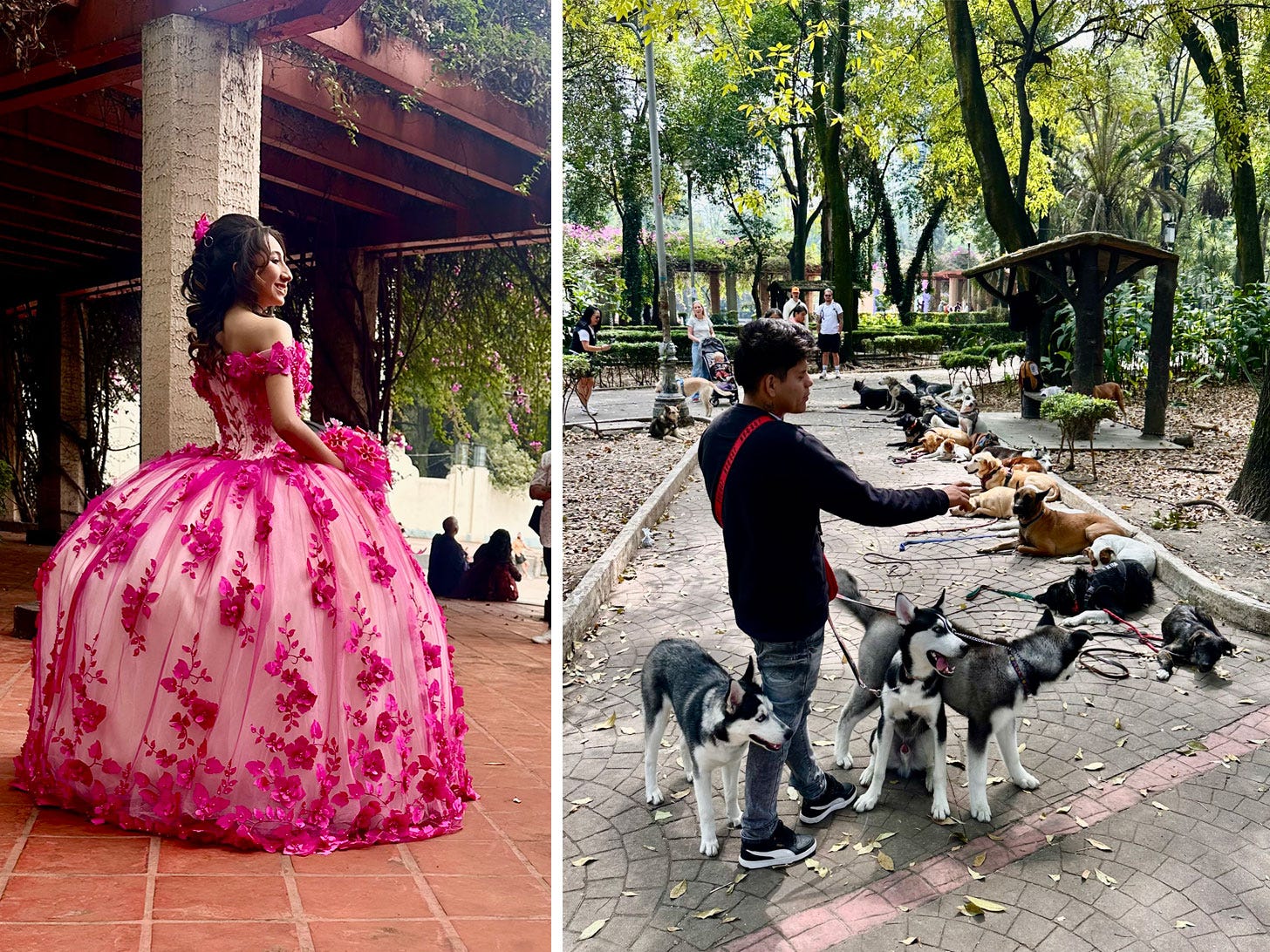
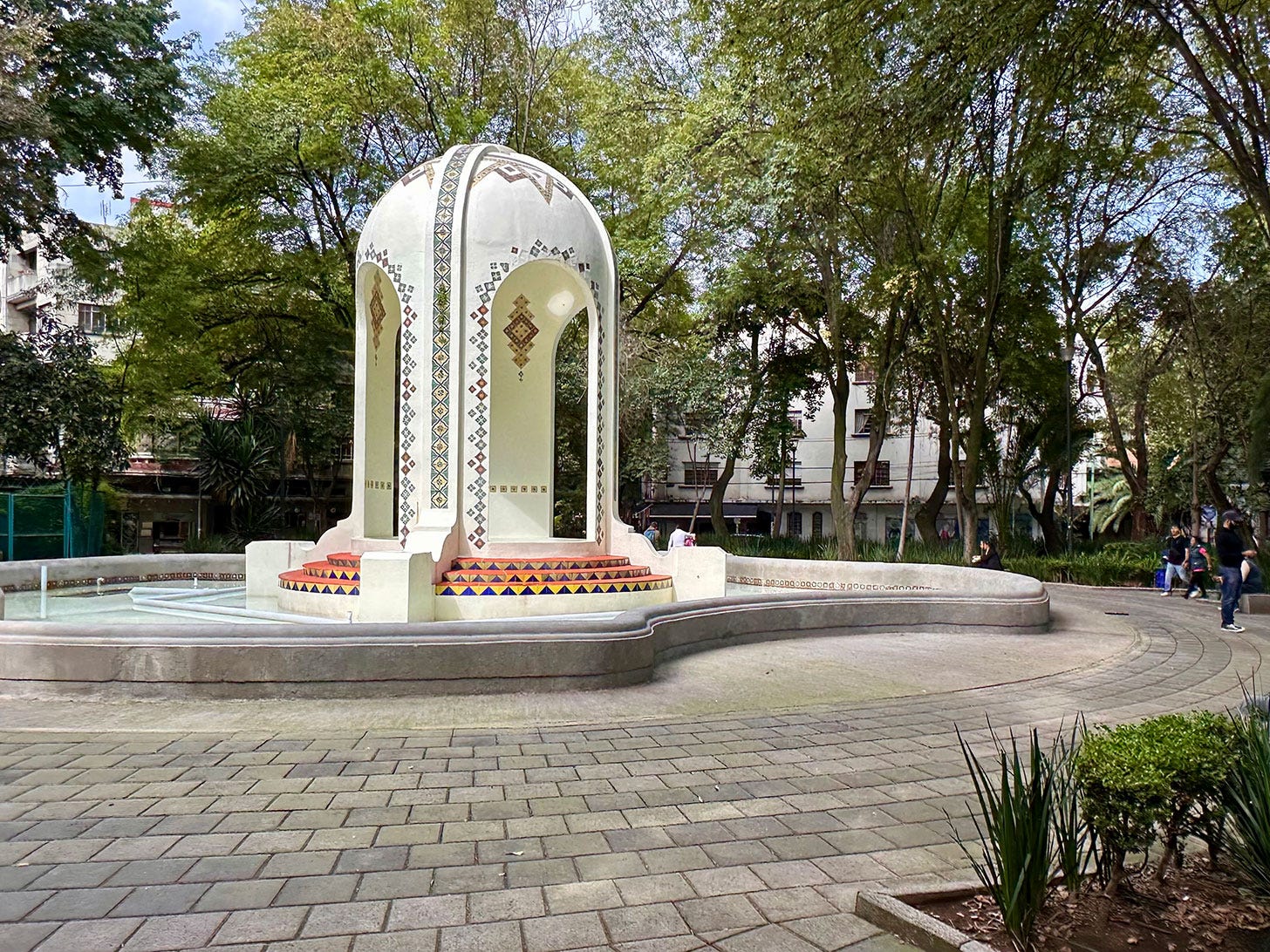
Our first stop is a park bench in Condesa’s central Parque México, pre-fuelling with freshly deep-fried churros and chocolate from the institution El Moro. The entertainment is pause-worthy – a photoshoot of a girl smitten with her pink Disney dress, a dad and son prepping for World Cup, shirtless rollerbladers (no complaints here), hipster students in gold-rimmed glasses, and dog walkers with six breeds of all shapes and sizes, all cooperating on just one central leash.
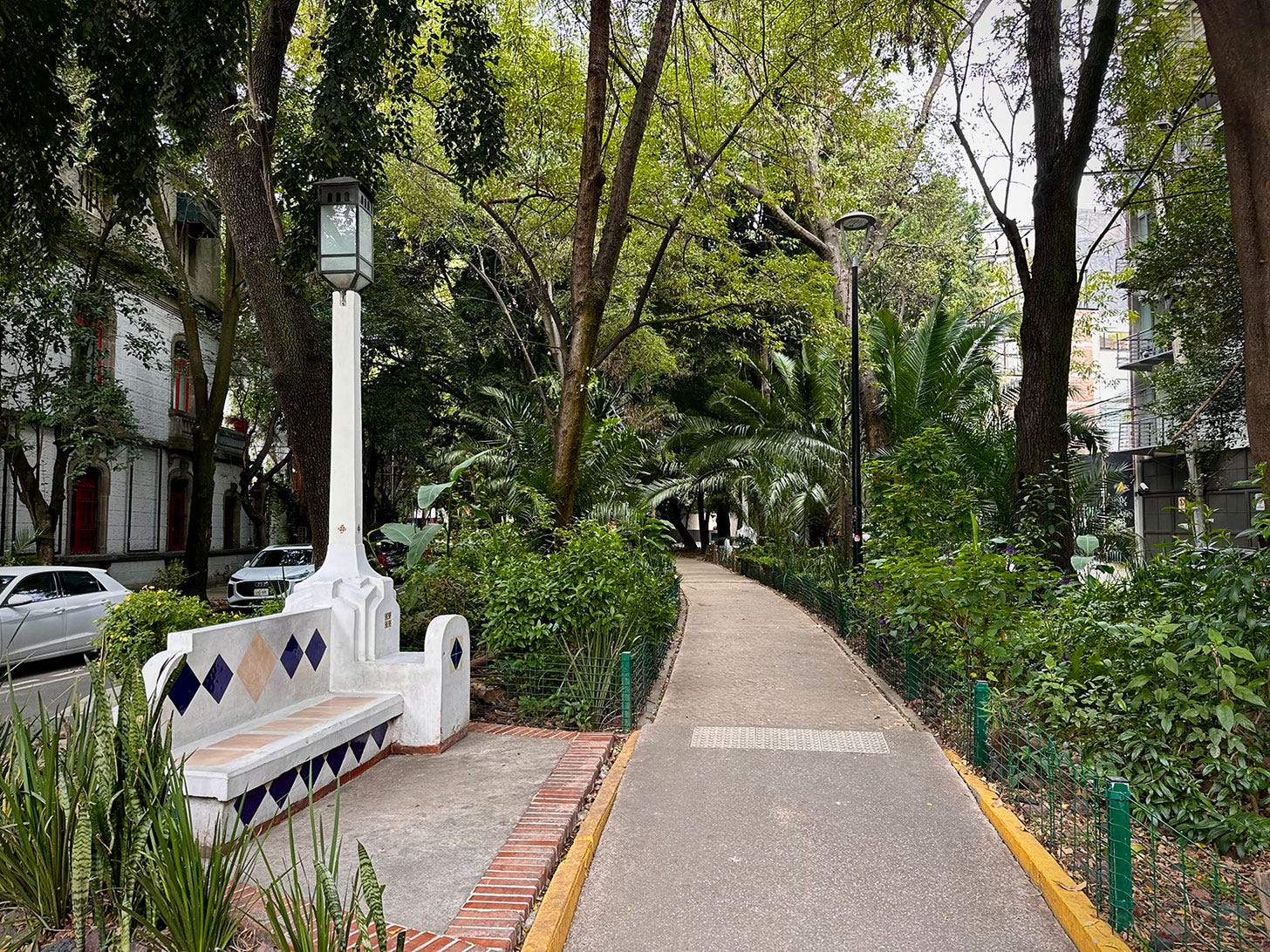
The elliptical street flow surrounding the park makes for a pleasant, never-finished stroll. This looping footprint pays homage to the suburb’s former Hipódromo de la Condesa, a horse racing track opened here in October 1910.
This wasn’t ideal timing, with the start of the Mexican Revolution soon after sealing its demise. Post-revolution in 1925, there was a strong desire for modernisation and European-style urban living – large tree-lined boulevards, parks, and efficient home design. The former Hipódromo with its sizeable footprint was chosen as the ‘blank canvas’ to build the suburb of Condesa.
Like Miami after its devastating hurricane of 1926, the timing was perfect for Condesa to embrace Art Deco – a bold new direction in geometric and architectural form.
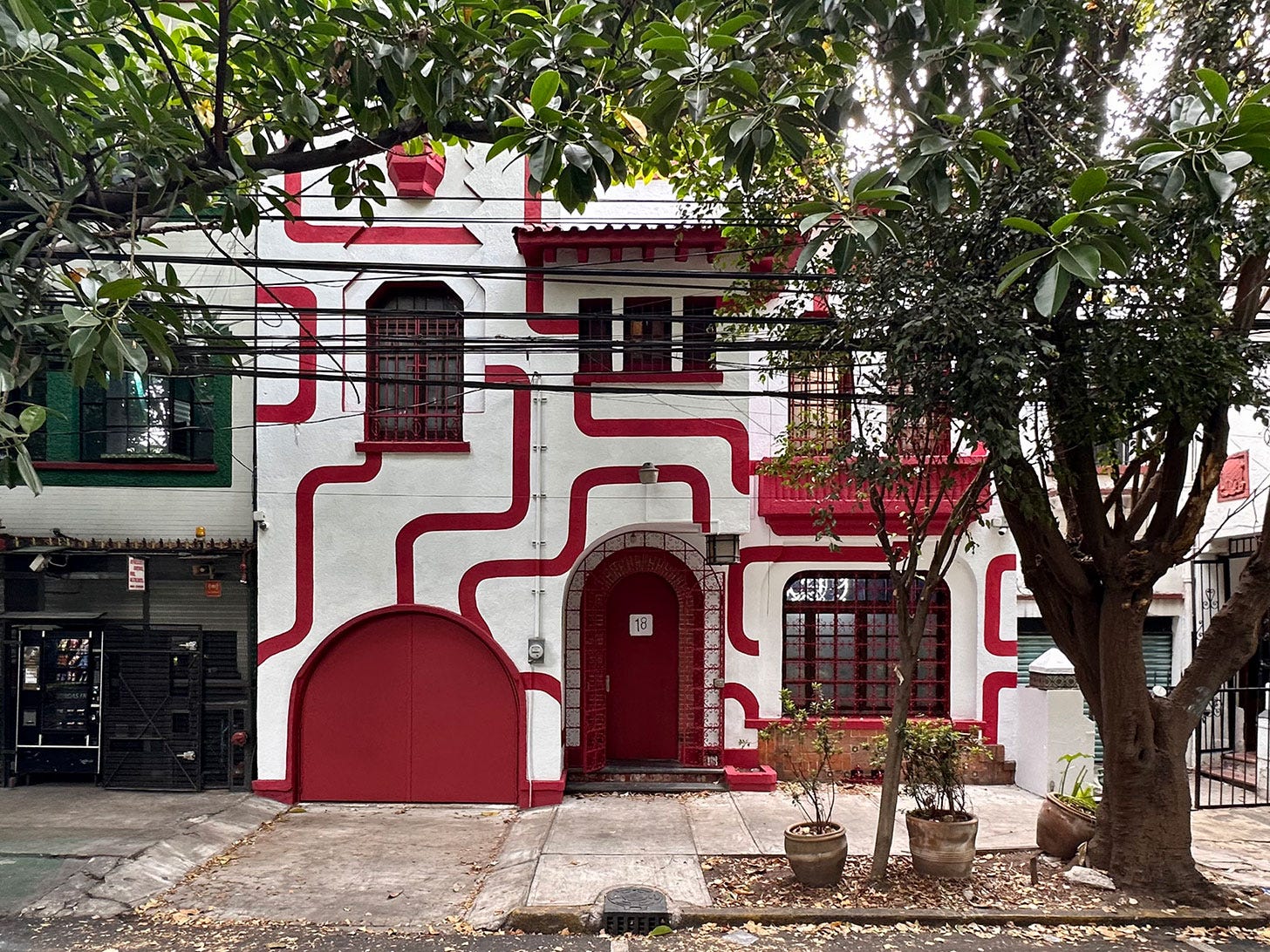
We make our way around the leafy boulevards. There’s homes and apartment blocks sandwiched together – cherry brick and rendered facades of all different colours, odd-placed round and rectangular windows, tiles and motifs featuring Aztec and Mayan designs as well as local cacti and flowers, Juliet-style balconies, and twisted balustrades – all in various states of immaculate restoration and disrepair.
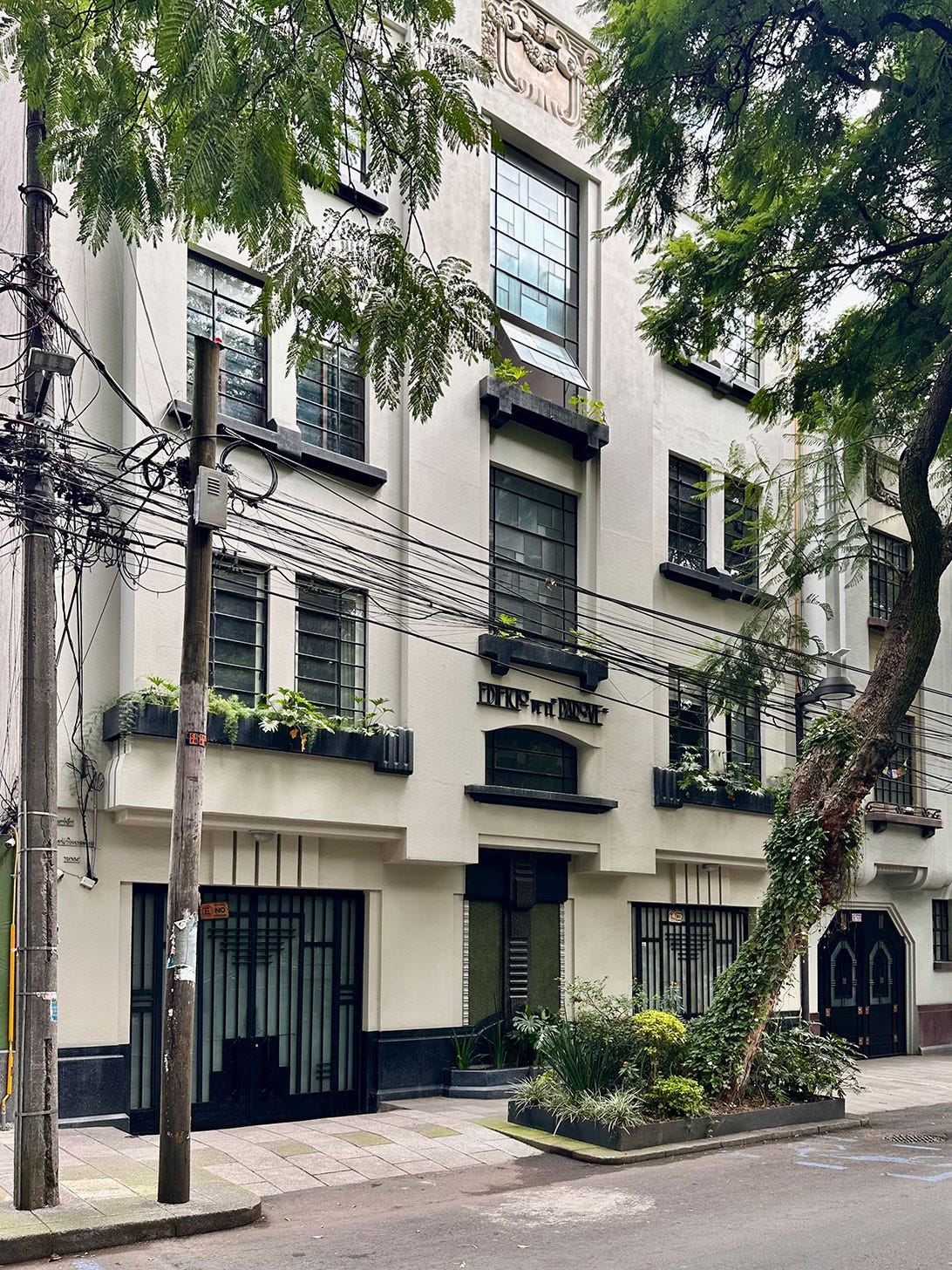
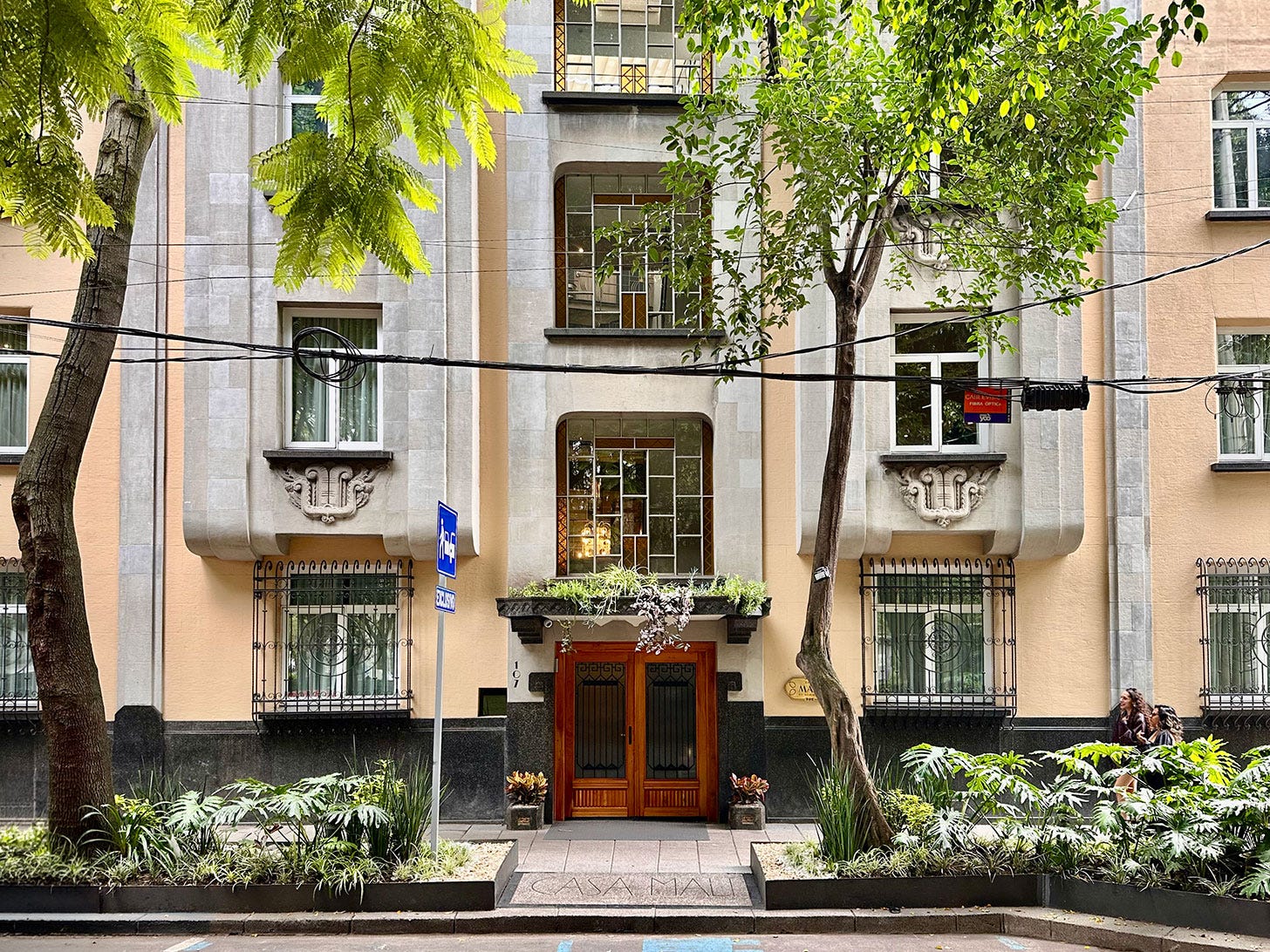
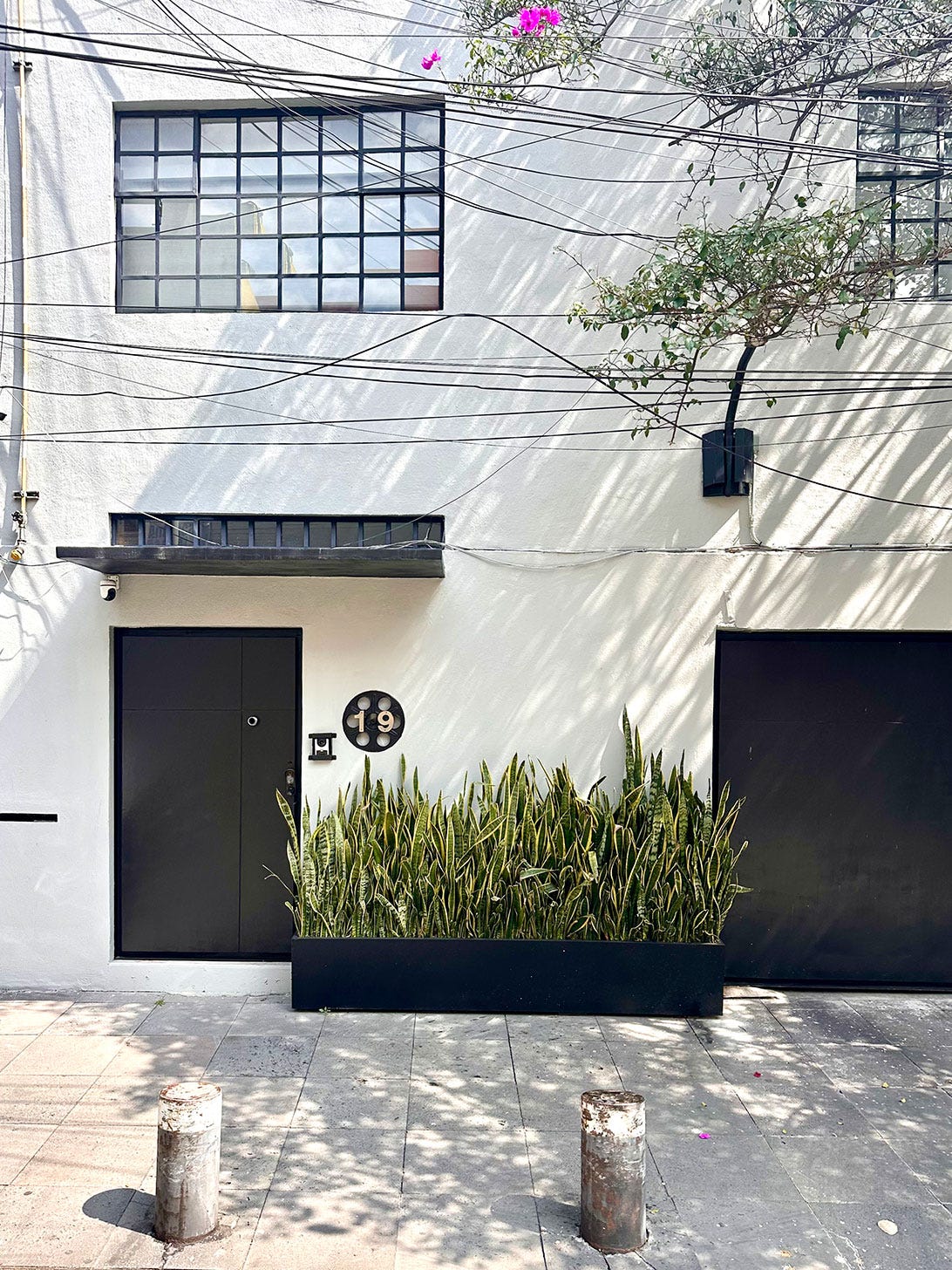
The streets, parks, and walkways are enclosed by huge, soaring Ficus Fig trees. The thick, evergreen canopy makes for dark, light-deprived living on an overcast day, and I’d say a haven for all things green and mouldy. It makes me wonder if a clock is ticking for the canopy’s demise.
Casa Luis Barragán – An Architect’s Retreat
Visiting Geoffrey Bawa’s peaceful abode in Colombo earlier this year reminded me whilst living out of a backpack, that ‘home’ can be a true sanctuary – a place to curate, connect to colour, form, light and nature – a space to make your own.
This inspired our discovery of Casa Luis Barragán here in Mexico City. Barragán was a local architect of a similar time who designed a signature architectural ‘forever footprint’ in his hometown.
Though Bower and Barragán never met, there’s a common thread in their tales. They were both renowned by trade, seeking a protective refuge away from the hustle of demanding careers, and retreat from the bustling cities they lived in.
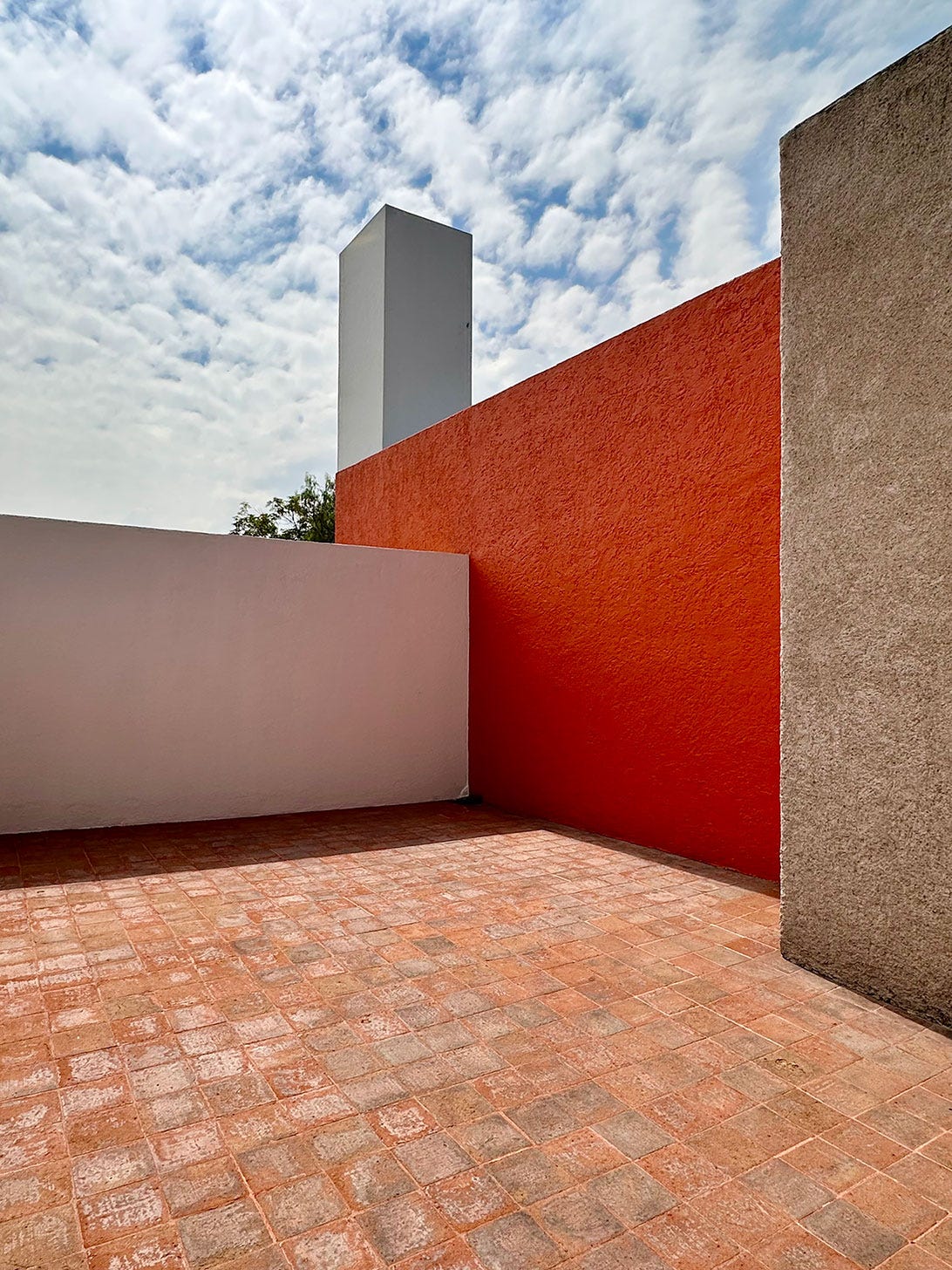
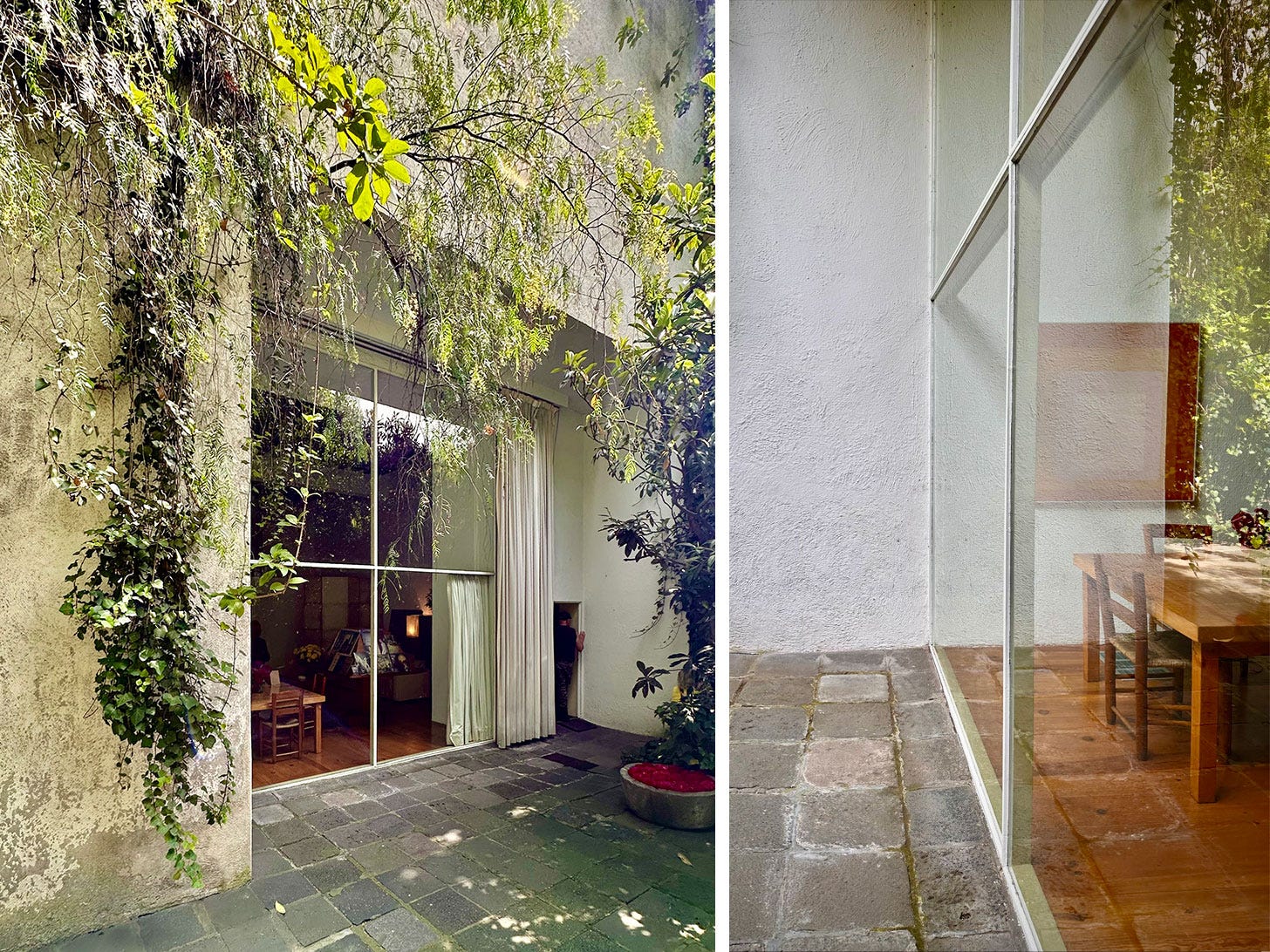
From the outside, this high-walled construction presents as a concrete-grey fortress, with just a few small windows, square light cells, and two nondescript street entry doors – one for his studio, the other for his home.
There’s small passageways, hidden entries and compact stairwells that open to huge, high-vaulted ceiling spaces with oversized glass walls facing into his world – a sensory oasis filled with pools, jungle greenery, (now) ancient pepper trees and ivy. There are bold blocks of yellow, pink and orange throughout, as well as heavy custom pine joinery, furniture and ceiling trusses – all designed by Barragan.
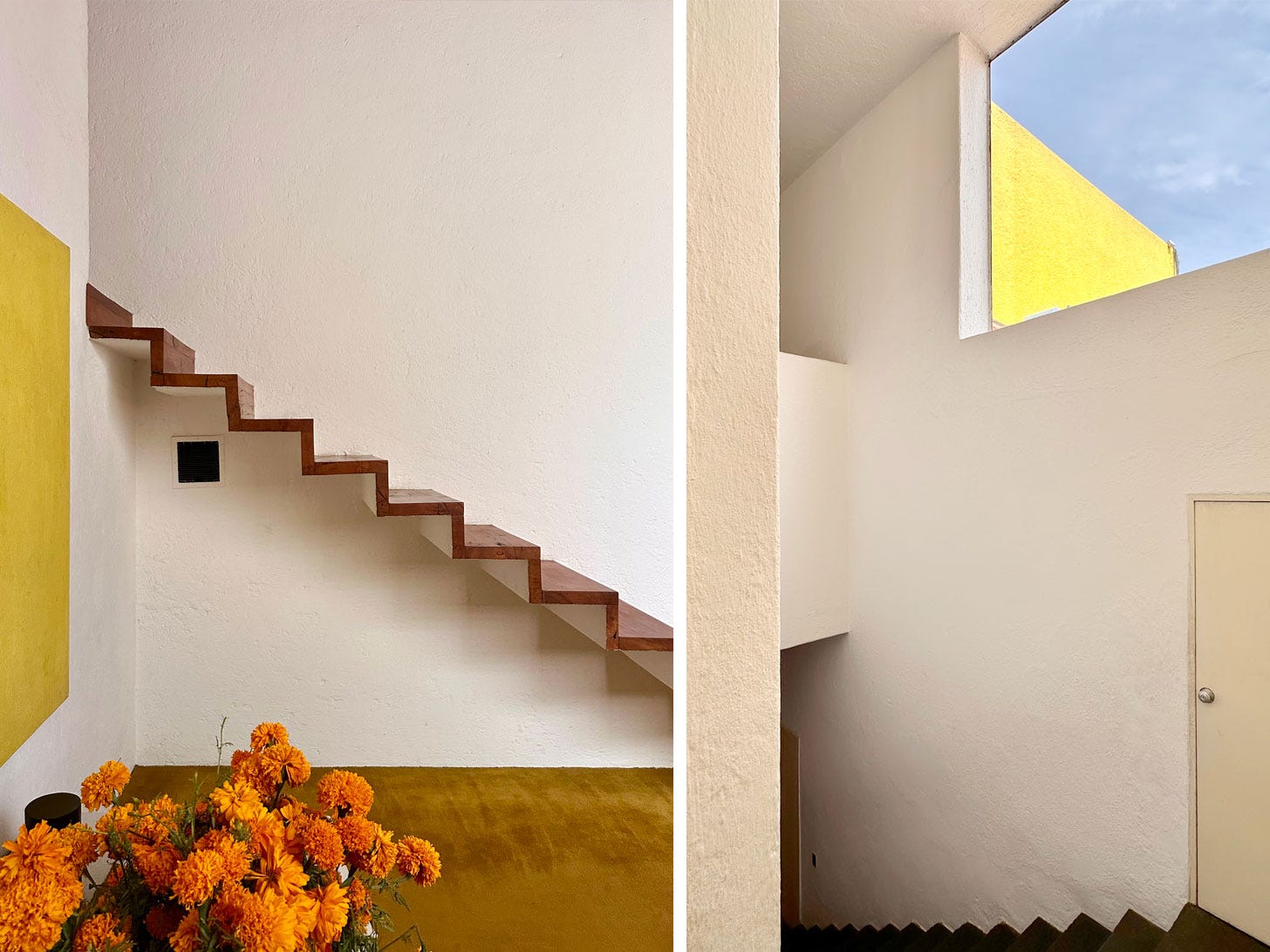
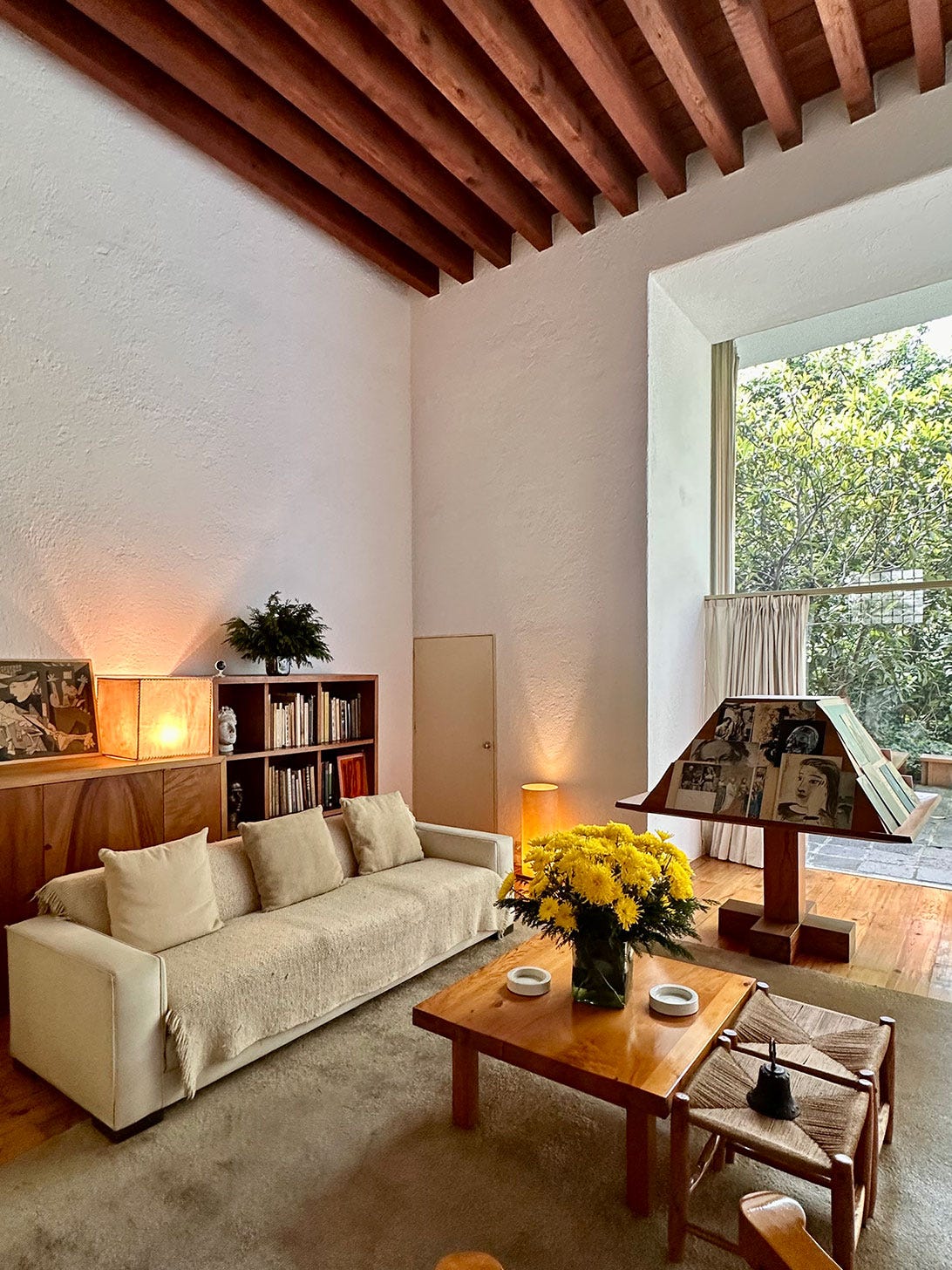
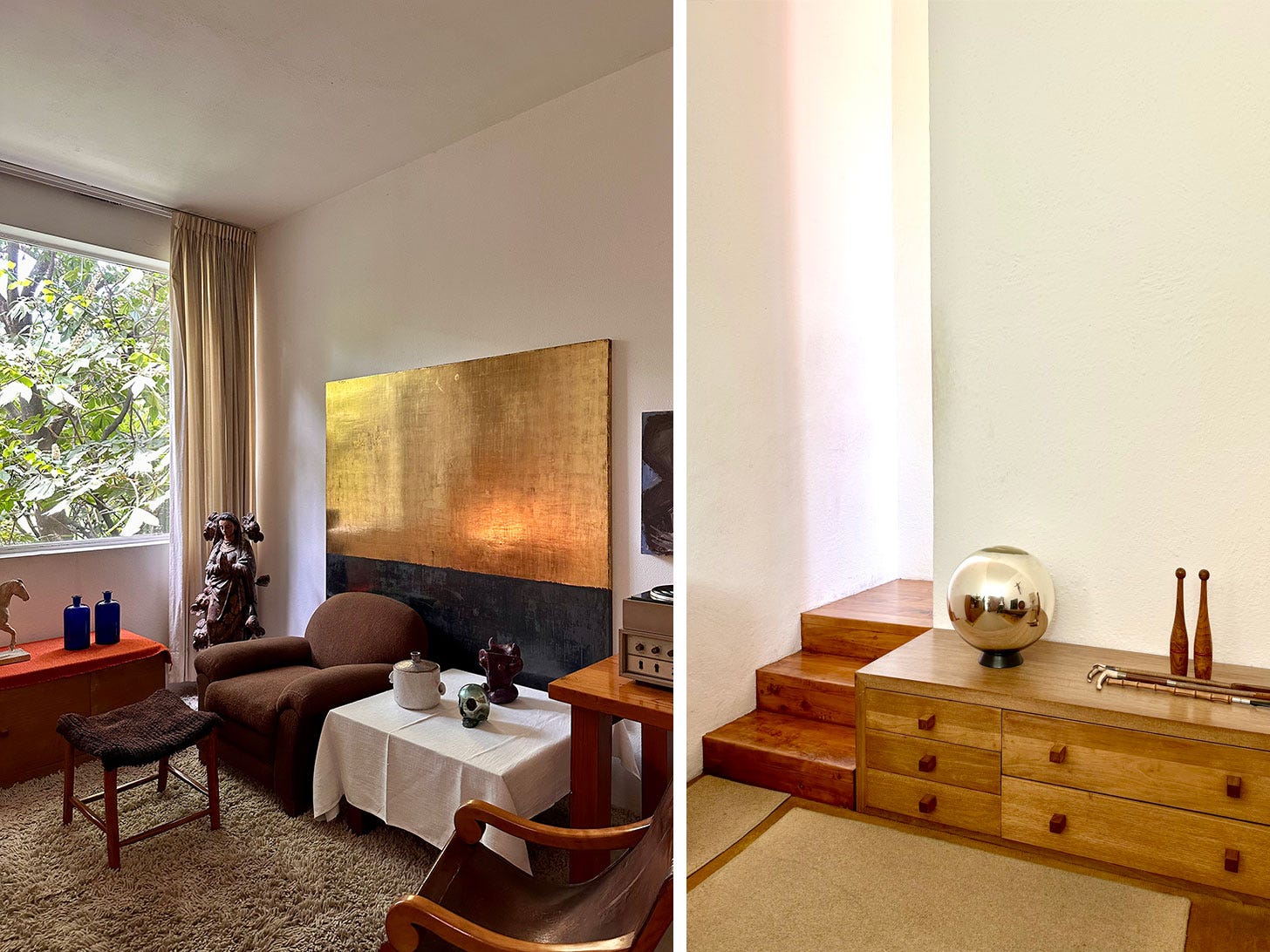
Unlike Bawa who was known for his flamboyant nature, love of socialising, and vibrant network of artists, photographers and writers – Barragán was conservative, a devout Catholic, and deeply private. According to record, he never partnered. His bedroom is dark, unwelcoming and austere – filled with religious iconography, and a single bed in the room, as if affirming his forever celibacy.
Both houses attract a similar kind of slightly awkward, self-aware, architecture-loving crowd. I’m not sure if Adriano and I fit the bill, but we do our best to strike up conversations… that are met with polite but minimal response.
The Welcoming Mexicans
Iconic builds, parks, and award-winning urban planning all makes for a great city experience, but what makes it unforgettable? The people.
I speak very, very rubbish Spanish. I don’t usually mind having a few local phrases under my belt in a new country, but here? Interaction is front and centre – a curious smile wanting to chat at the markets, a friendly “Hola” from passers-by and shop assistants… I have proper FOMO.
In Europe, and many South East Asian countries it’s too easy to be ‘language lazy’, with locals in the tourism industry now speaking enough English to support travellers. In Mexico though it’s a firm ‘Spanish-first’… which is awesome. It reminds me of travels in my 20s where knowing the basics, beyond a picture book, was essential to everyday survival.
My home city of Melbourne recently secured the top spot as the ‘Friendliest City in the World’ in Condé Nast Traveler 2026 Readers’ Choice Awards. This warmth was a draw card when we moved from Sydney to Melbourne back in 2019. I’m surprised Mexico City isn’t sitting up there as a close second.
This city lives and breathes its own identity. Strolling these local neighbourhoods, knowing their history of destruction and rebuild – and sensing the fierce attachment locals have to what they love – makes them all the more captivating and unforgettable.
Shared Moments
Best ‘worth the effort’:
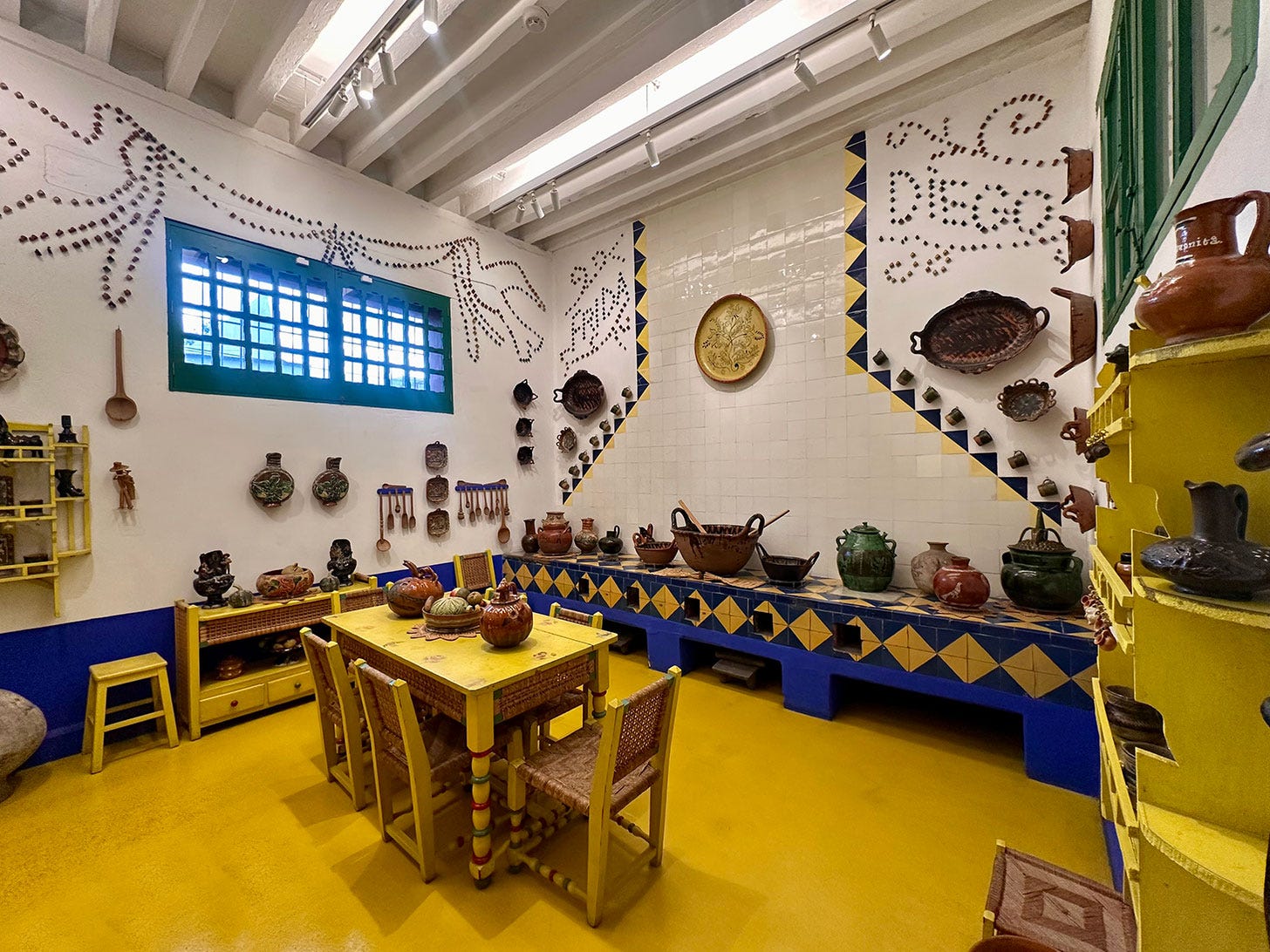
Mexico City celebrates the interwoven lives of Frida Kahlo and Diego Rivera. Their legacy remains strong, both in architectural and artistic footprint, as well as the city’s cultural identity. Diego’s Museo Anahuacalli will leave you wonderfully confused. Be sure to book well ahead for a visit to the Frida Kahlo ‘Blue House’ Museum.
Flat point:
Watching dance classes around Parque Mexico on a Sunday morning for Cuban Salsa, Bachata, and Argentine Tango as a spectator sport – rather than joining in!
Cultural observation:
The younger Mexican generation embrace their ink culture – it’s mainstream and almost feels normalised. There’s a strong reference to pride and survival, and tattoos often serve as a forever statement of heritage. I’m sure many visual stories are being told – I just need more Spanish under my belt to understand them.
And… onwards! 💚