


Today’s a milestone Monday. It marks my twentieth post shared with you, my wonderful readers since April – when Adriano and I packed up our Melbourne lives and jetted off around the globe!
We’ve taken our time, focusing on quality hangouts rather than a country tick-list, but looking back at our destinations to date – Singapore, Sri Lanka, France, Denmark, Norway, Sweden, Greece, Switzerland, and our current stop Mexico – it’s a decent mouthful.
After two weeks of barely scratching the surface of Mexico City, we headed to Puebla, where Mexico’s Día de Muertos (Day of the Dead) has been in full skeletal swing. There are a few key days of celebration and gathering towards the end of October, but it’s artfully drawn out by cultural boards into a month-long spectacle filled with parades, dress-ups, face paint, music and performance.
The core observance and tradition though is family – honouring the lives past of loved ones.
Halloween also happens to fall on 31st October. With such a strong thematic crossover, it can be visually confusing. One minute it’s skeletons in traditional costume, the next it’s the (disturbing) clown from Stephen King’s IT, and Ghostface from the movie Scream, happily planting seeds for your next therapy session. Beyond the costumes though, there’s far more depth to the Día de Muertos gatherings, altars and remembrance.
On arrival at our little abode, we dropped bags and headed for the Zócalo – the town’s buzzing central plaza. On the ground is a giant skull mural created out of small, rainbow coloured stones. It’s certainly impressive, but unless you’re a drone, it’s not easy to fully appreciate the scale and splendour of the artwork.
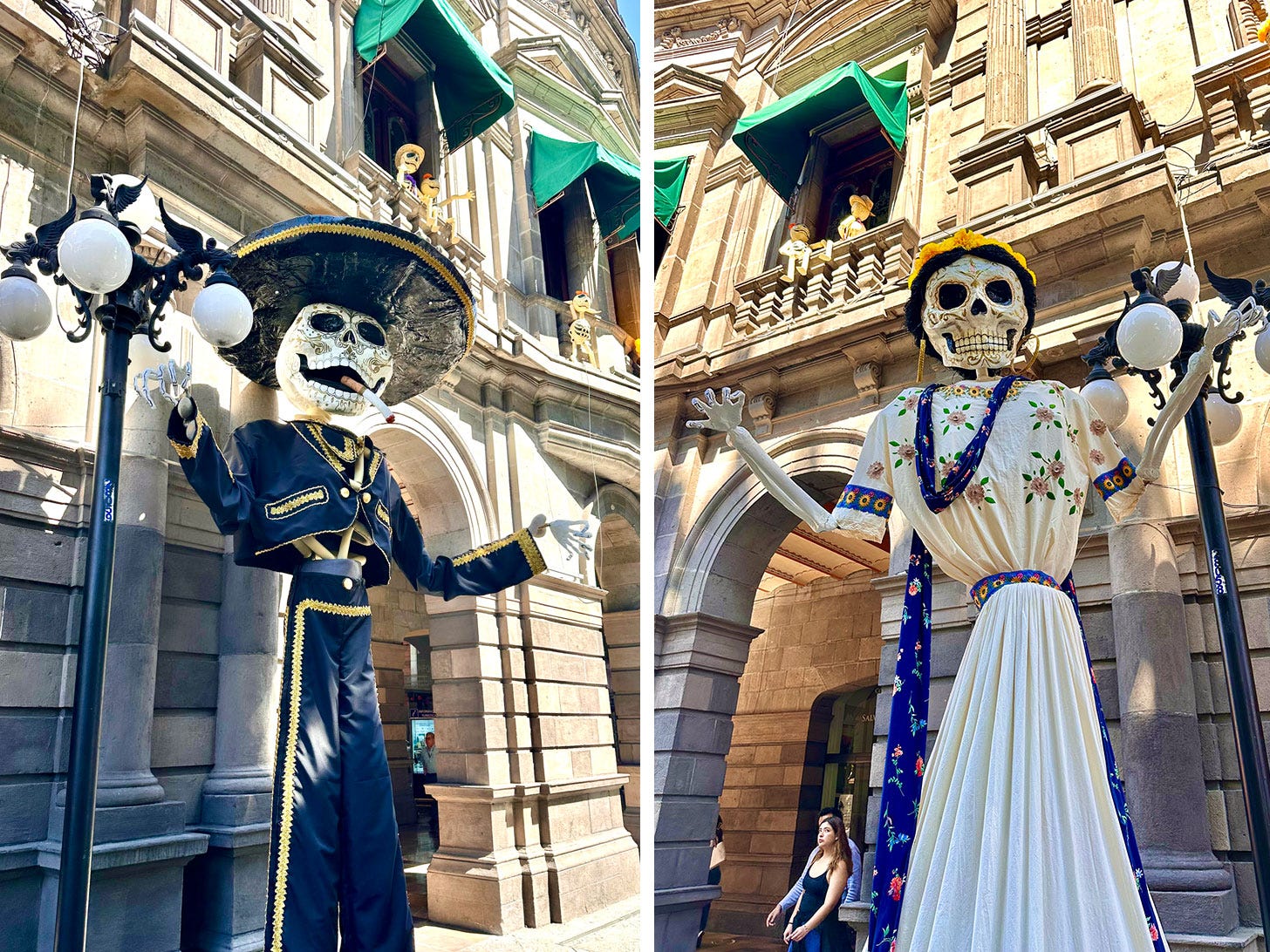
Two fifteen foot high skeletons guard the Town Hall entrance – a guy on one side dressed in Traje de Mariachi – a traditional three-piece Mexican suit with gold detailing and a massive cigarette hanging off his jaw. The girl wears a flowing, traditionally embroidered white dress, with Cempasúchil (Mexican Marigolds) in her hair – no skin, just bare bones and thick black hair. Delightful.
The Town Hall was covered in even more dangly skeletons in various states of climbing, marriage proposal, dismemberment, or hanging each other out the windows by their feet. Such silliness!
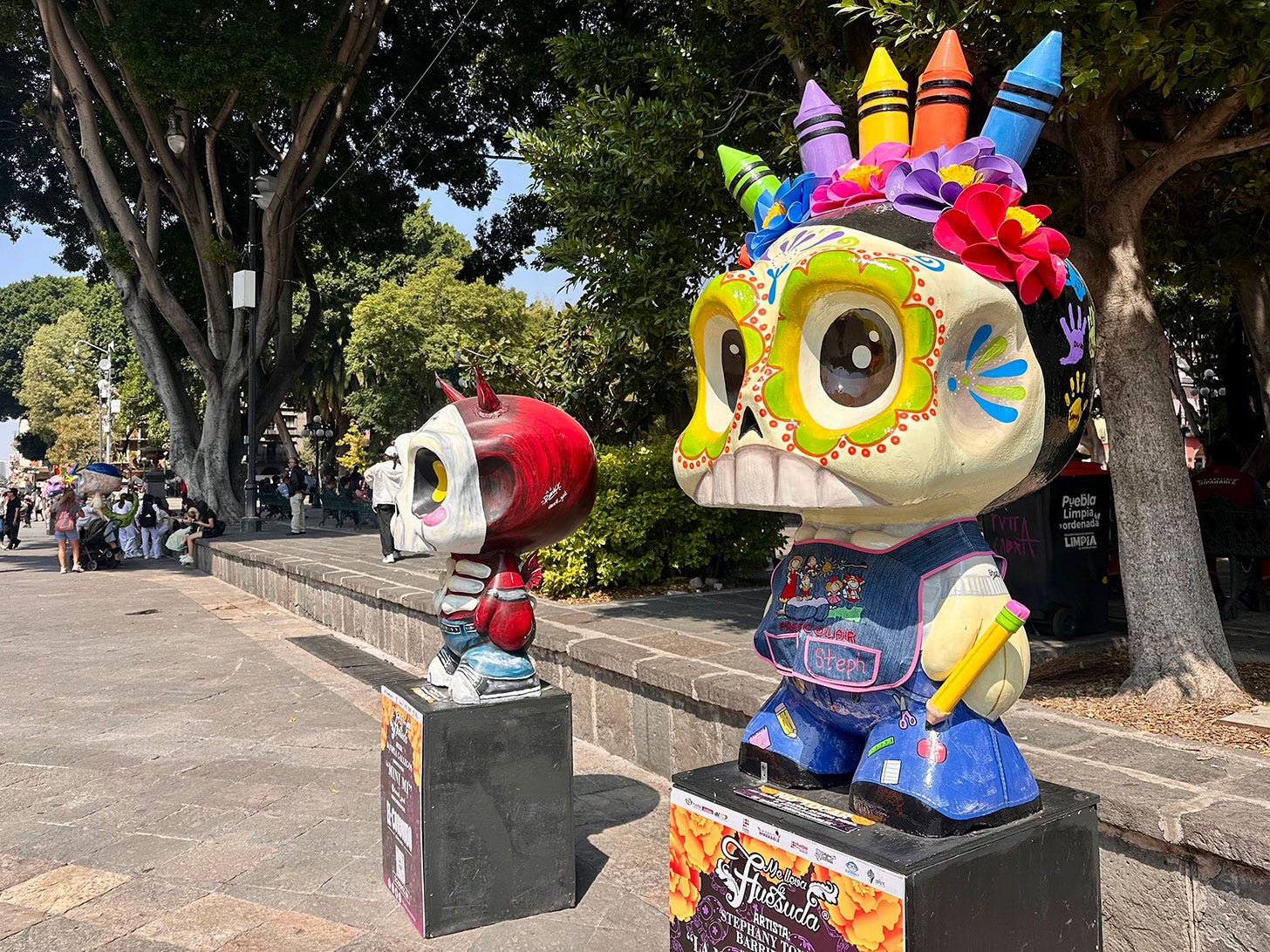
Rows of more unusually large skeleton head statues on plinths (I’m going to use the word ‘skeleton’ a LOT in this article) line the promenade outside the imposing Catedral de Puebla, decorated in all shades of neon. And there are people everywhere! Children dressed in cute suits and dresses, covered in concerning face paint are running riot.
Ahead of us was a young girl in a white dress with smeary make-up, lying half-dead in a rocking chair. She’d covered herself in fake blood, holding an (also fake) knife, accompanied by a charming soundtrack of moaning and groaning as she swayed back and forth.
Parade Festivities
More skeletons!
The parade on 1st November marks the final, mass celebration for Puebla’s La Muerte es un Sueño (Death is a Dream) festival. Interestingly, the parade itself isn’t part of the ancient traditions. It was created back in 2016 after the release of James Bond’s Spectre movie, which featured a fictional parade through the streets of Mexico City. It was so popular that it caused a domino parade effect across the country – and it’s stuck ever since.
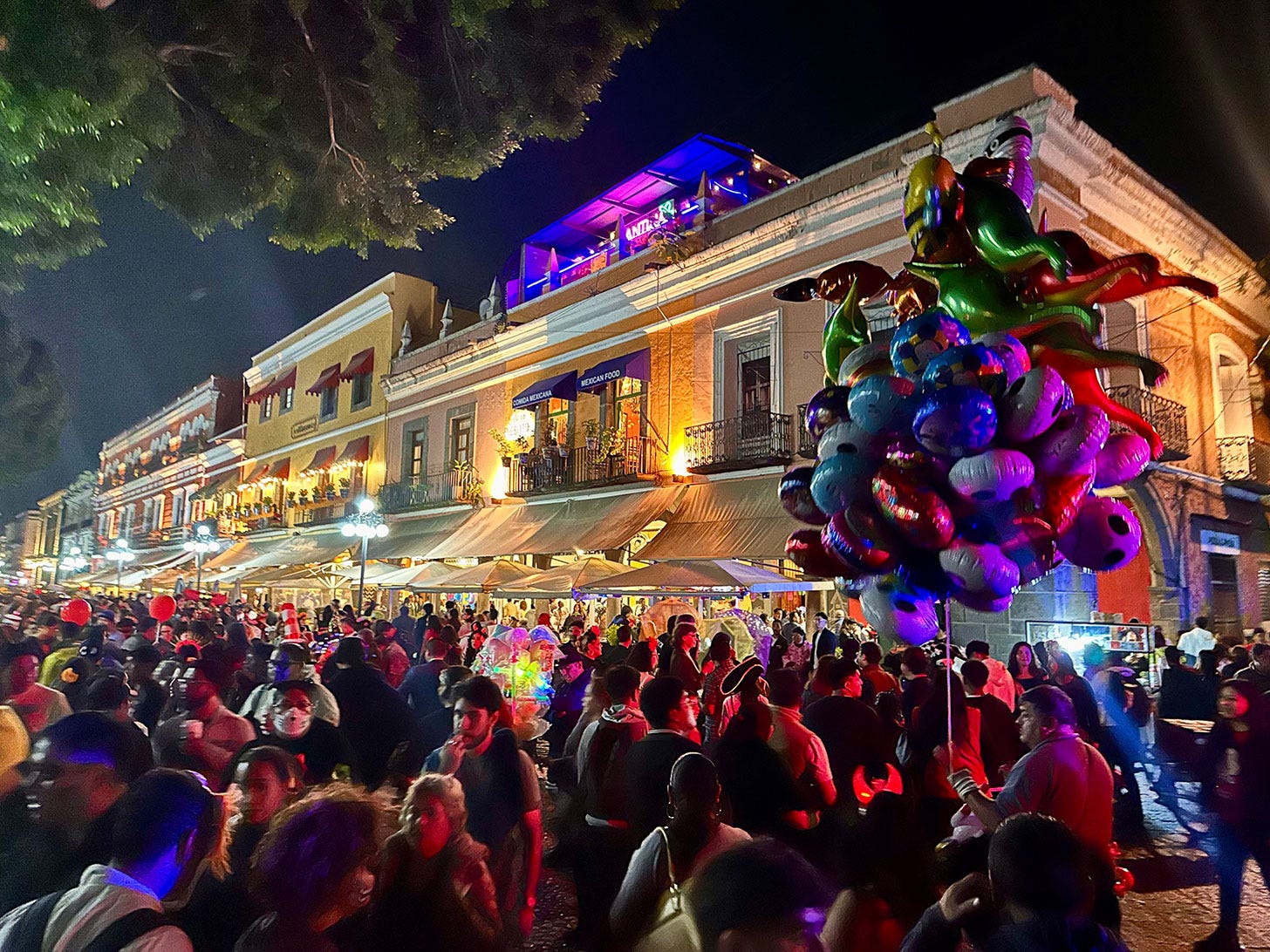
We hit the streets, and it’s clear the town is turning up the dial for its last evening of festivity. Every man, women, pupil-dilated child, and dog – lots and lots of dressed-up dogs, strongly skewed towards an inordinate number of chihuahuas – are out to celebrate.
Huge bunches of skull and pumpkin face helium balloons with their string-bound vendor wrists straining to avoid take-off. There’s a good few tonnes of white face makeup, kilometres of LED strip lighting and truck-fulls of papier-mâché showing up for this evening’s festivities.
The average height in Mexico I’ll sum up as short. Why is this important? With most of the crowd sitting well below our head height, we rock up to a parade with A-Reserve views to the action, plus Adriano and I can easily spot each other amongst the masses.
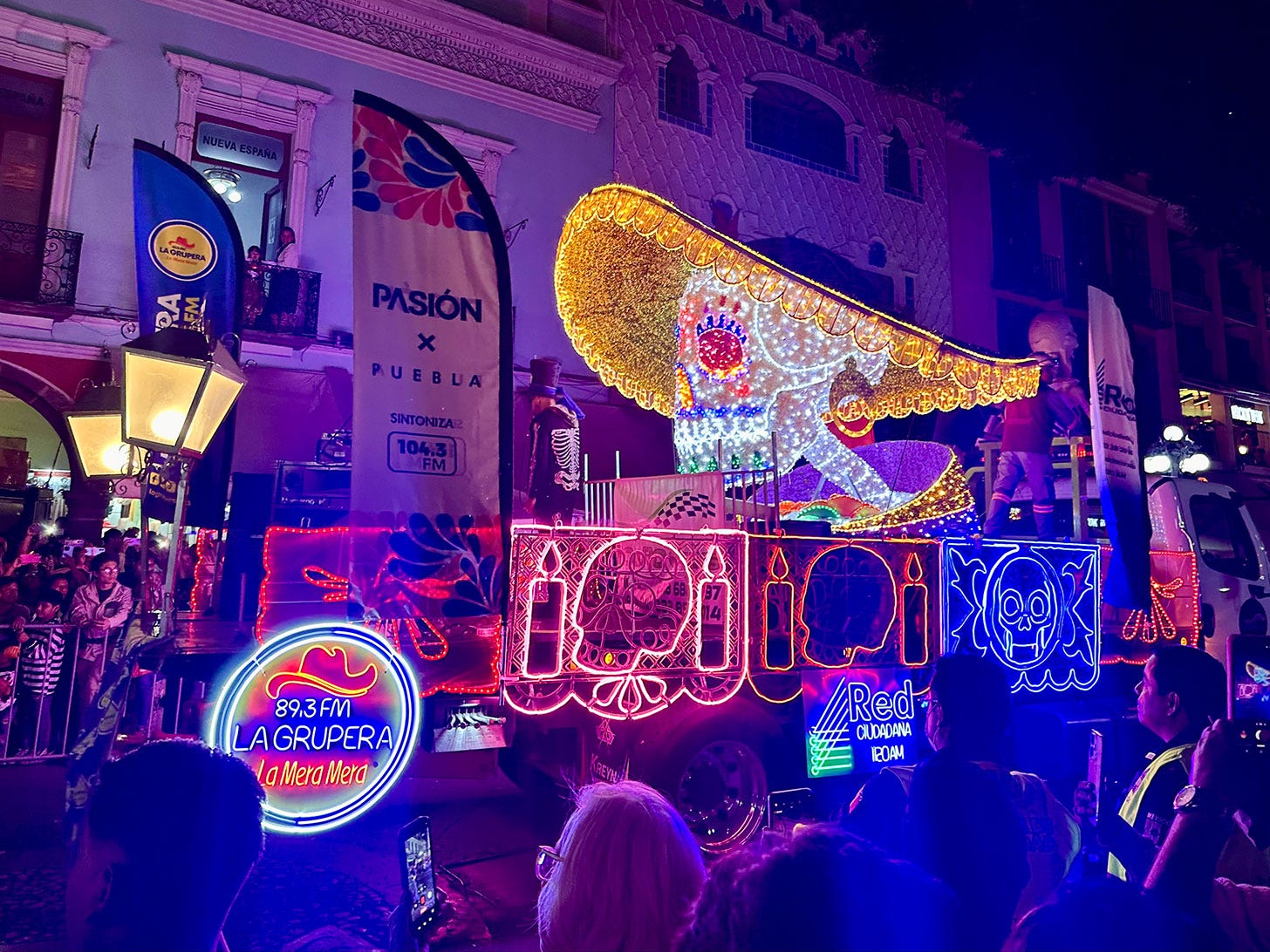
Police cars, photographers and camera phones are poised for action as the parade approaches the square. The first, albeit most impressive float approaches, promoting the regional radio station, with an oversized illuminated skull with an amphetamine-fuelled disc jockey screaming at the crowd.
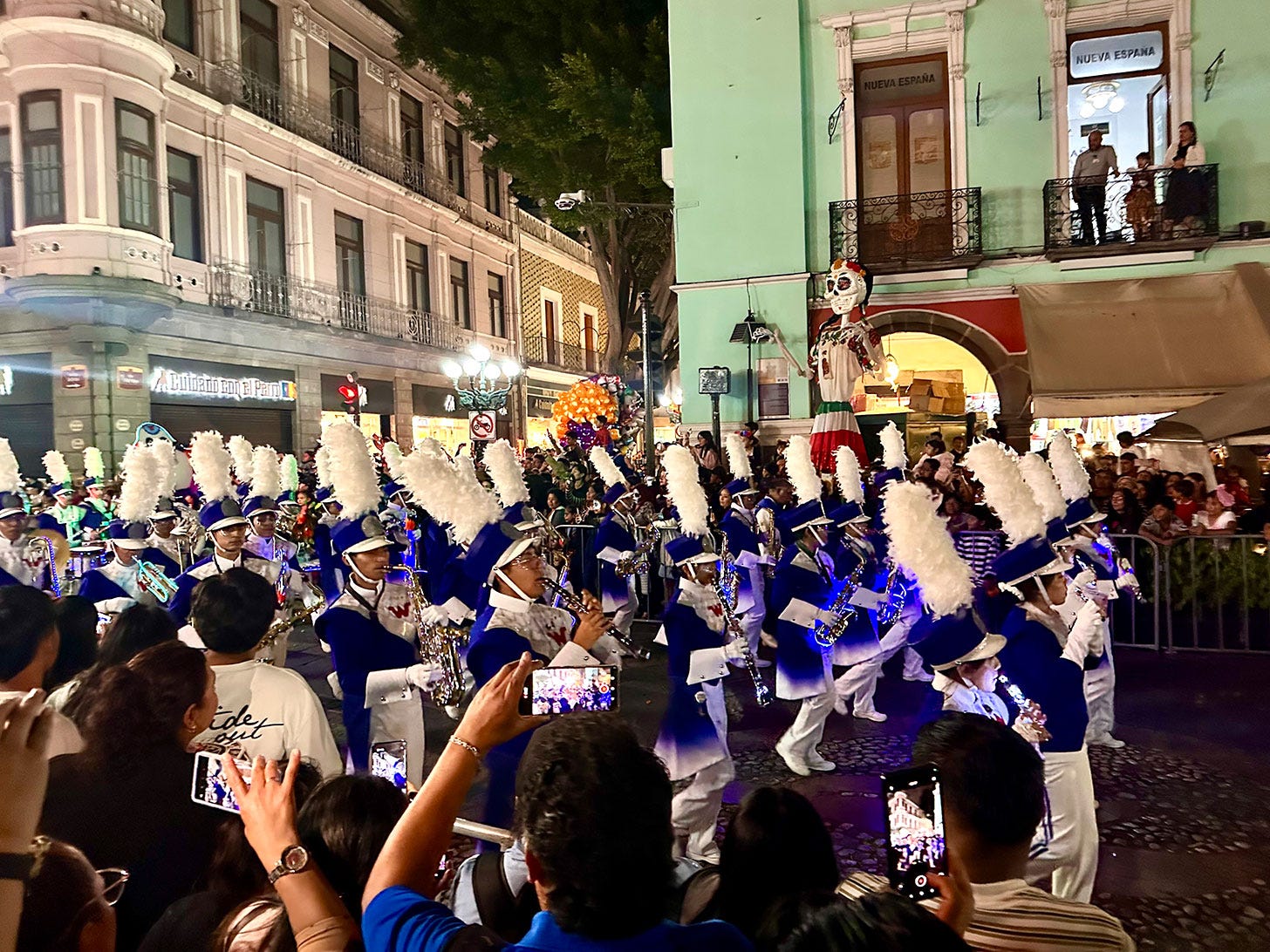
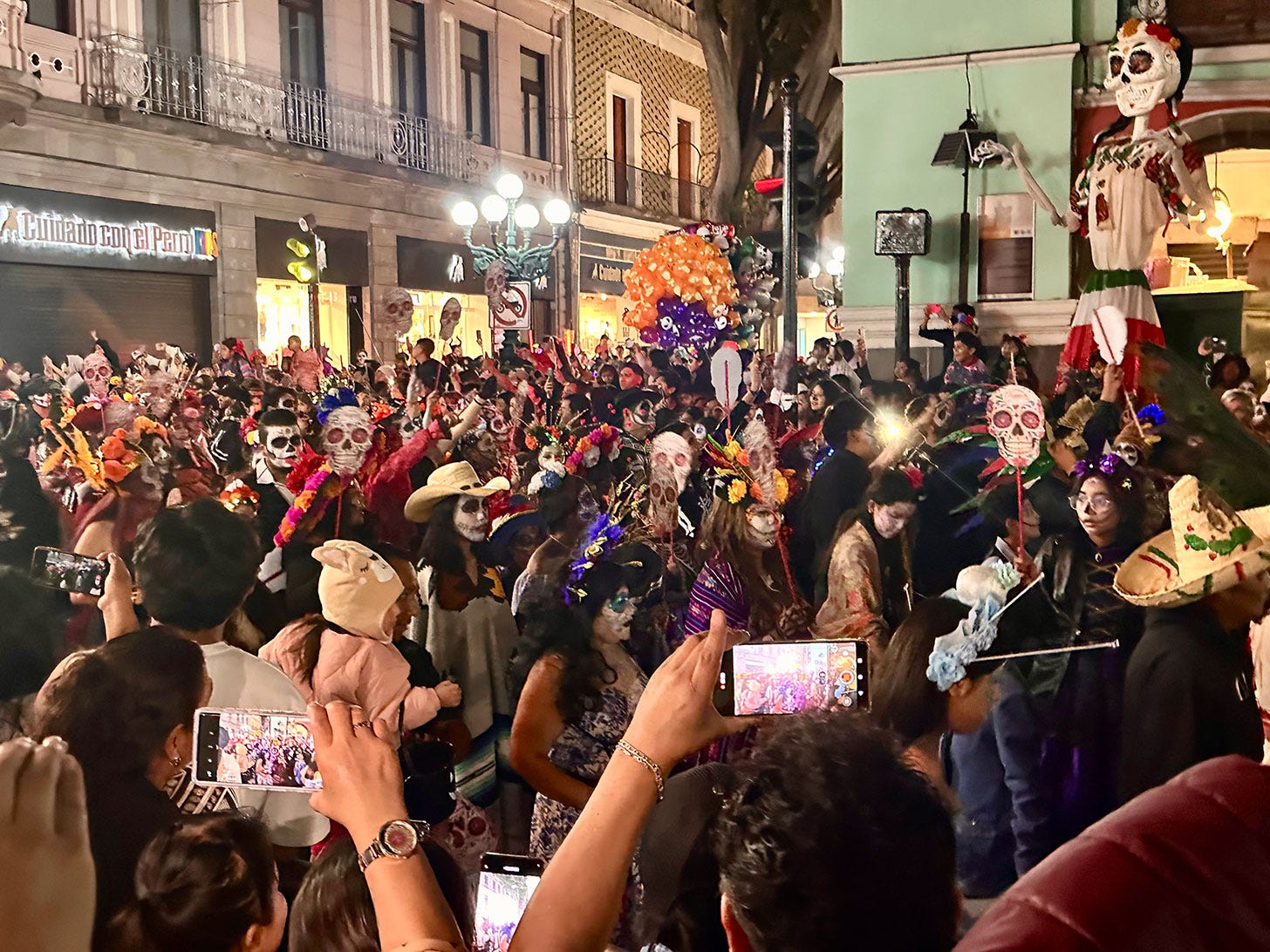
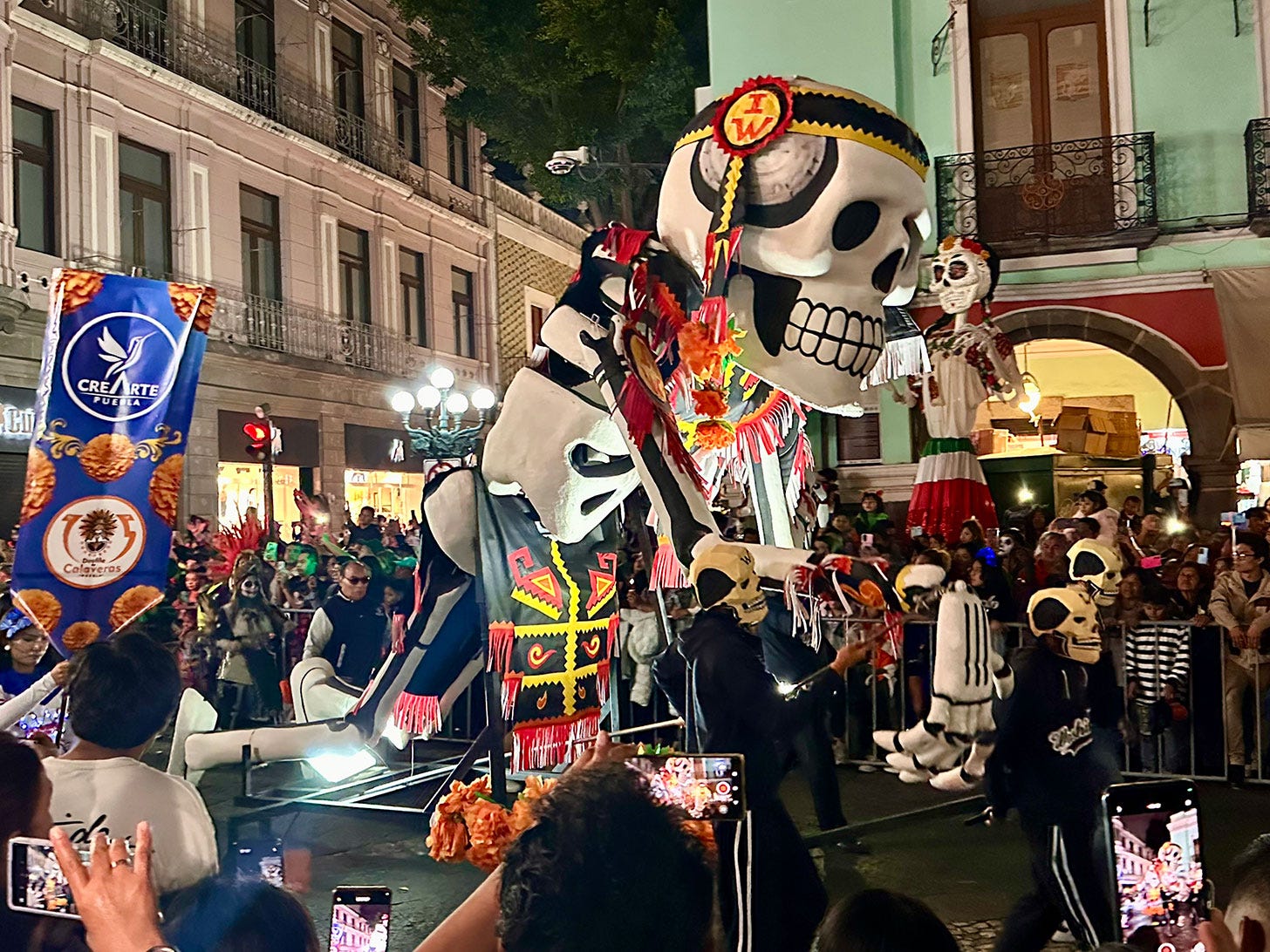
The first of many, many brass bands arrives with horns blaring, holding some kind of tune, with a wall of drummers letting loose. Weary flag twirlers and skeleton-faced cheerleaders lead them home. Then there are belly dancers (random), pet owners and tribal feathered warriors… I can’t believe we’re here!
With seven thousand people in the parade, it’s similar in size to Sydney’s Annual Mardi Gras Parade, albeit with less glitter, exposed skin and fake tan. It also means the line-up goes on for a good while. After a few hours of bands and never-ending choreography, the crowd starts to thin – a cue we take to to leave, wandering home through the throngs of town wanderers.
The Tradition
Dress-ups aside, there’s a genuine realness to this time. Mexicans take the time to honour loves and lives lost, welcoming them back to the world as a true defiance of letting them fade into the forever forgotten.
A bittersweet, but beautiful way for people to move through their grief.
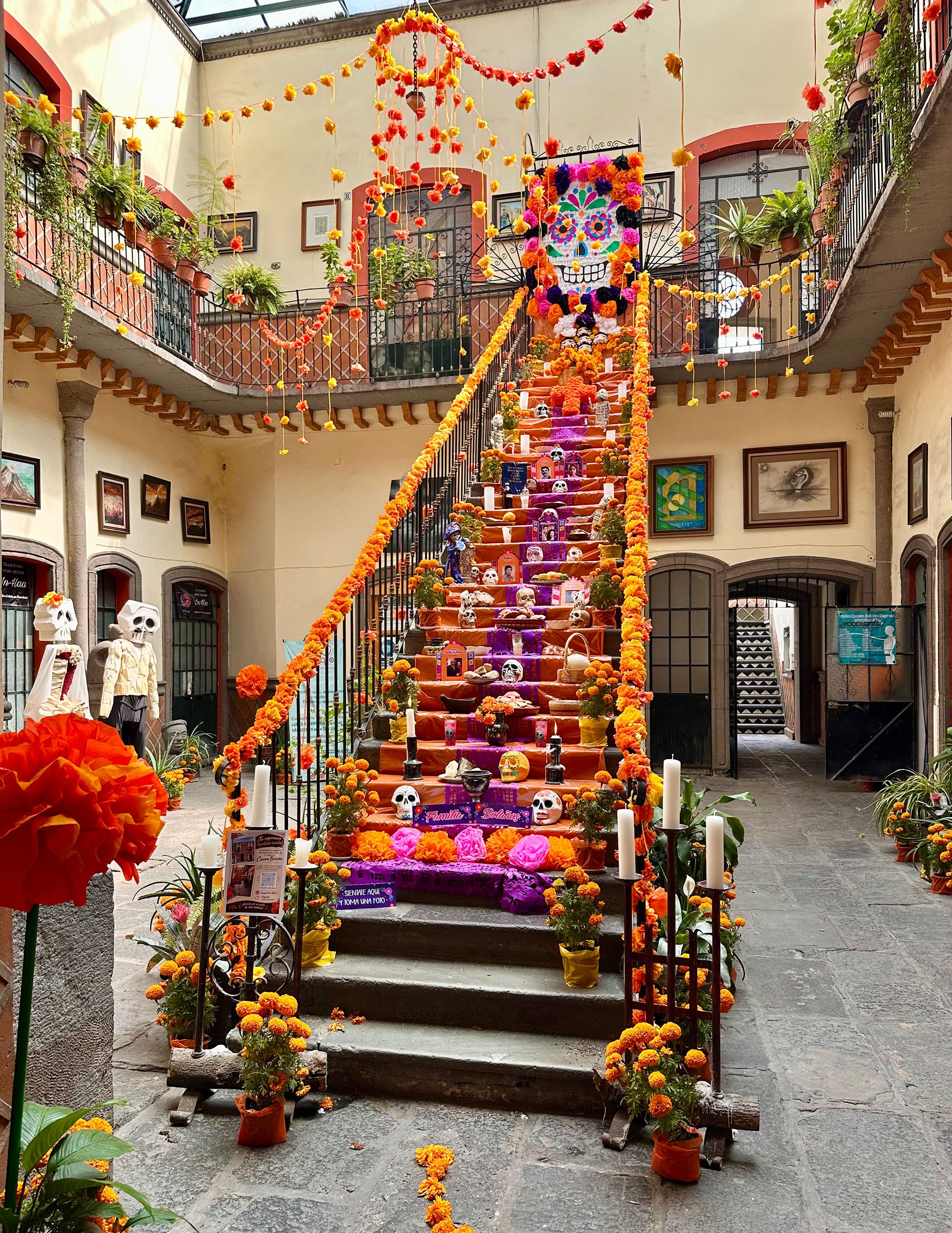
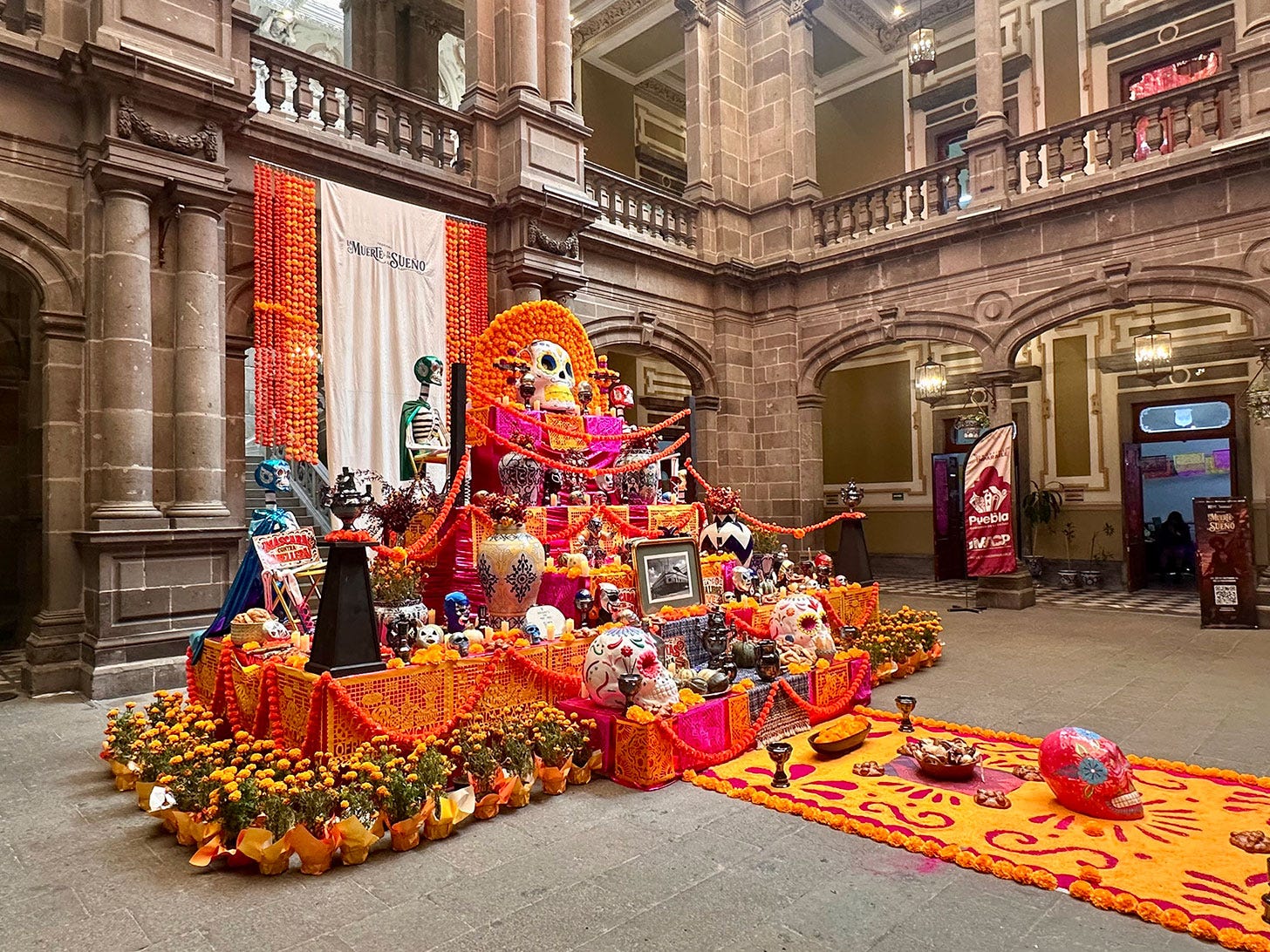
Alters are created in markets, government buildings, the home and places of gathering. They’re filled with photos, jewellery, favourite food offerings, candles, dog biscuits (yes pets are honoured too), skulls, and colourful paper cutouts.
Blooms take centre stage, mostly Cempasúchil (Mexican Marigolds) and Terciopelo (Velvet Flowers). Cempasúchil, with their headlight colour and pungent scent, are said to guide the spirits back to the living world.
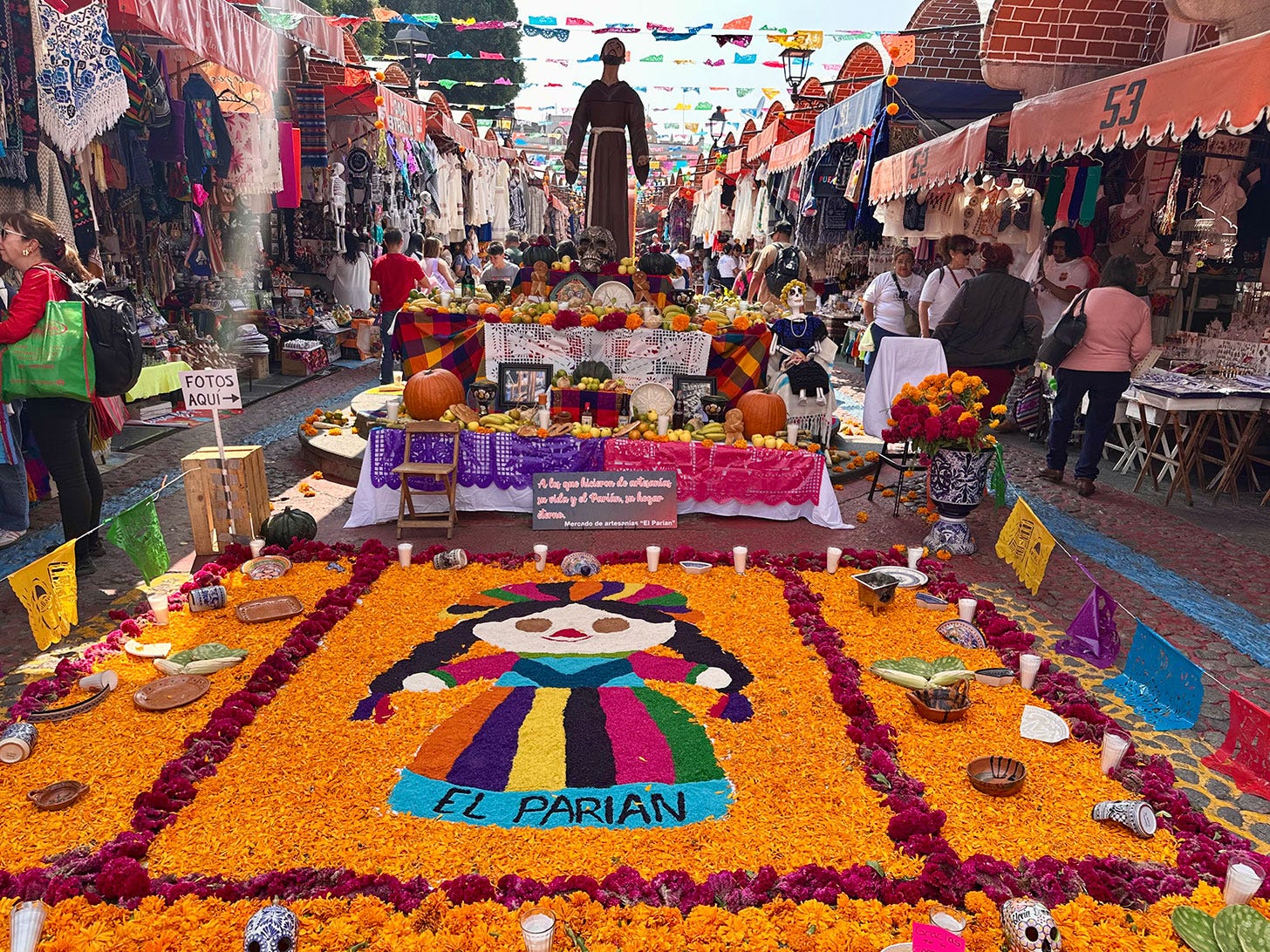
Cemeteries are not seen as dark, foreboding, don’t visit places. On the final day, families come together at local grave sites filled with flower walkways, to light candles and share meals with their lost ones, all the while keeping watch until their souls are returned to the afterlife.
This isn’t a final goodbye… it’s another chance to be together.
Shared Moments
Tasty Eats:
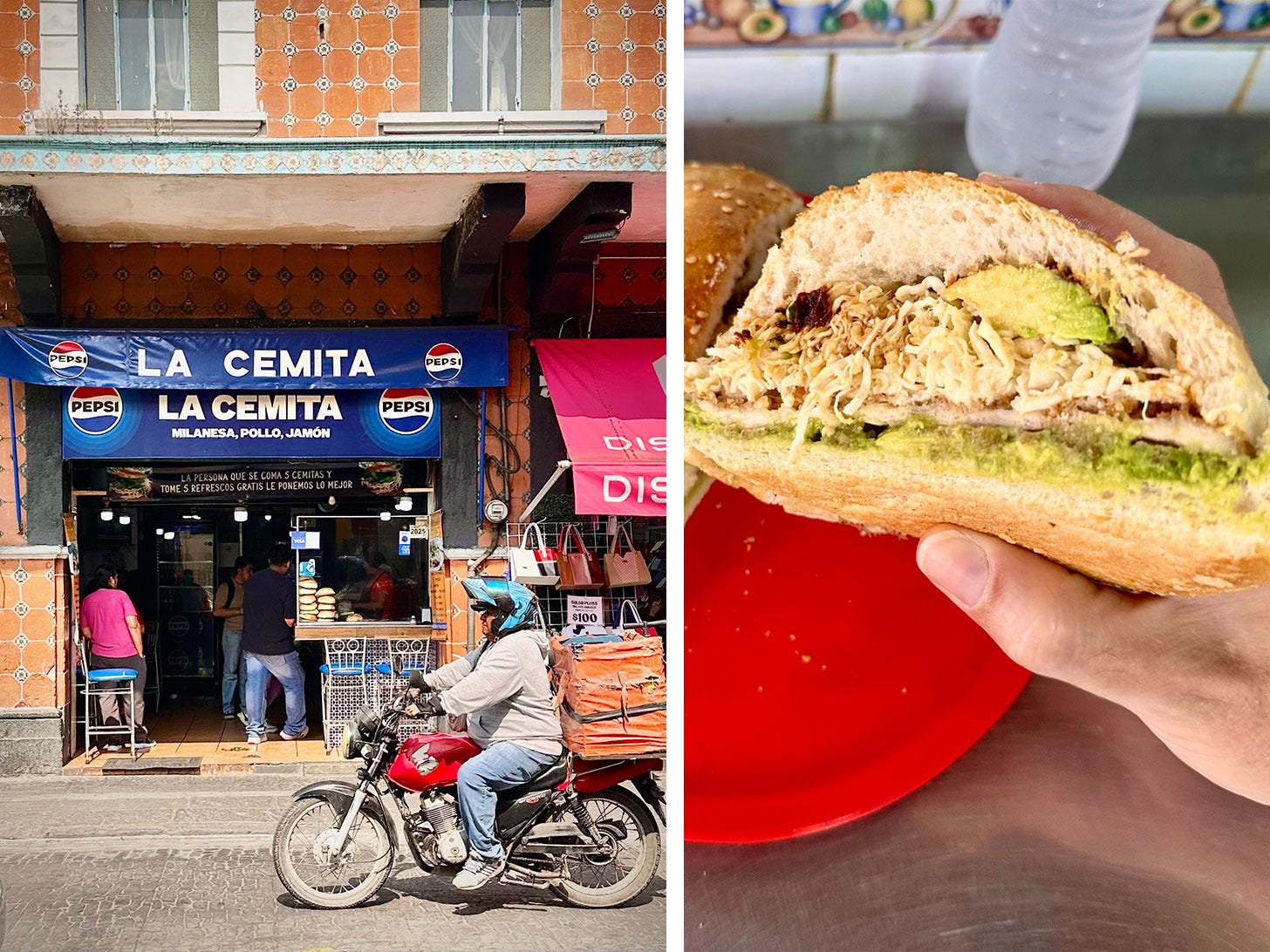
La Cemita
Gramps minds the money with three younger, pro-sandwich-making women manning the cemita (Puebla’s signature sandwich) assembly station. The milanesa is the bomb – a round bun filled with avocado, chicken schnitzel, chipotle, pápalo (a herb that tastes like rocket, lemon and coriander all at once), then a BUCKET load of Oaxacan Cheese that shreds into ribbons when pulled apart, with a mozzarella-like flavour profile. It’s a proper calorie whopper – the trick is to either share or split it over two meals (we did neither).
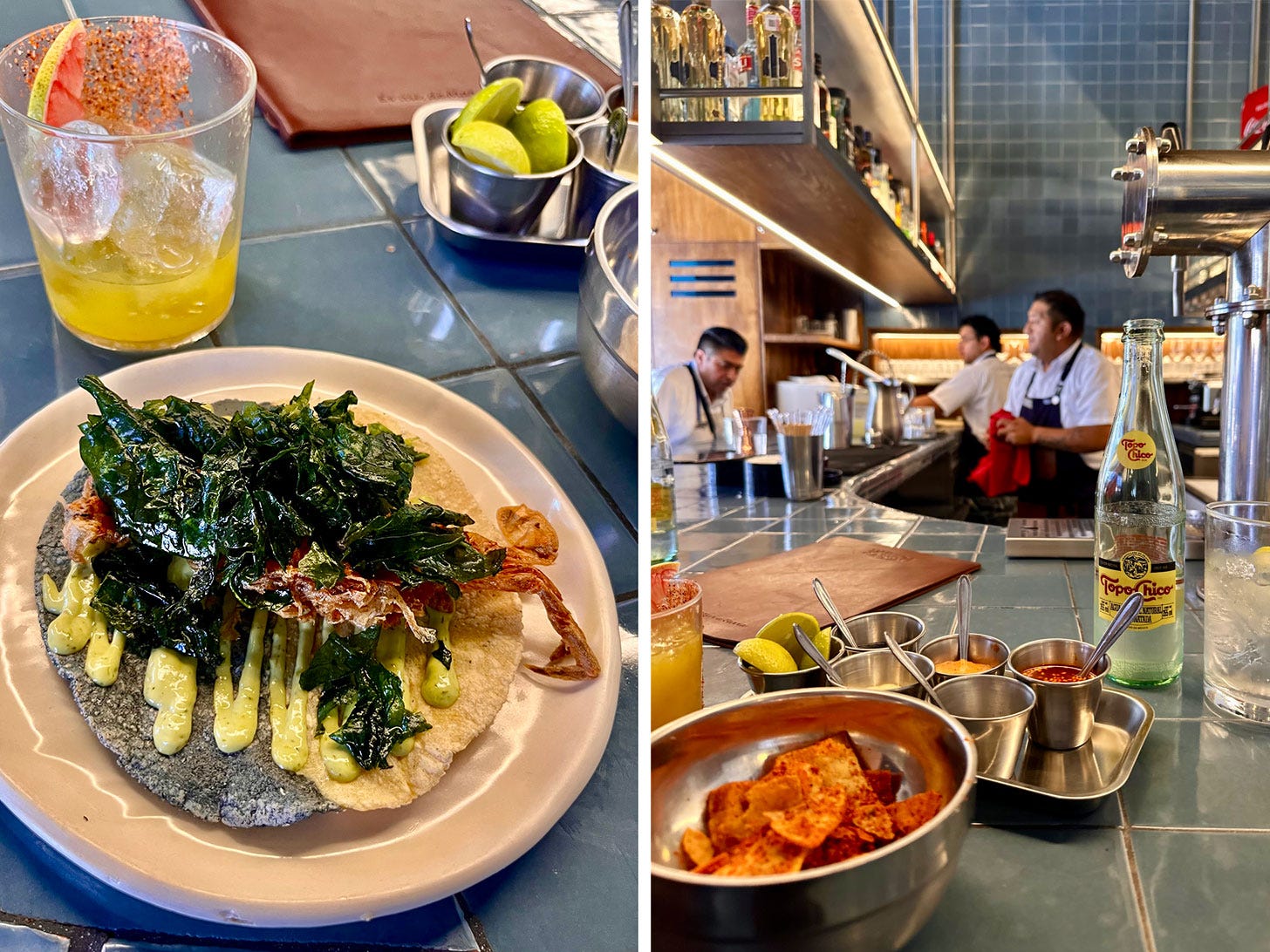
El Güero Marinero
Save the best for last? After the unforgettable dining experience of Contramar in Mexico City, we were keen to find a similar progressive seafood institution. Inspired by travels, three young Pueblan food entrepreneurs opened this casual seafood bar, which won them Michelin acclaim this year. The accolade’s fancy, but the prices fair and accessible. The fish taco is a standout, I challenge you not to drop half of it on your plate. The delicious Mezcal cocktails are artfully sour/sweet, with clever chilli-lime salts to ease the lime squeeze. Three triple-yum stars for this one.
Best ‘worth the effort’ moment:
Choosing to stay in Puebla rather than international airport-serviced Oaxaca for Día de Muertos. Accommodation in Oaxaca can be eye-wateringly expensive for these few days of tourist hub prices. Puebla offers a more traditional, local experience, with the towns of Atlixco and Huaquechula relatively close by.
Current listening:

The iconic La Sonora Santanera’s 60th Anniversary Album with some fantastic guest artists including my fave, Maria José. This muchos-loved Mexican tropical music institution started way back in 1955, and plays all the hip-shaking dance genres like bolero, cha-cha, mambo, and guaracha. Turn up the tunes and load up the hot sauce!
Flat point:
Booking an overly fancy restaurant for a forgettable meal. Our best eating experiences in Mexico (by an standout mile) have been at small, relaxed taquerías and ‘young blood’ establishments diving into new twists on traditional dishes.
Cultural observation:
Besides loving a good honk of the horn, you won’t experience many, if any, Puebla locals cursing, yelling or losing it in public places. Even in the throng of parade crowd madness, there was no pushing and shoving, just well behaved children, and adults patiently waiting for the show to begin.
And… onwards! 💚
I knew nothing about Mexico and this celebration. A bit different to All Souls' at CCSL Monday night but just as fragrant. Love what you're giving us!