21/ Oaxaca: Fried Crickets, Ancient Skulls & Damn Good Coffee
Location: Oaxaca, Mexico

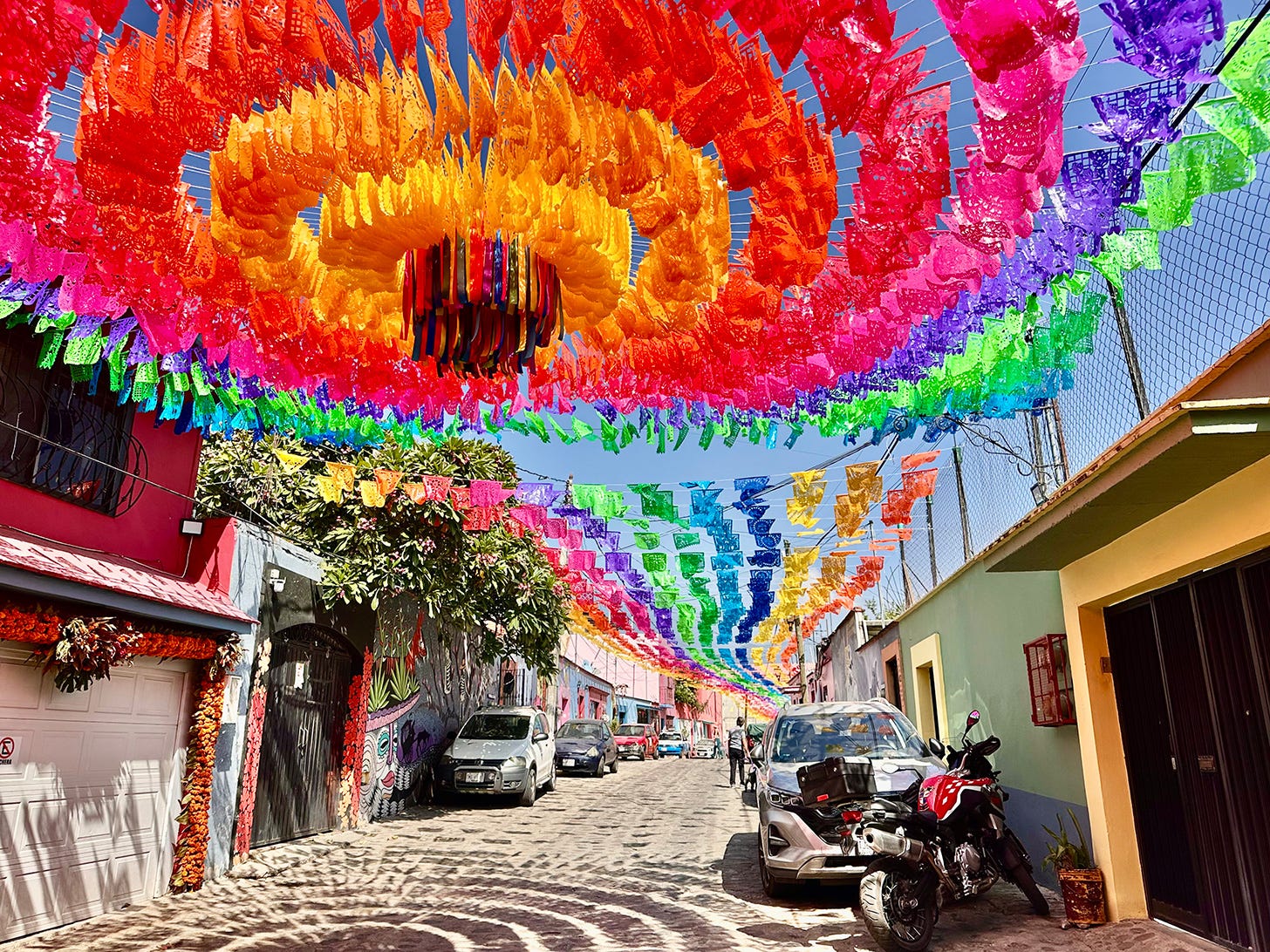
After a spine-realigning six-hour bus trip… we arrived in Oaxaca.
Crossing the cactus-carpeted mountains of the Tehuacán–Cuicatlán Biosphere Reserve we were kept alert by a road that’s more pothole than bitumen. Non-stop movies unashamedly blast through the bus’s speaker system – Venom (Spanish-speaking extraterrestrial parasites), Sex and the City (watchable for Carrie’s ‘smoked a few packets’ Spanish persona), and The Godfather – I’m sure they use the same voiceover artists for all foreign film imports.
“Hola Josh!”
We’re warmly welcomed by our hosts, Victor and Gabriela, and their two-year-old son peaking out from behind Dad’s leg as we unload our taxi from the main bus depot. “Who’s this guy?” I ask. “This is little Victor!” Dad replies, his smile beaming. I’m curious about the name double-up. “Names often pass down to our kids here,” he explains. A fine gesture of pride and family tradition.
Automated checkins are convenient when arriving at some ungodly hour on an international flight, but I do miss these ‘welcome to your home’ human connection experiences from formative Airbnb days.
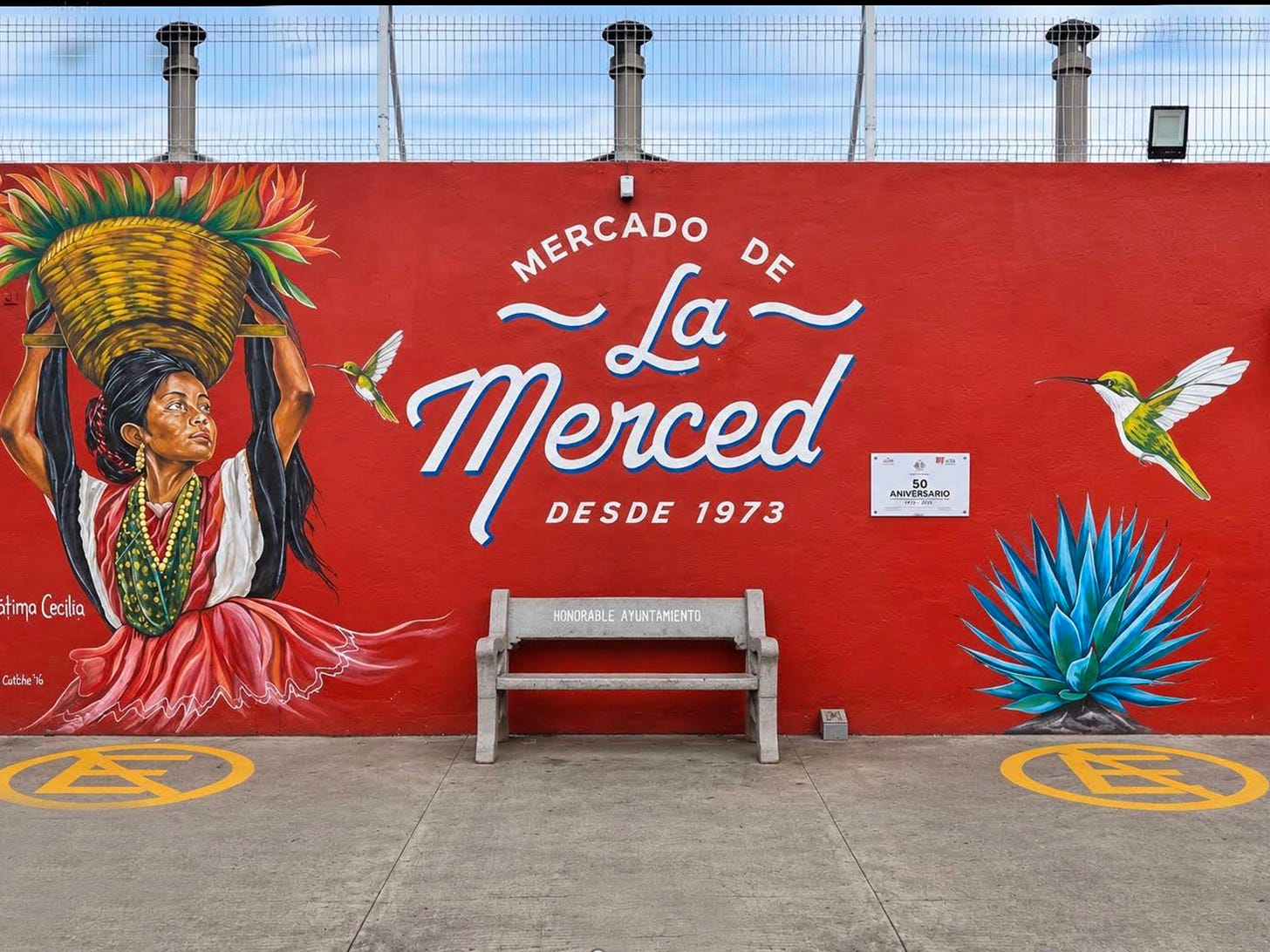
Victor recommends Mercado de La Merced for groceries and a traditional bite to eat – his favourite market. It’s less of a tourist performance than the Centro’s Mercado Benito Juárez. Benito’s still worth a visit to experience the intensity of ‘BBQ meat street’ filling the skies with billowing smoke. And the feisty fried cricket sellers won’t let you leave without downing a handful.
From Ornate Facades to Crunchy Crickets
We head to Victor’s market for our first morning adventure. Blue skies and a temperate 24°C greet us as we head out. The first thing we notice is that our very stroll-able neighbourhood is unashamedly alive with colour – ochre, pink, toothpaste minty green, navy, and ‘Frida’ cobalt blue – boldly splashed across restored Spanish colonial façades with their fancy render work, oversized wooden doors and ornate ironwork.
After our traditional Día de Muertos experience in Puebla the week before, this town’s polish and charm at first feel a little ‘fake-Mexico’. There’s been a massive surge in tourism here since the pandemic, with direct flights from LA, Dallas and Phoenix. As a result, this celebration, with family, memory and ritual at its heart, risks becoming somewhat of an international fancy dress party.
In a recent CNN article, Martha Jiménez, a local from San Andrés Mixquic near Mexico City, reflects on the growing crowds: “Suddenly, something intimate becomes – I wouldn’t want to put it this way – but it becomes a spectacle, doesn’t it?”
Thankfully we arrived after the clean-up. Decorations are still bright and beautiful, but the marigolds are starting to fade.
En route we encounter Hatted home-style eateries, bouji boutique hotels and the finest of French-inspired bakeries. Things start to feel less theatrical and more day-to-day as we near the market.
I notice some sellers dressed in traditional clothing. Vendors and small farmers from the surrounding Oaxaca Valley’s villages head here to sell their fresh produce, flowers and handicrafts. I catch a beaming smile from a lady on a small wooden stool, her laundry basket loaded with tortillas still warm and sweating in plastic bags. How can we resist – that’s lunch sorted for the next few days.
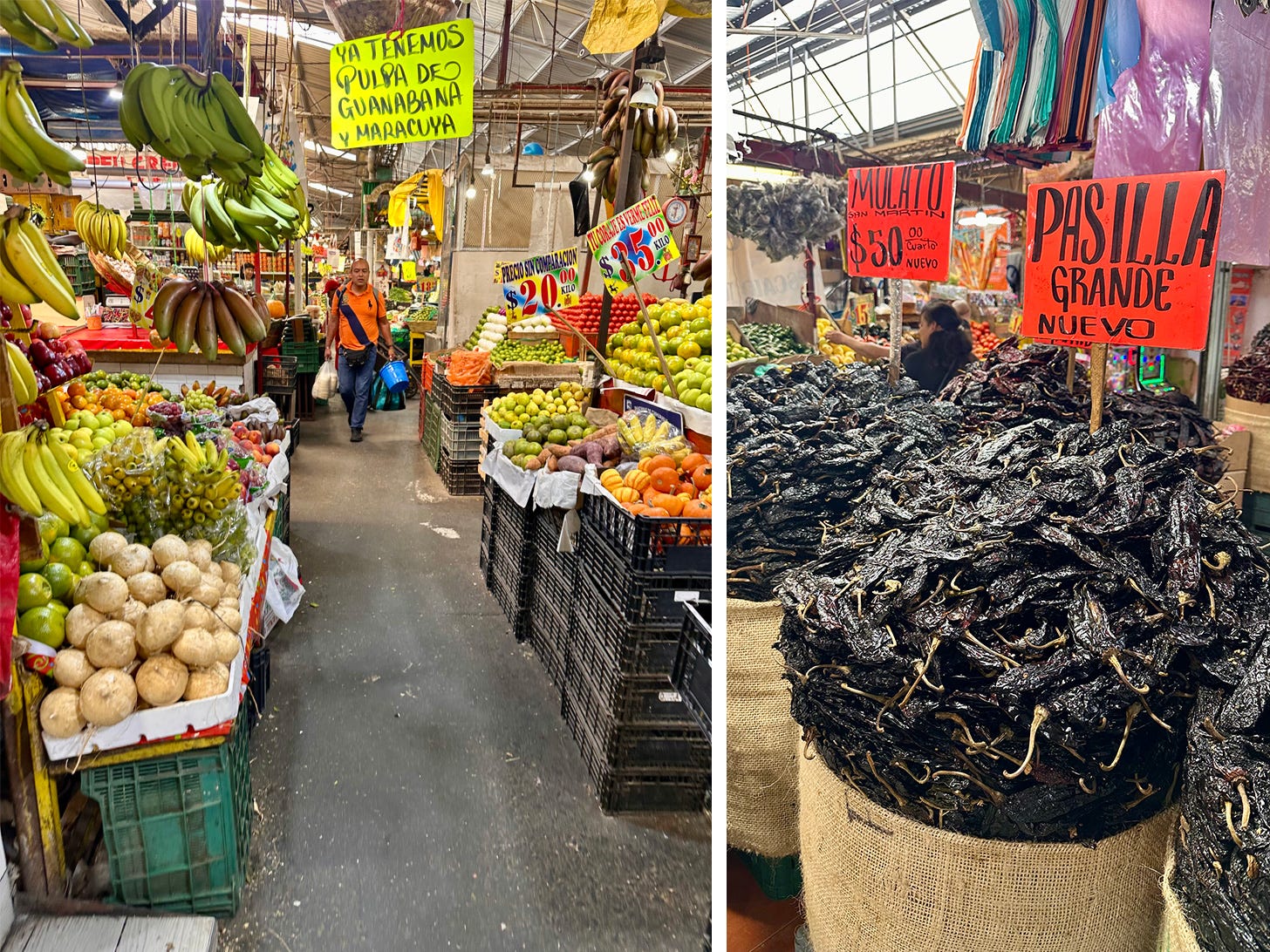
We load up on avocados, limes, red and green tomatoes, orange habaneros, bananas, sour green oranges (am I turning Mexican?) and the freshest peppery rocket. I ask for tomatillos, like the ones we had in Mexico City, only to told by our seller that what I thought was locally grown, is most likely flown in from Peru. Damn it… carbon footprint fruit blowout.
Butchers are busy chopping, deboning and chorizo making. Chickens dangle by the neck (apologies my vegan comrades… just keeping things real). I’m sure the meat is market fresh, but I struggle. My Western-trained, over cautious brain can’t get past the room temperature, open-air stands, with nothing between the produce and the flies and heat.
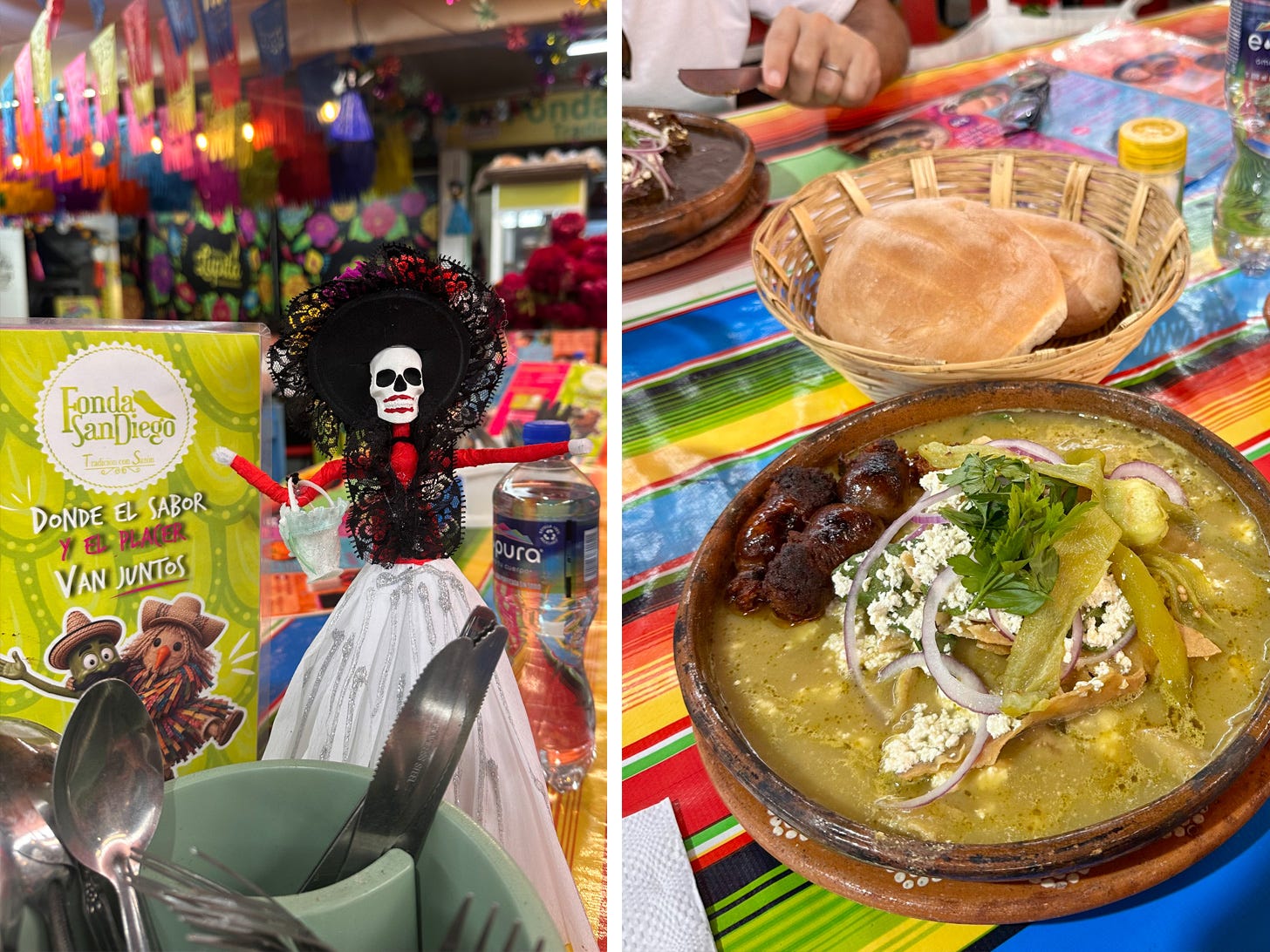
Of course this dilemma is quickly forgotten as we round the corner into the dining hall. The smell of slow cooking permeates the air. We’re ushered to a long table covered in checkered plastic table-cloths, salsas and serviettes by a cheery restauranteur with sweaty brow, twirled moustache and a well-fed belly. Yes he’s worked this move a million times before, but we’re hungry so the cheeky push is welcome. He goes for the ‘taste everything’ upsell. We politely decline knowing full well, just by looking around that the serves here are football team-worthy. He grins and happily takes our still-generous plan B order, and it’s proper tasty.
A Crumbly Convent, a Mountain Tomb, and One Extraordinary Skull
I promise there’s a common thread here… stick with me.
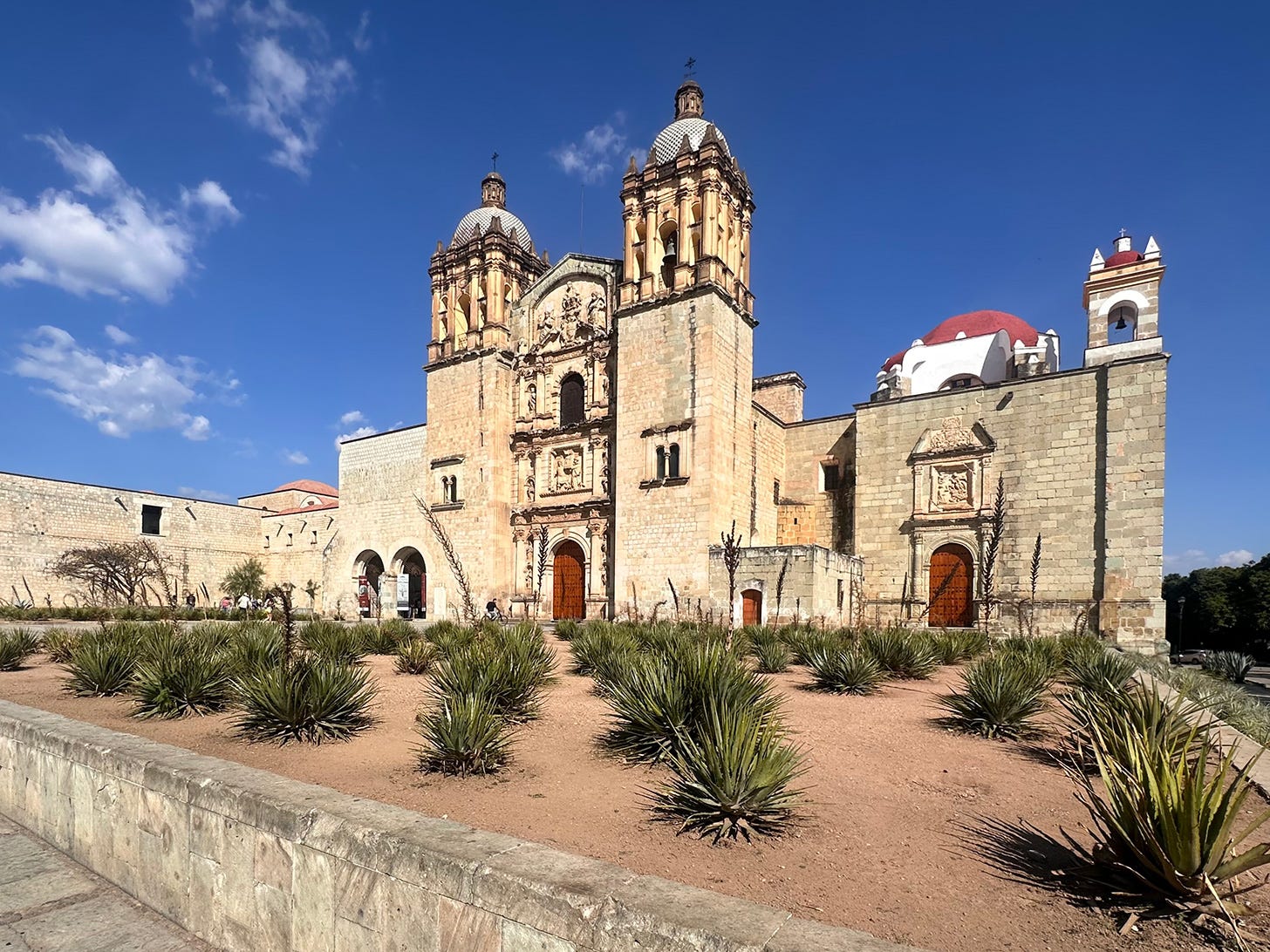
With food sorted, we began our cultural explore with a visit to The Museo de las Culturas de Oaxaca – a vast former convent turned museum dating back to the 16th century. It took ambitious Dominican friars in partnership with Indigenous craftspeople nearly two hundred years to complete the building as it stands today.
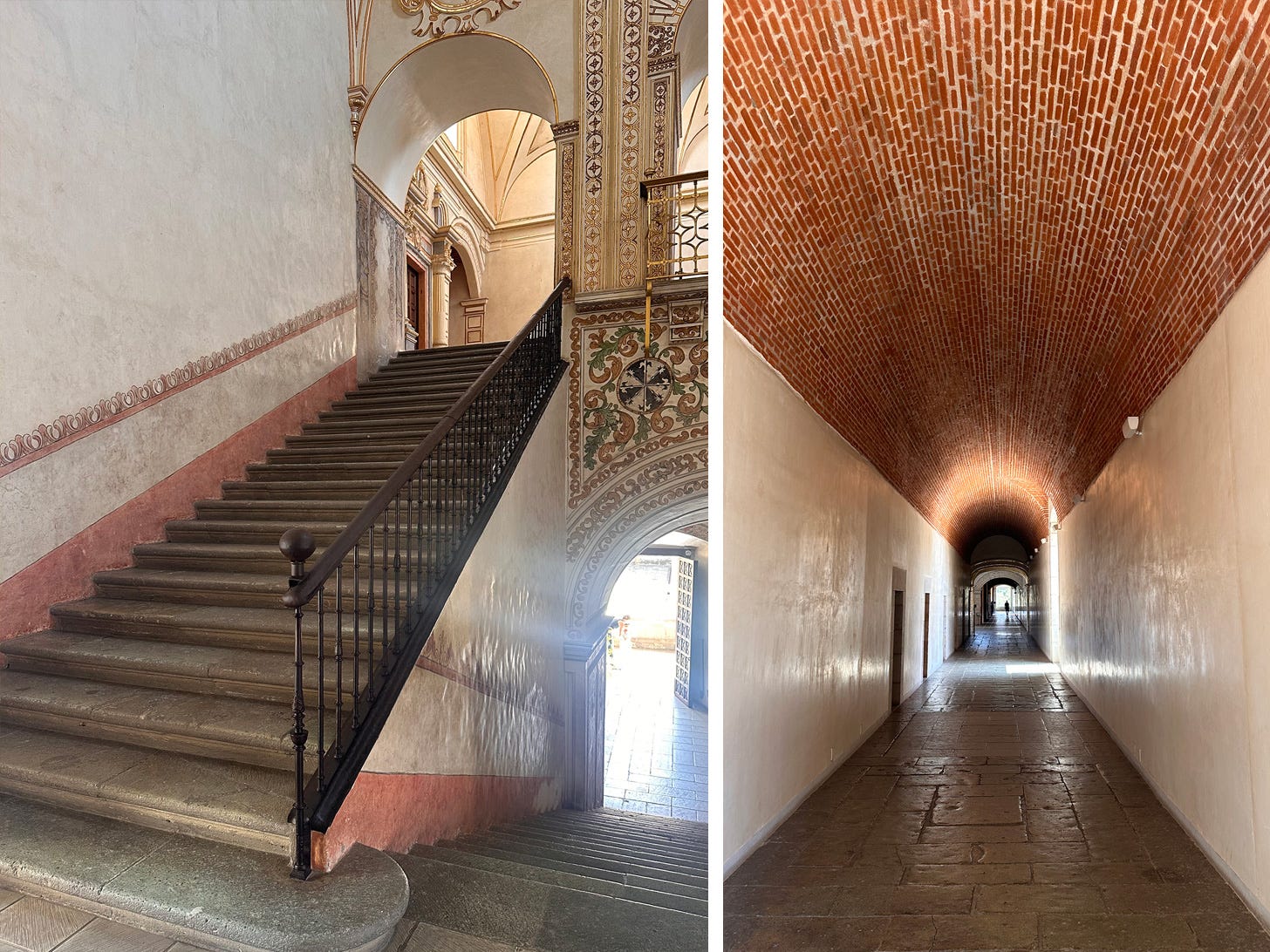
A photoshoot-worthy staircase encrusted in Baroque decoration leads to a maze of stone passageways, branching off into room after room showcasing centuries of lives and culture. Light shafts penetrate the darkness through several meters thick walls, with occasional open air archways opening to panoramic vistas of cactus gardens and the Oaxaca mountain ranges beyond.
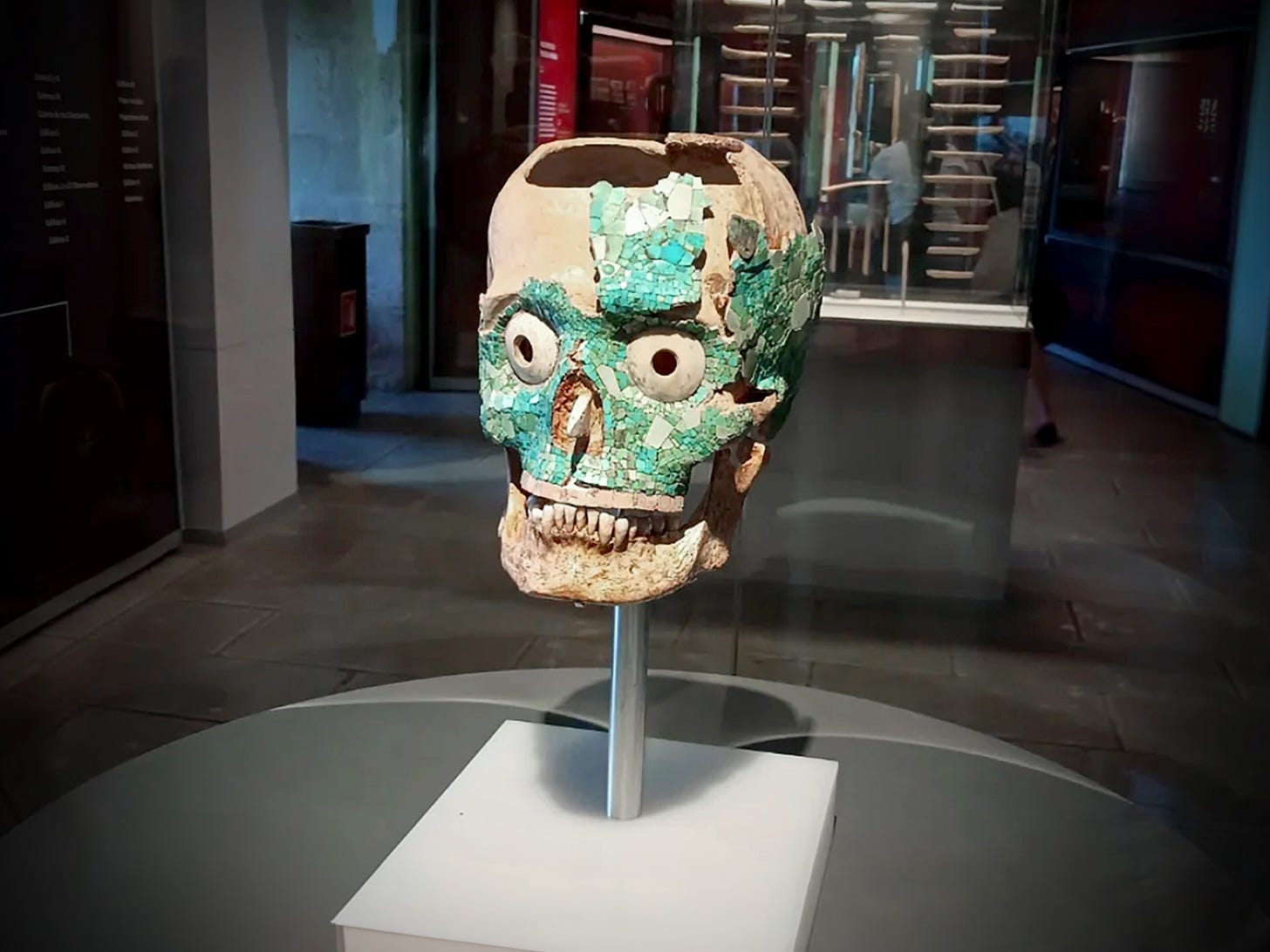
My artefact threshold’s about an hour, so we beeline for the showstopper – the discovered contents of Tomb Seven. Amongst the ornate gold, pottery and pearls we find it… the nightmare-inducing, but equally beautiful turquoise-mosaic skull. Well, Mexican archaeologist Alfonso Caso ‘found it’ for us back in 1932, when he was digging about the ancient Zapotec estate of Mount Albán, a few kilometres out of town.
It’s a real skull, and it’s mesmerising. Most of the face is still covered in intricate, multi-shaded turquoise pieces, with two white shell discs as eyes in the sockets giving it an ‘I’m alive!’ presence. All this I’m sure allowed priests of the time to get up to all sorts of conjurings.
The next morning we make an early start, winding our way out of town and up Monte Albán to explore the skull’s excavation site. As we approach the entrance of this mountain top Zapotec citadel, I’m transported back to that arrival moment at Machu Picchu, after our multi-day mountain hike in 2012. You emerge out of the jungle, transported to a vast and magnificent world from another time – a truly humbling experience.
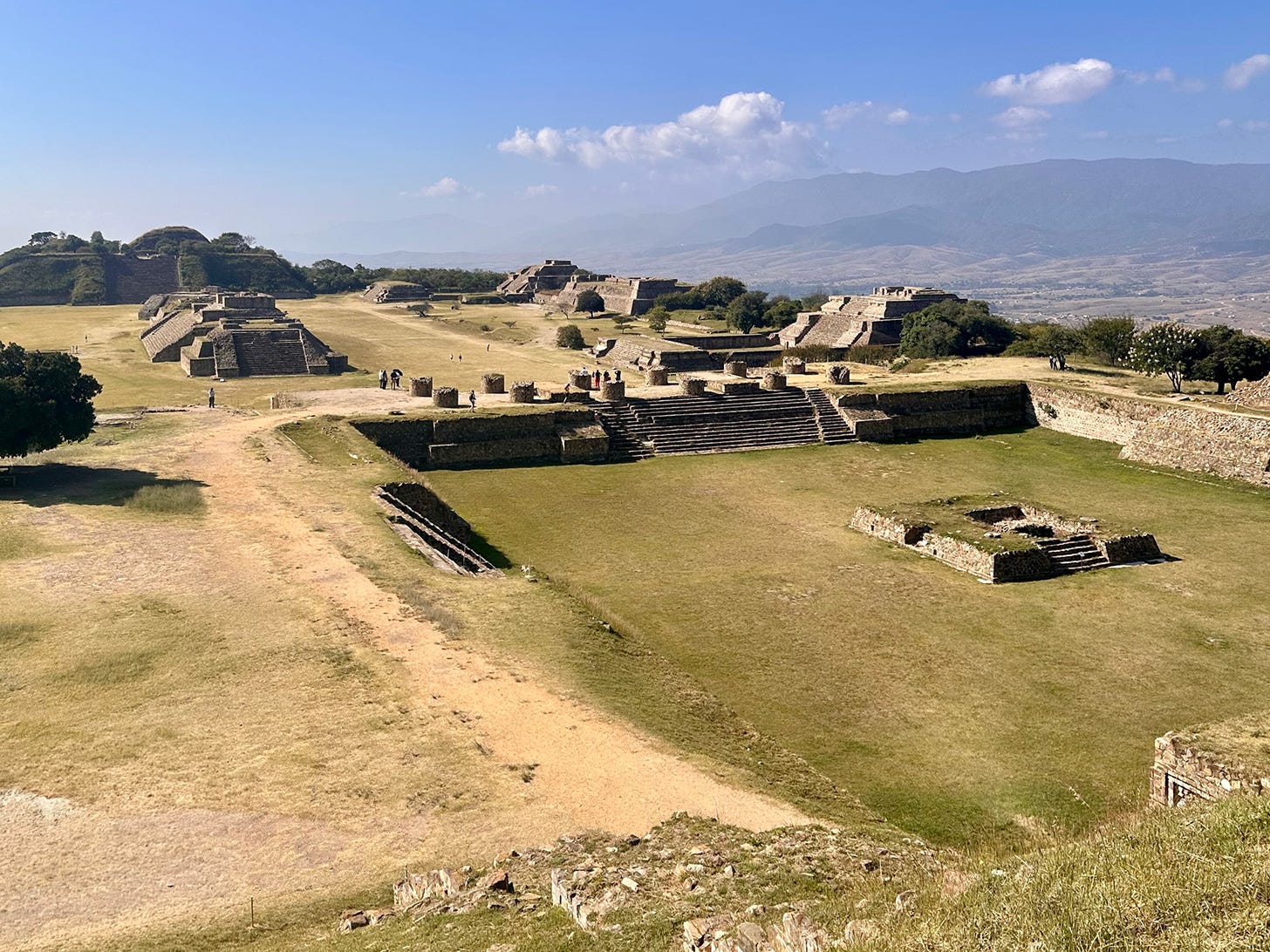
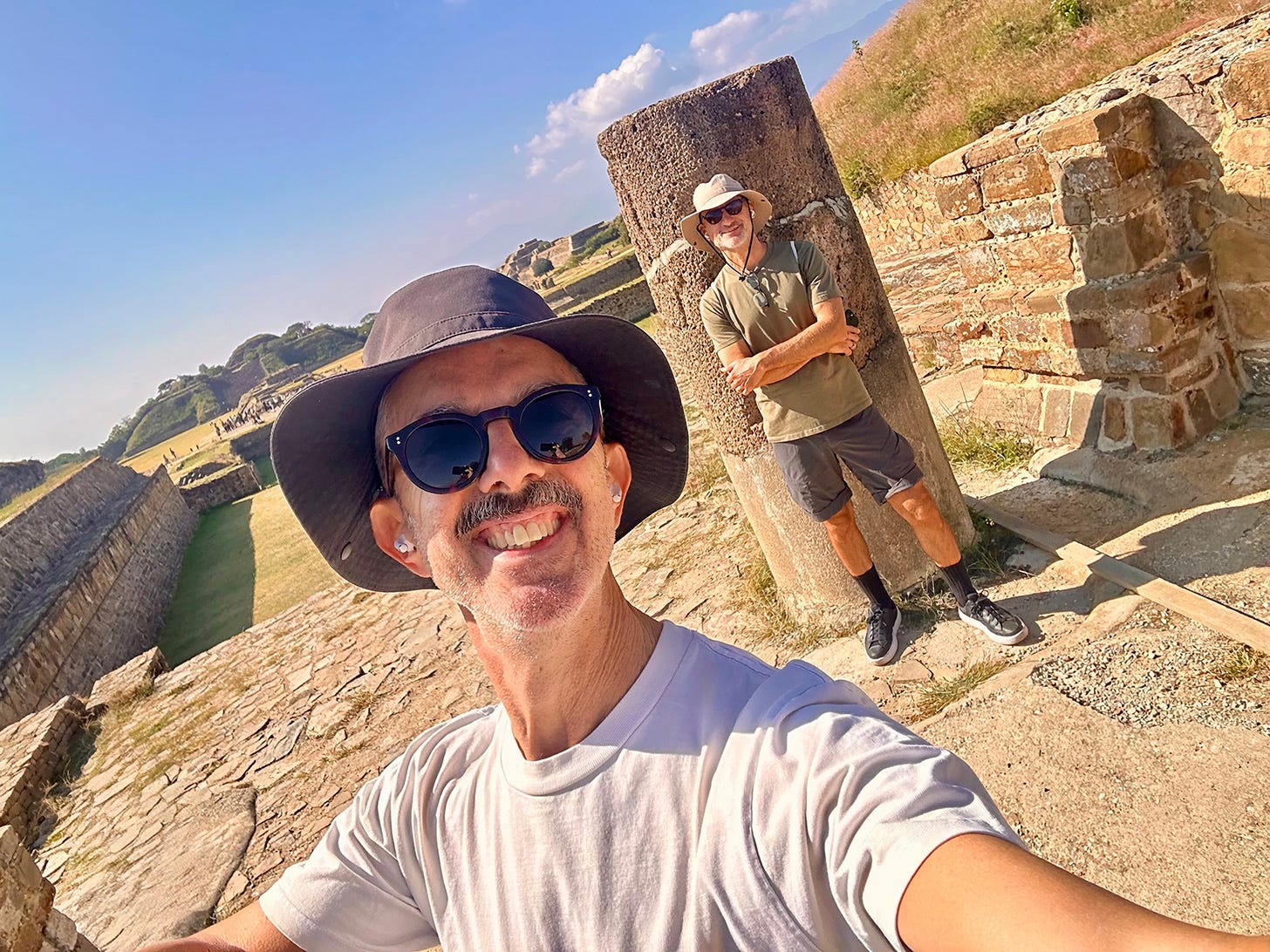
I imagine the high priests appearing atop these pyramids, in full feathered (very drag-worthy) head-dresses, making their way in theatrical procession through the colonnade to address the common people, standing small and insignificant in the plaza below.
So much human blood and sweat to build all this, with such geometric precision. Every pyramid, temple, altar and the observatory intentionally designed for strategic crop management, solar observation and upholding authority. Offerings were made regularly including food, animals, war captives and even star athletes. According to legend, the captain of the winning ball game team was at times sacrificed… not exactly an incentive to shine.
As we exit the main site, we’re still on the hunt for the infamous Tomb Seven. We ask a security guard and are given directions as the rest of our tour waits for the bus. We make our way behind food stalls, across a car park, then down a ramp through the trees. There it is. Hidden away like an afterthought. It feels disconnected – when there’s such a song and dance made at the museum about its discovery and findings. A fascinating journey through time and discovery nonetheless. I’d highly recommend Monte Albán for your visit.
Collingwood meets Barrio de Jalatlaco
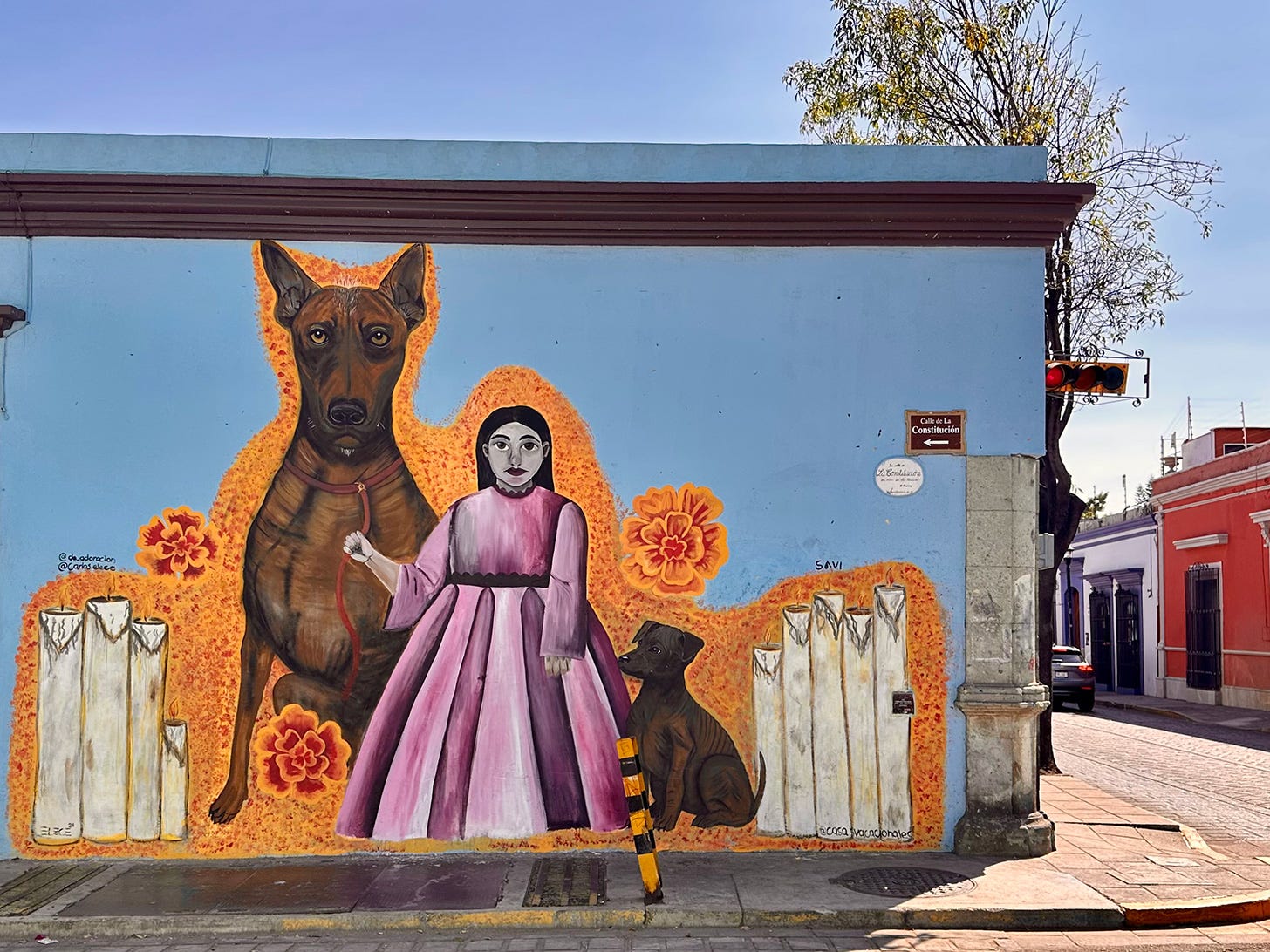
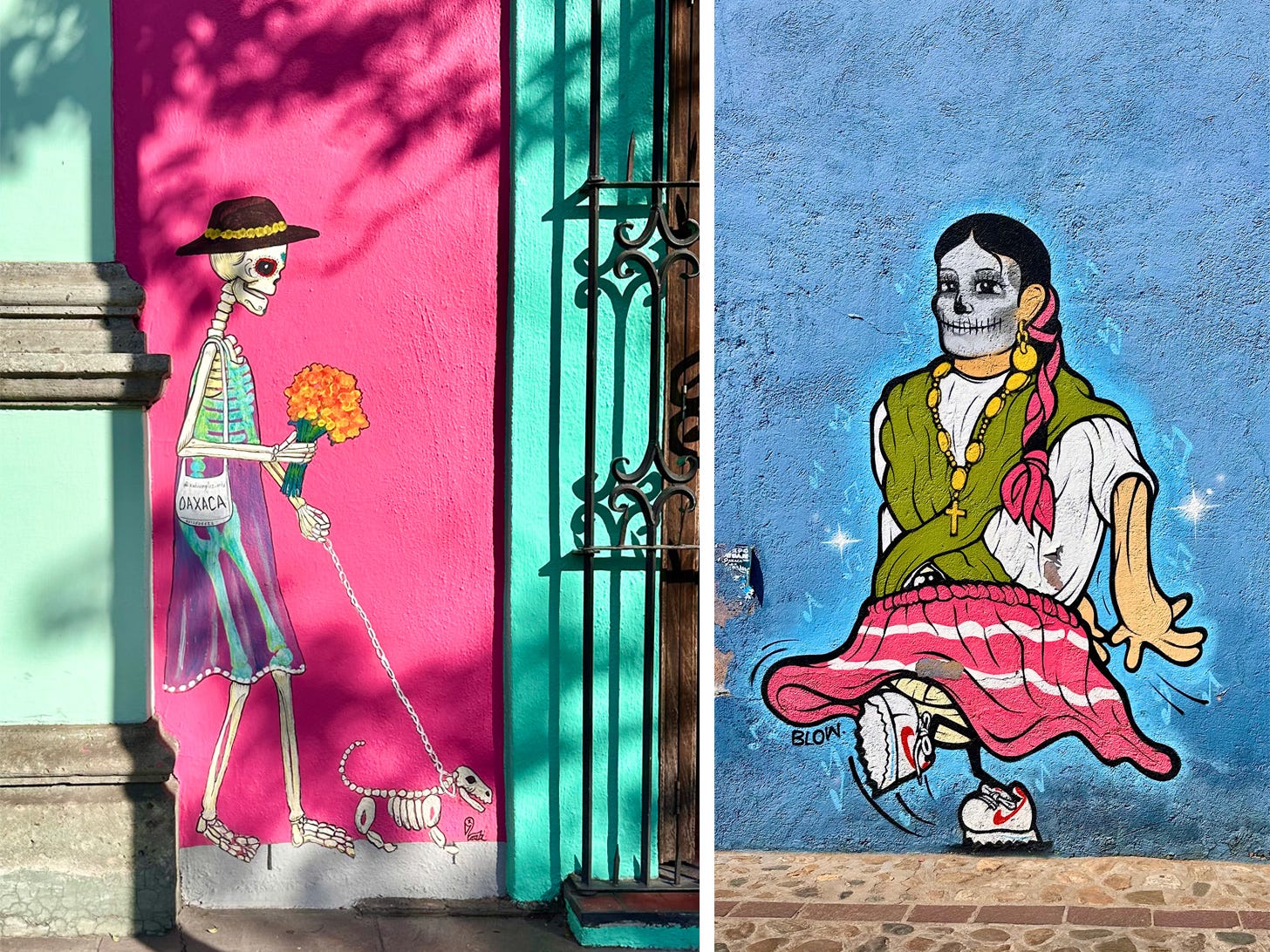
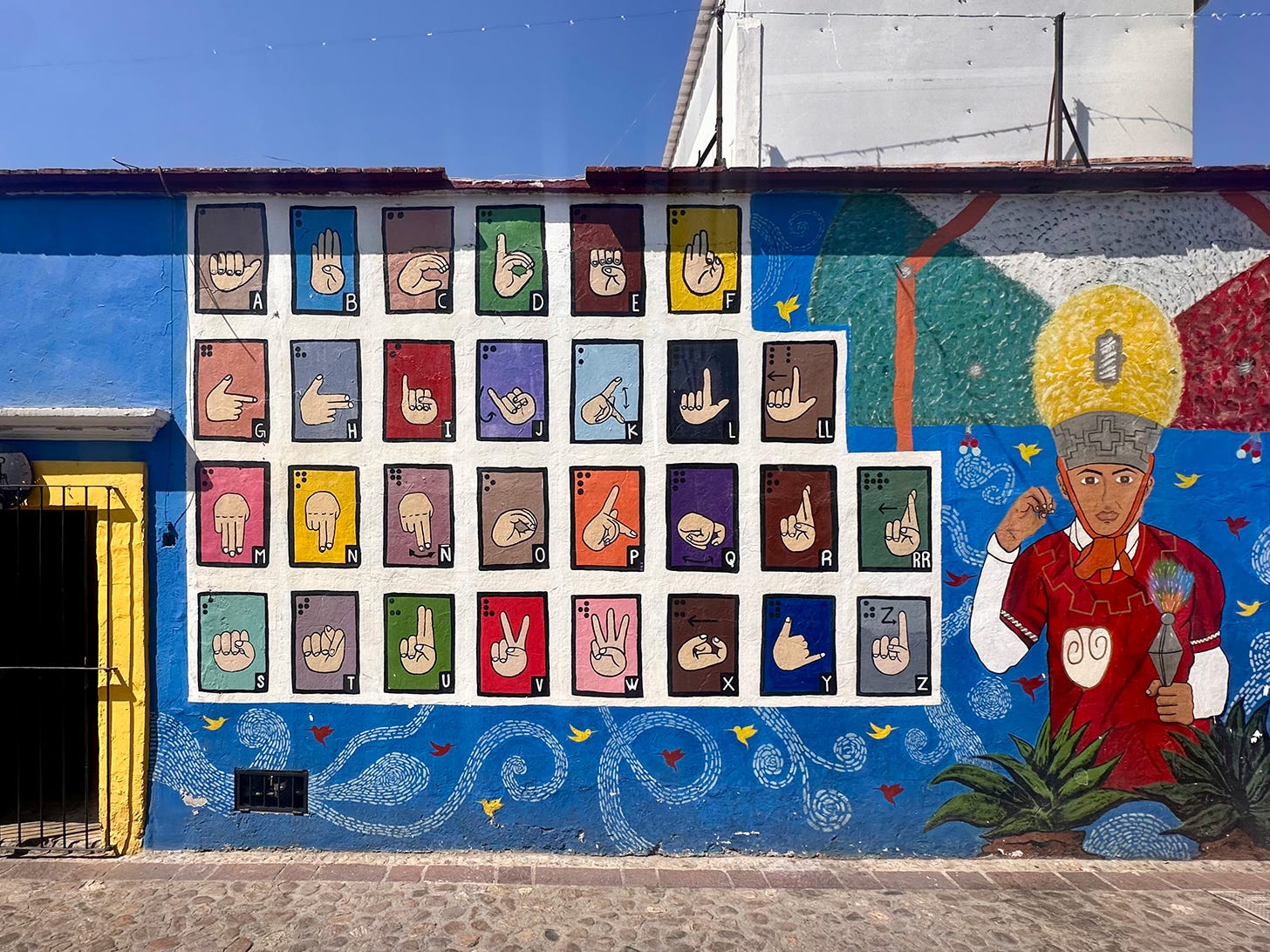
We’d heard about a brightly coloured neighbourhood, with meandering cobbled streets lined with colonial homes, murals and paste-up outdoor art galleries, and laid back cafés barista-ing fine coffee. As two curious Collingwood-ites from Melbourne, we were keen for the explore, and the brew. Here’s a few shots from our strolls below.
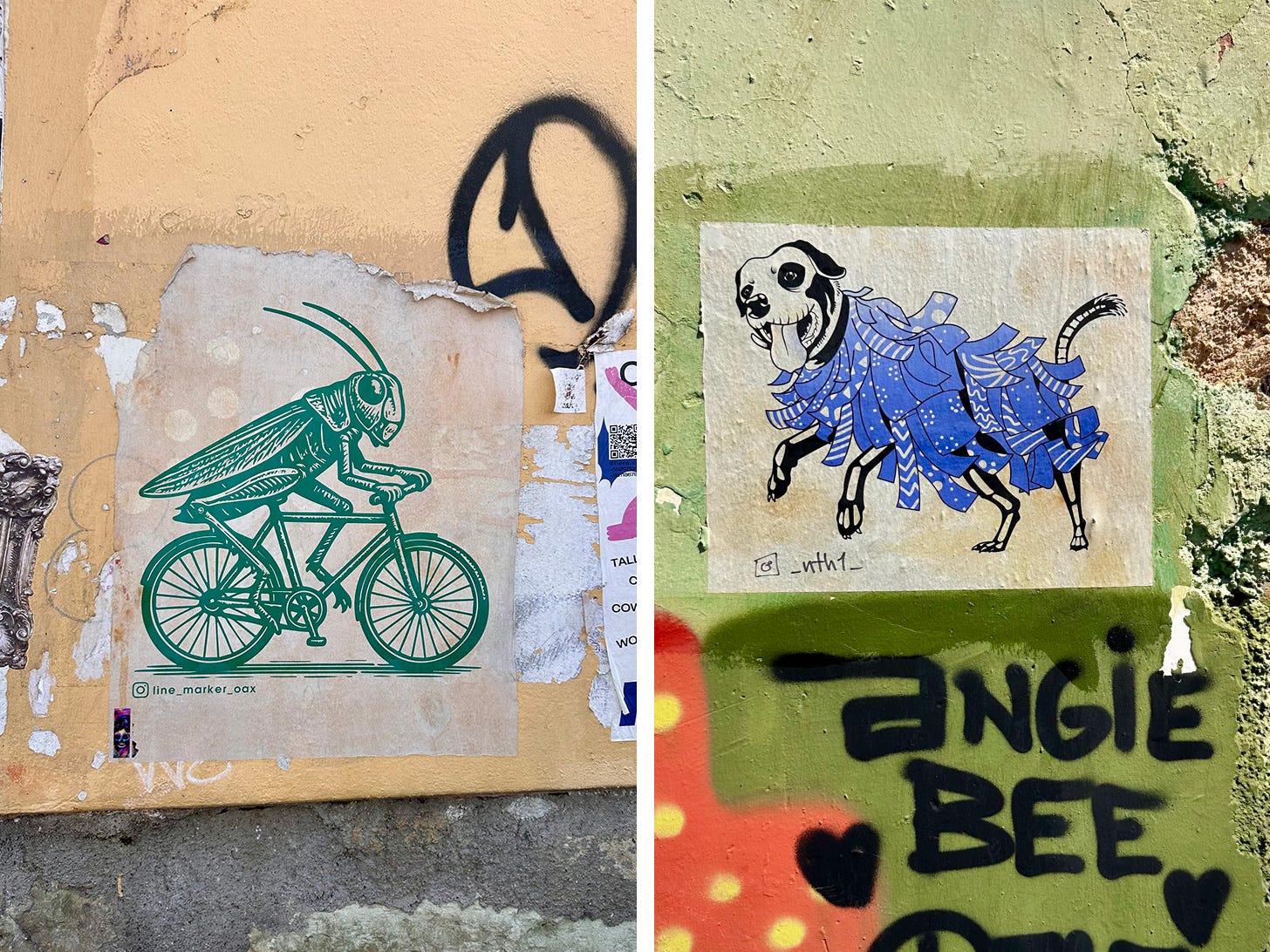
I spot plants, brightly coloured stools and festoon lights. The sign says ‘Once in Oaxaca’. We wander inside and there’s a gaggle of wide trousered, sock and sandal browsers oohing and aahing over limited release prints, artisan mugs and other curated trinkets. The owner of this coolcat café and artspace has a good eye for style. And… the coffee’s bloody good. I begin to explain to the laid back, friendly waitress that the brew reminds us of Melbourne. She let’s me finish my rant before replying “Our owner’s from Melbourne” with a wink and a smile.
Oaxaca certainly has that ‘please stay longer’ appeal. It may be busy, but the locals are still very down to earth, warm and most importantly, welcoming.
Shared Moments
Tasty Eats:
Ocote Cocina
An understated, family style kitchen gem. Experience their ‘‘Menú del día’ consisting of a simple broth and lime soup, chicken enchiladas or turkey mole negro, and dessert. The fresh lime juice is a thirst quenching standout. From the looks of things it’s a mother and daughter running the homey cocina. I’m greeted with big smiles as I give them a departing ‘Delicious comida!’.
Las Quince Letras
This one’s an Eva Longoria Netflix discovery/stalk run by head chef Celia Florián. We order the signature queso wrapped fried cricket salad. It’s a one off for me but glad we gave it a try, think haloumi, with a crispy bug in it, lol. The main – her signature mole negro is smooth, glossy, not too chocolaty and proper devourable. This one’s worth the slightly higher price but be sure to book. She’s got a stellar reputation, and importantly the locals respect and acknowledge her talent.
La Atolería por Tierra del Sol bakery
We were a block away and I could already smell the goodness. As we step in, the bakery is a hive of white uniformed busy-ness. Serious ovens, baskets of pastries and breads, and a glass patisserie cabinet looking like it just flew in from the eleventh arrondissement. This space personifies ‘artisanal’. There’s nothing cookie-cutter French going on here though. Olga Cabrera the founder puts her Ñuu Savi (Mixtec) traditional spin on things, replacing wheat flour with maize for far more textured, earthly shortbread (OMG) and fruta de horno (their signature).
Best ‘worth the effort’ Moment:
Booking our Día de Muertos time in Puebla, then heading to Oaxaca post-festivities. More on this experience in my last post Puebla: Beyond the Skeletons of Día de Muertos.
Current Listening:
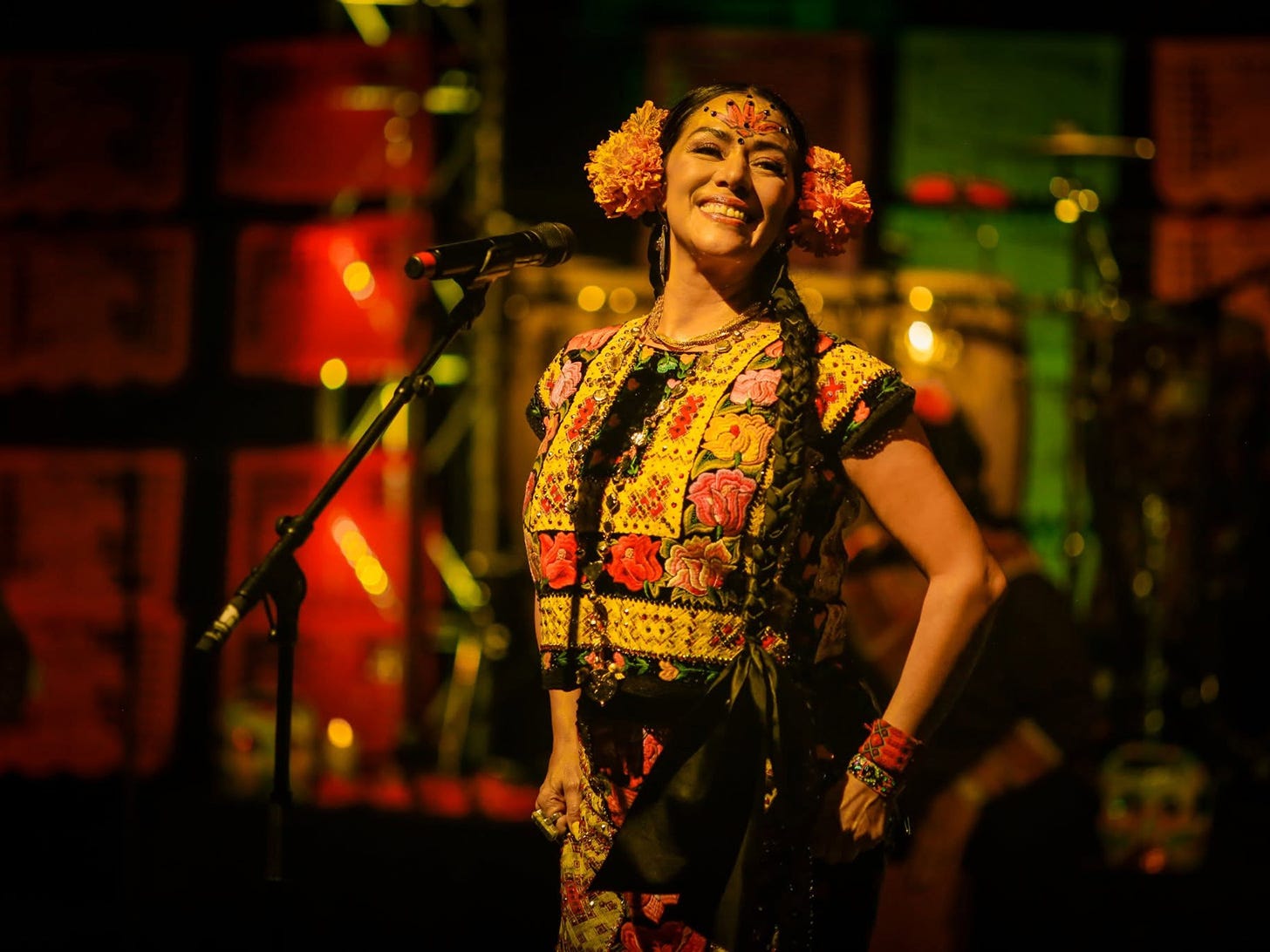
La Sandunga
Close your eyes and the earthy voice of Lila Downs will transport you back to another time, surrounded by your Mexican comrades in a small Colonial courtyard evening performance – back in 1999 when she made this recording. Join me for a listen with vino in hand, gazing out over your garden (or pot plants) as your evening settles in.
Flat Point:
Having to leave. Yes it’s touristic, but this city has much to offer in food, art, architecture, beautiful handicrafts, a textile museum (be sure to check out the geometric terracotta courtyard walls, a graphic design museum (I didn’t go, can you believe?) – and the regional discoveries including hiking in Sierra Norte, the world’s largest tree to hug, and of course, Monte Albán. We’re coming back.
Cultural Observation:
Mexicans love to hang in their local parks. The main Zócalo in Oaxaca has tourists zipping here and there, but all the benches are packed with locals just stopped, sitting quietly, not waiting for anything to happen.
And… onwards! 💚
Glomad’s free for your reading pleasure. If you’re enjoying, a like, comment or share helps more curious travellers find their way here too.
Amazing colour including the displayed food in the markets and on plates. Hope all is going well and you are enjoying. Love Dad , Lizzie and Lola XXX
I love your writing right now. Is it coming easier? I can’t believe Oaxaca is Melbourne hipster now! I was there about 27 years ago!